PROJECT AIM
- Provide an introduction to tea, including its history, production, health effects and environmental impact.
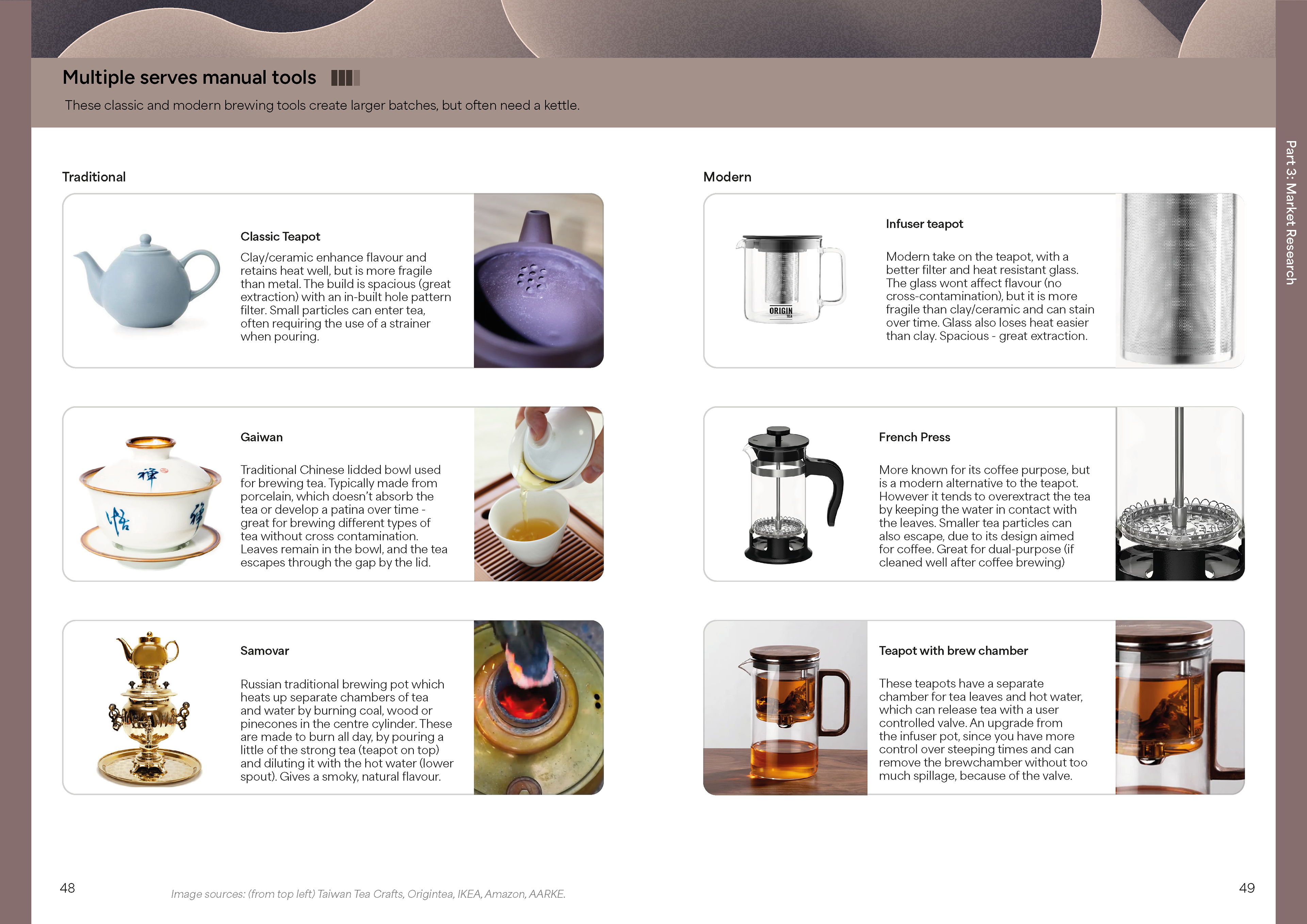
- Analyse brewing tools to identify poor user experiences.
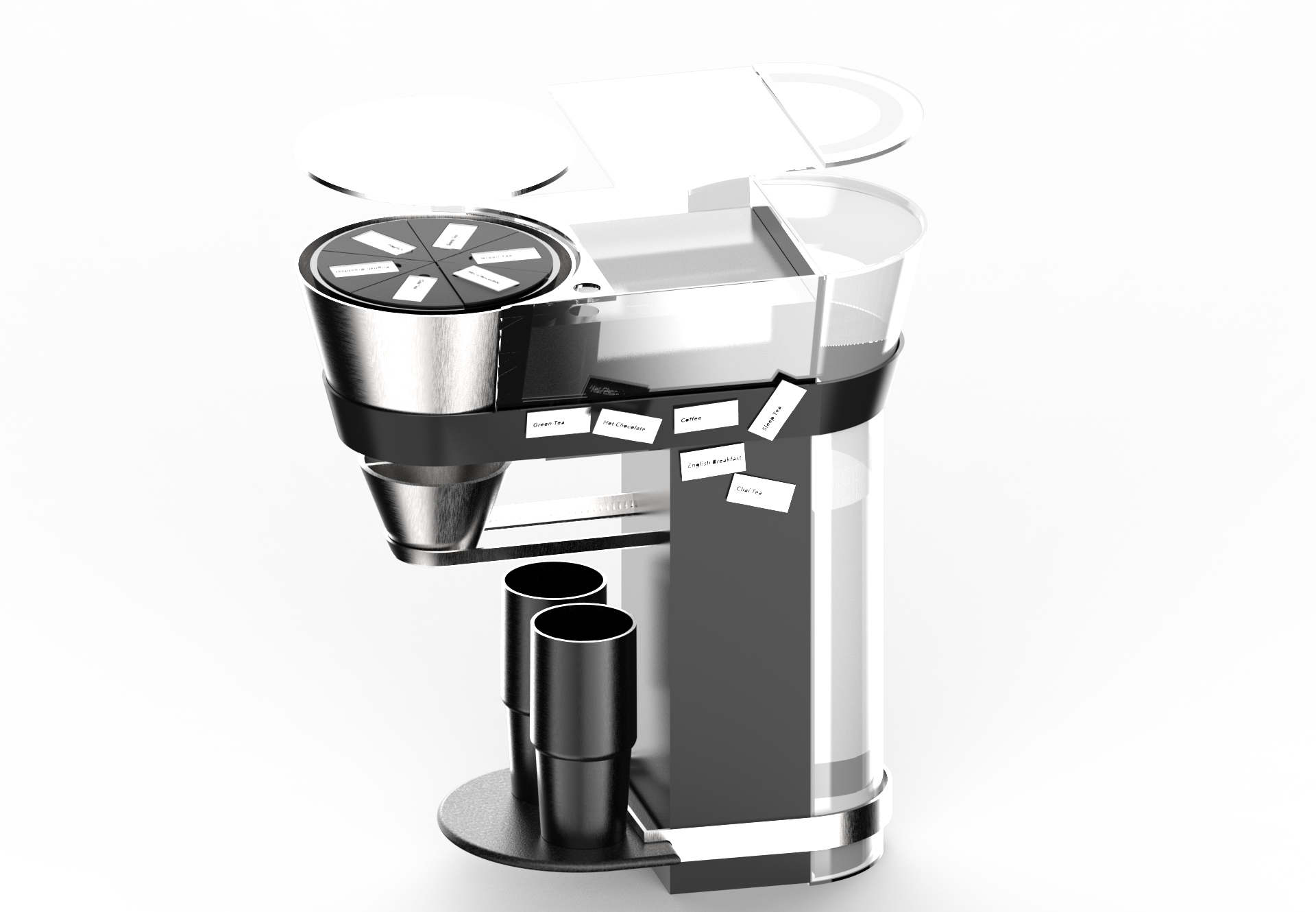
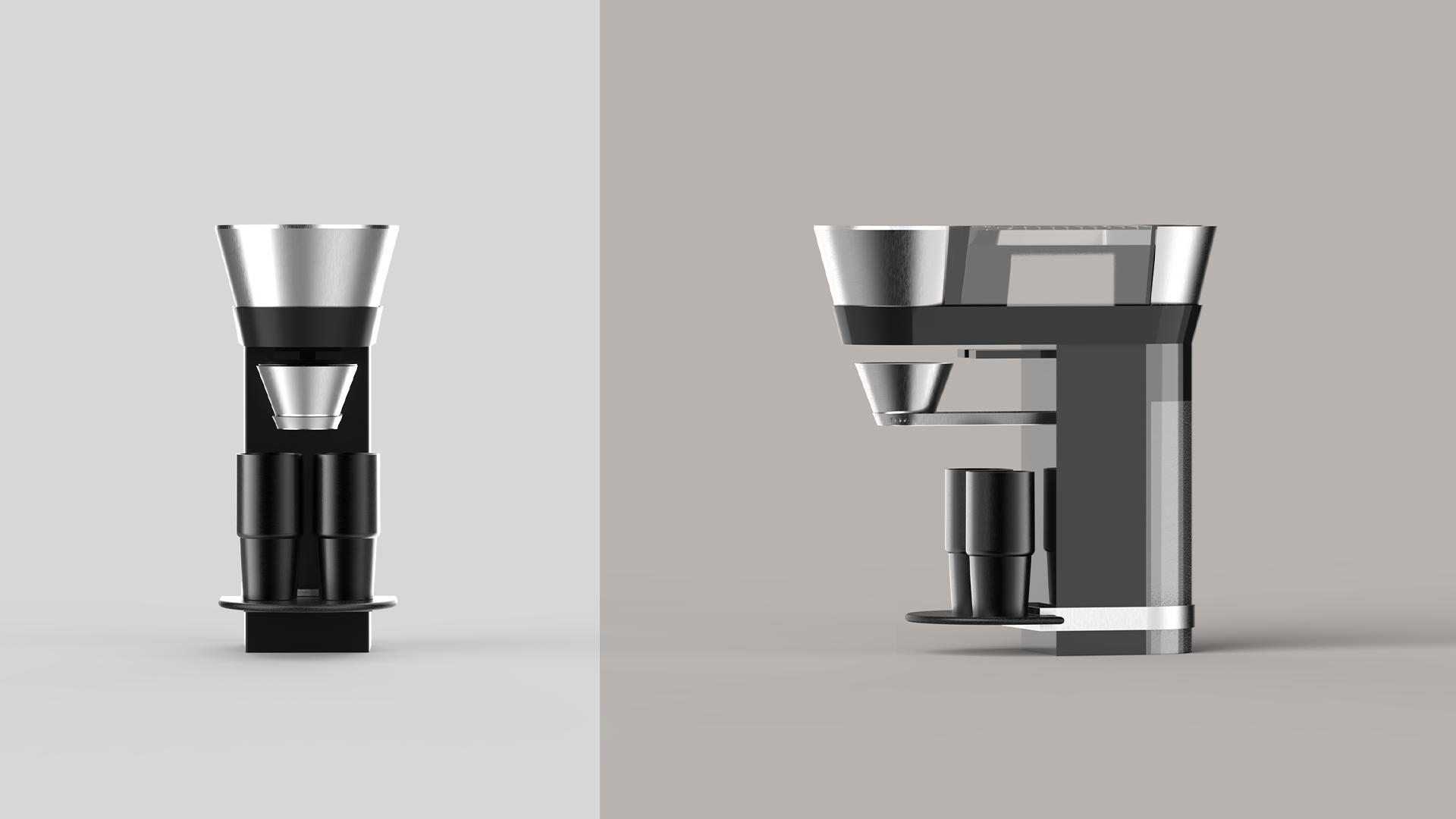
- Translate findings into a concept for a commercial tea-machine for the home.
SUMMARY
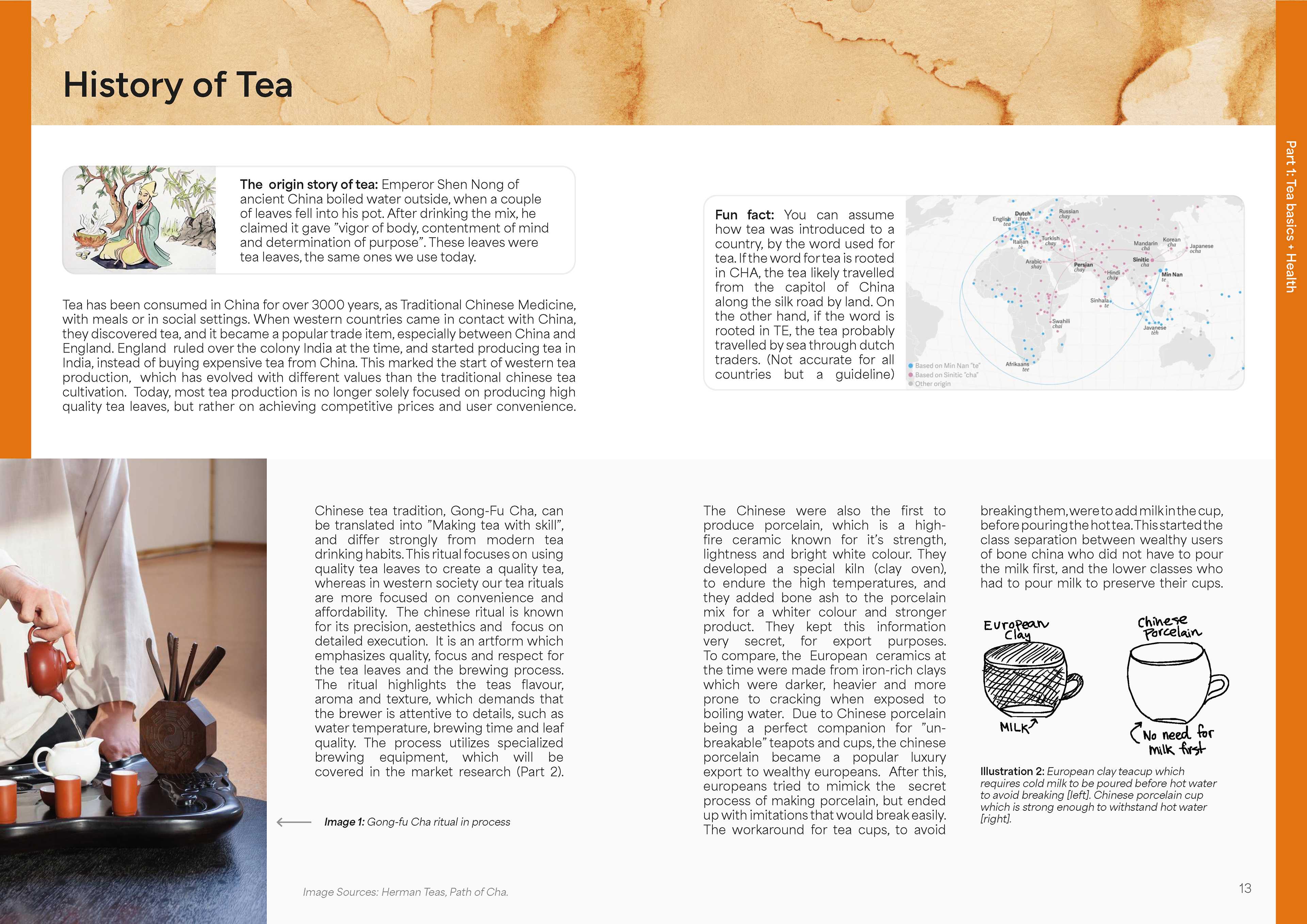
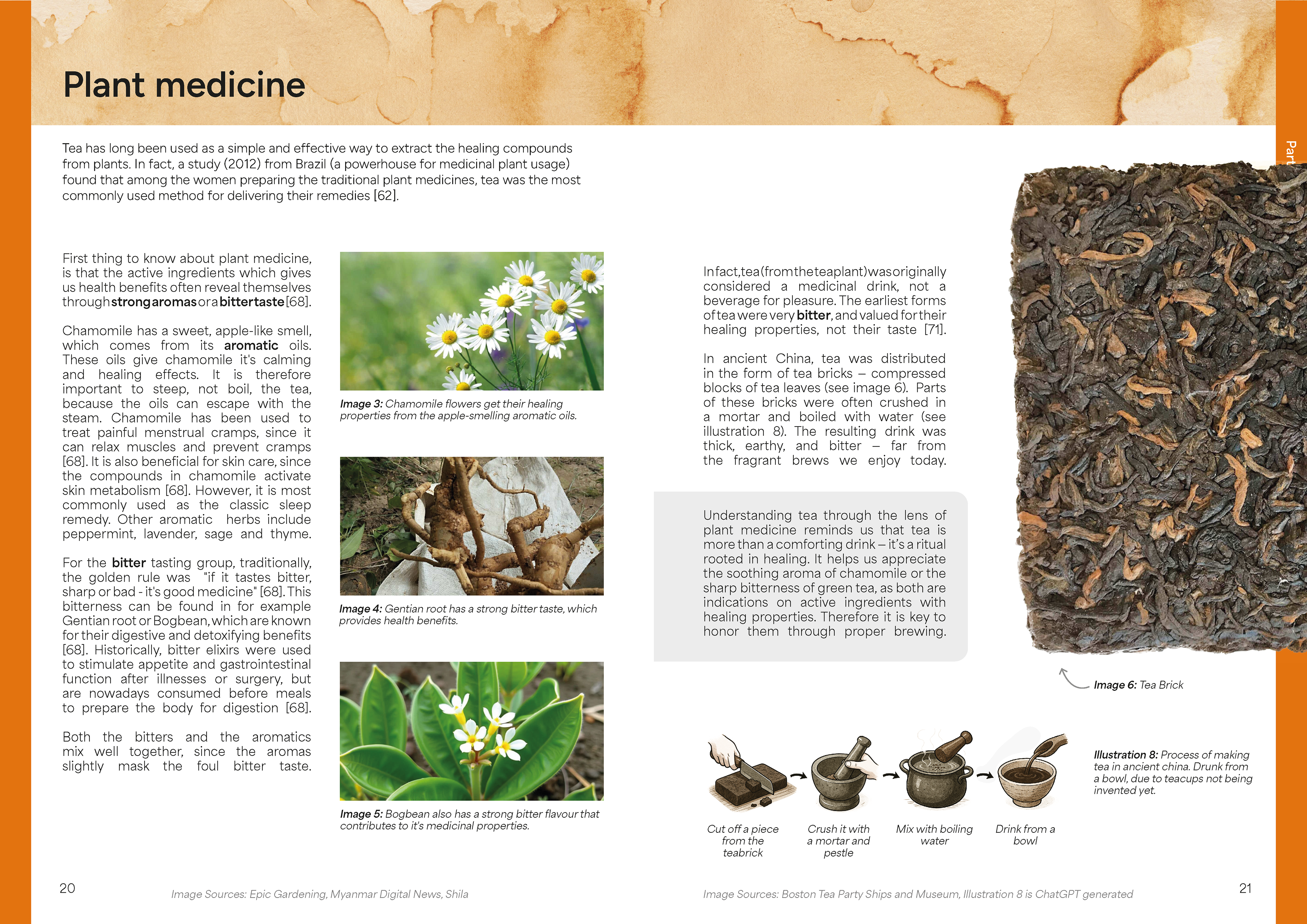
Tea was originally consumed as a bitter-tasting medicine, where one would break off a piece from a tea brick, crush it with a mortar and pestle, mix it with boiling water, and drink from a bowl. This was long before modern tea processing techniques were developed to improve flavour — and long before elegant teacups existed. A much later invention turned brewing from an art form into something quick and convenient: the tea bag.
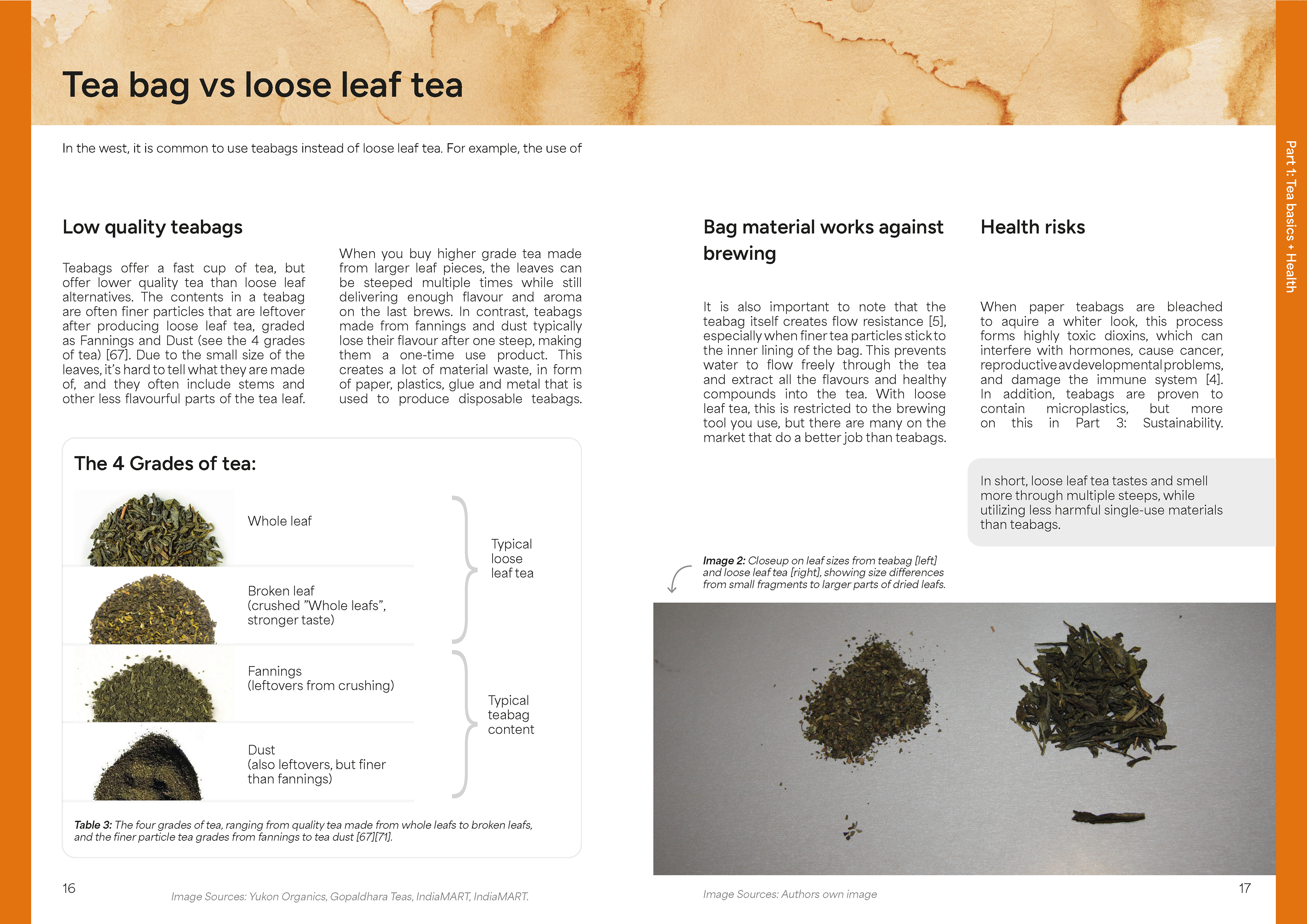
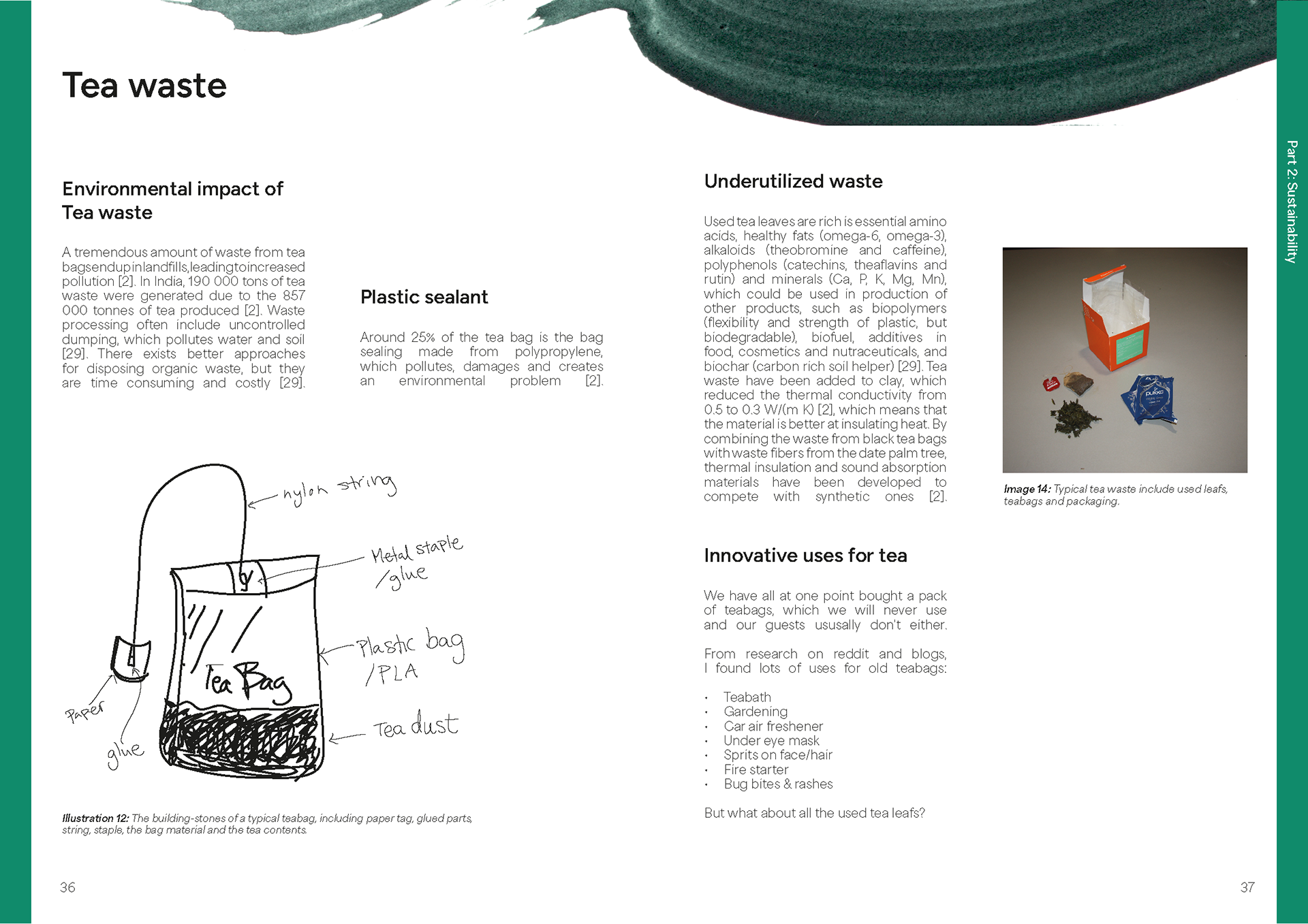
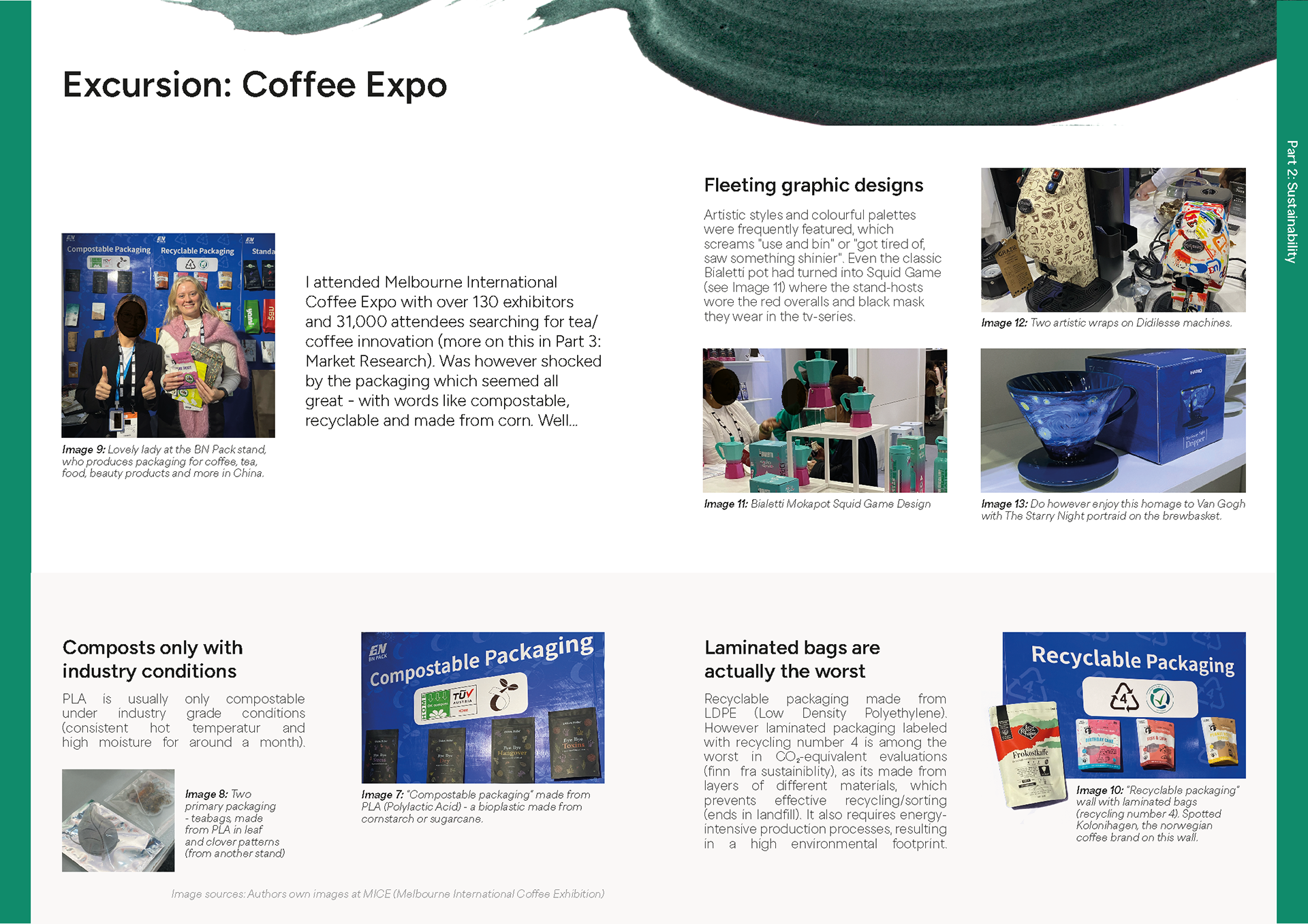
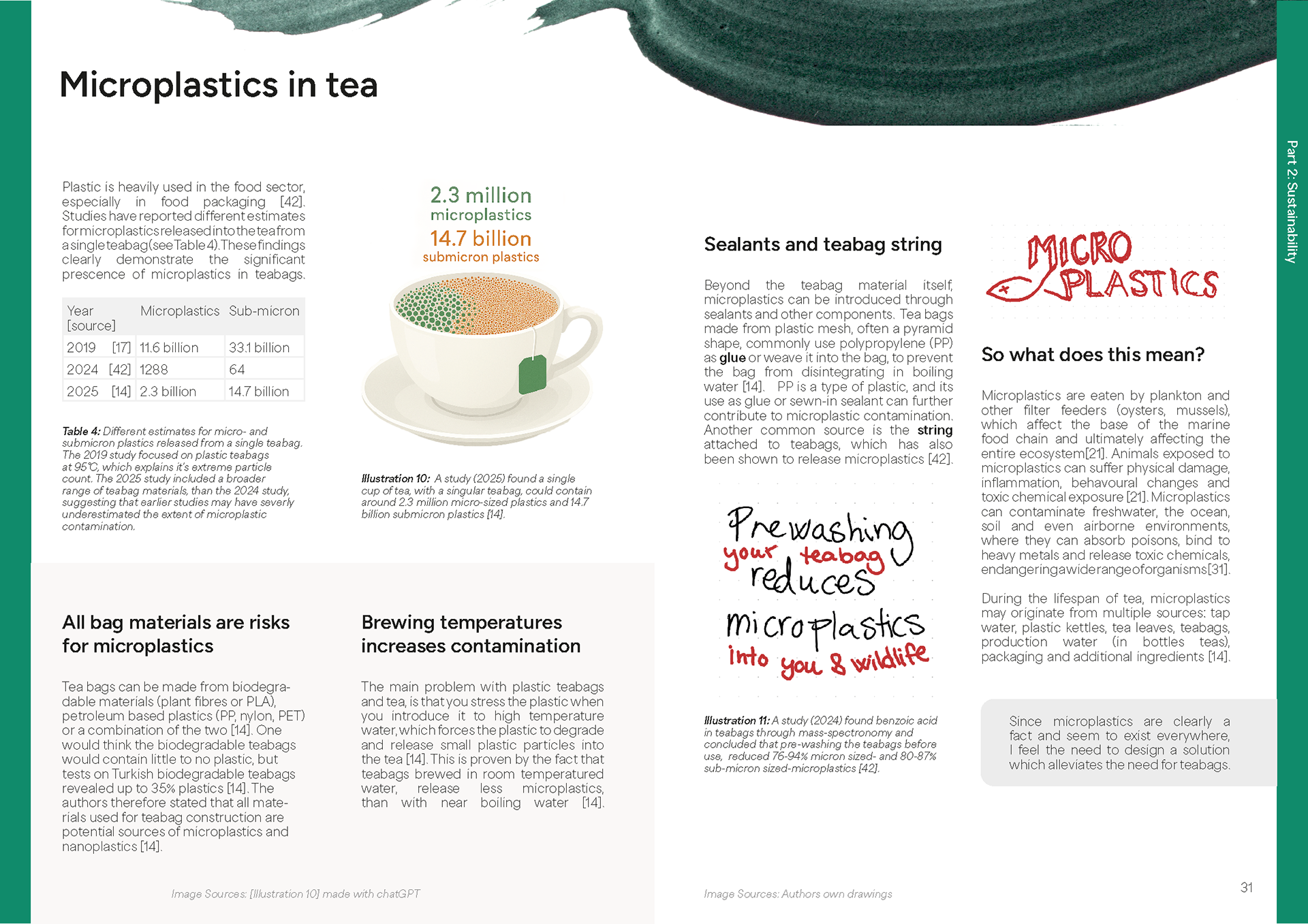
The tea bag offers convenience, but that’s about it. It’s often filled with the leftovers after higher-quality tea has been sorted out — dust, stems, and small fragments. Many tea bags are also made with plastic-based fibers that release microplastics at high temperatures, affecting wildlife, the environment, and our own health. On top of that, single-use tea bags contribute to unnecessary packaging waste.
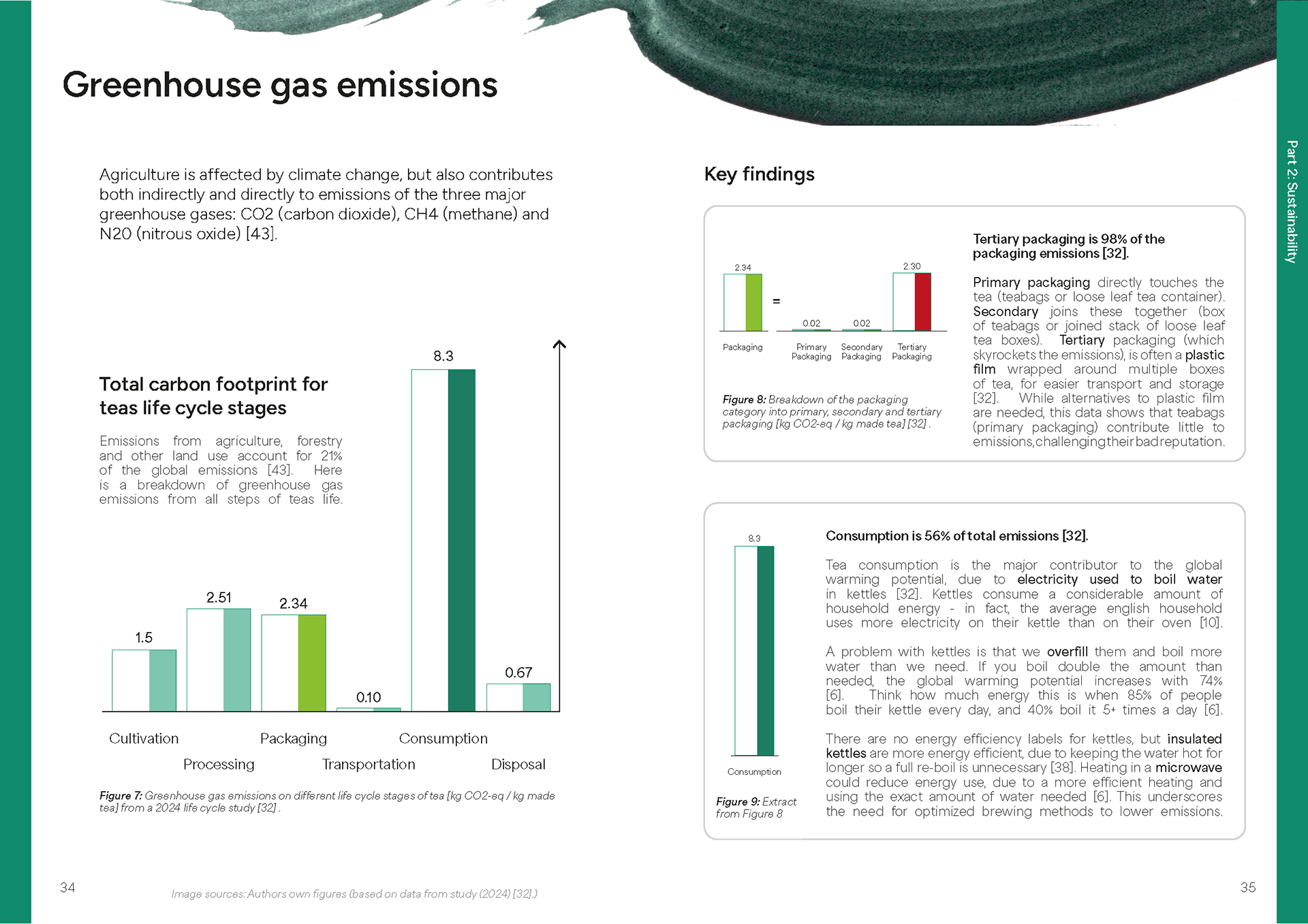
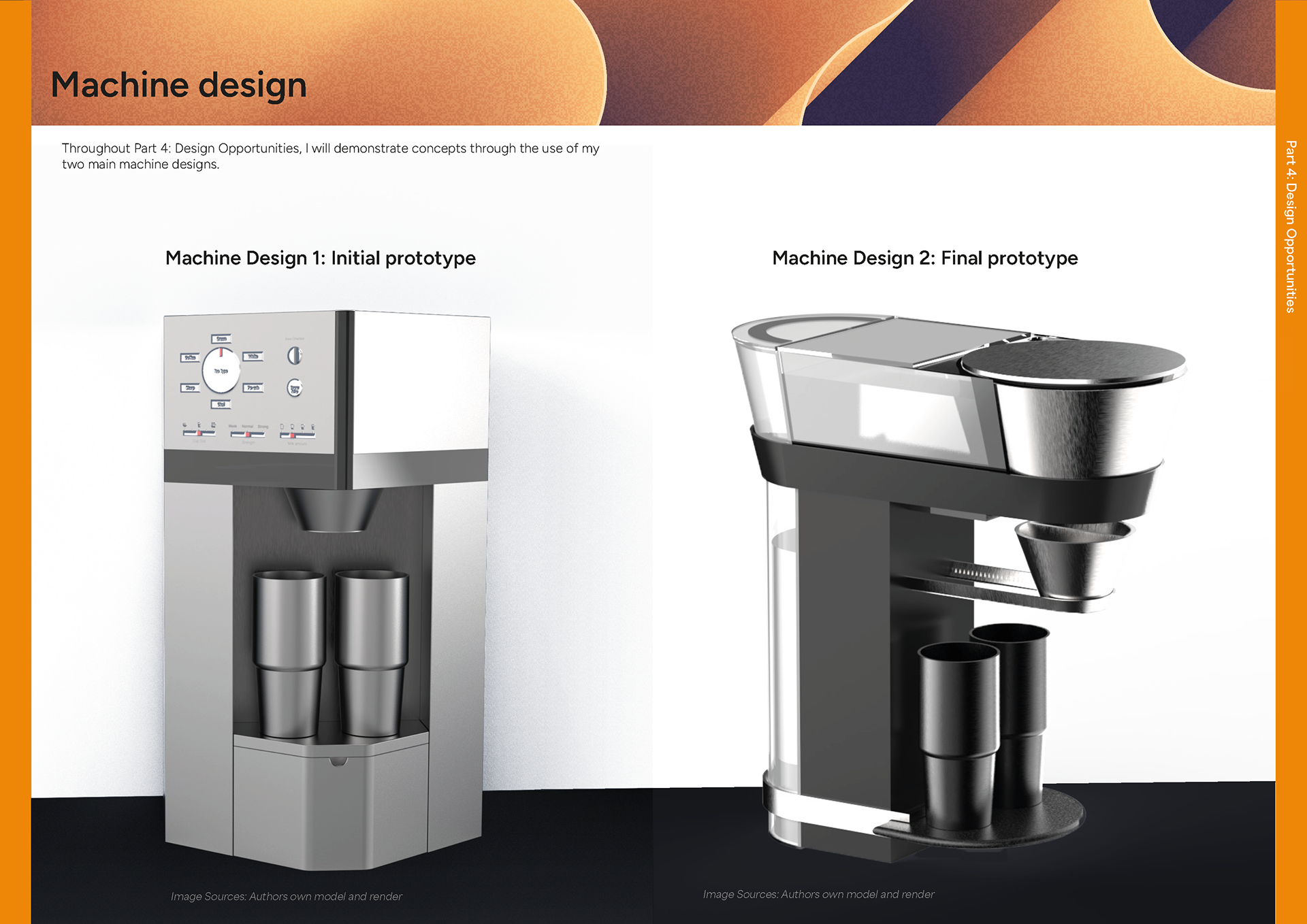
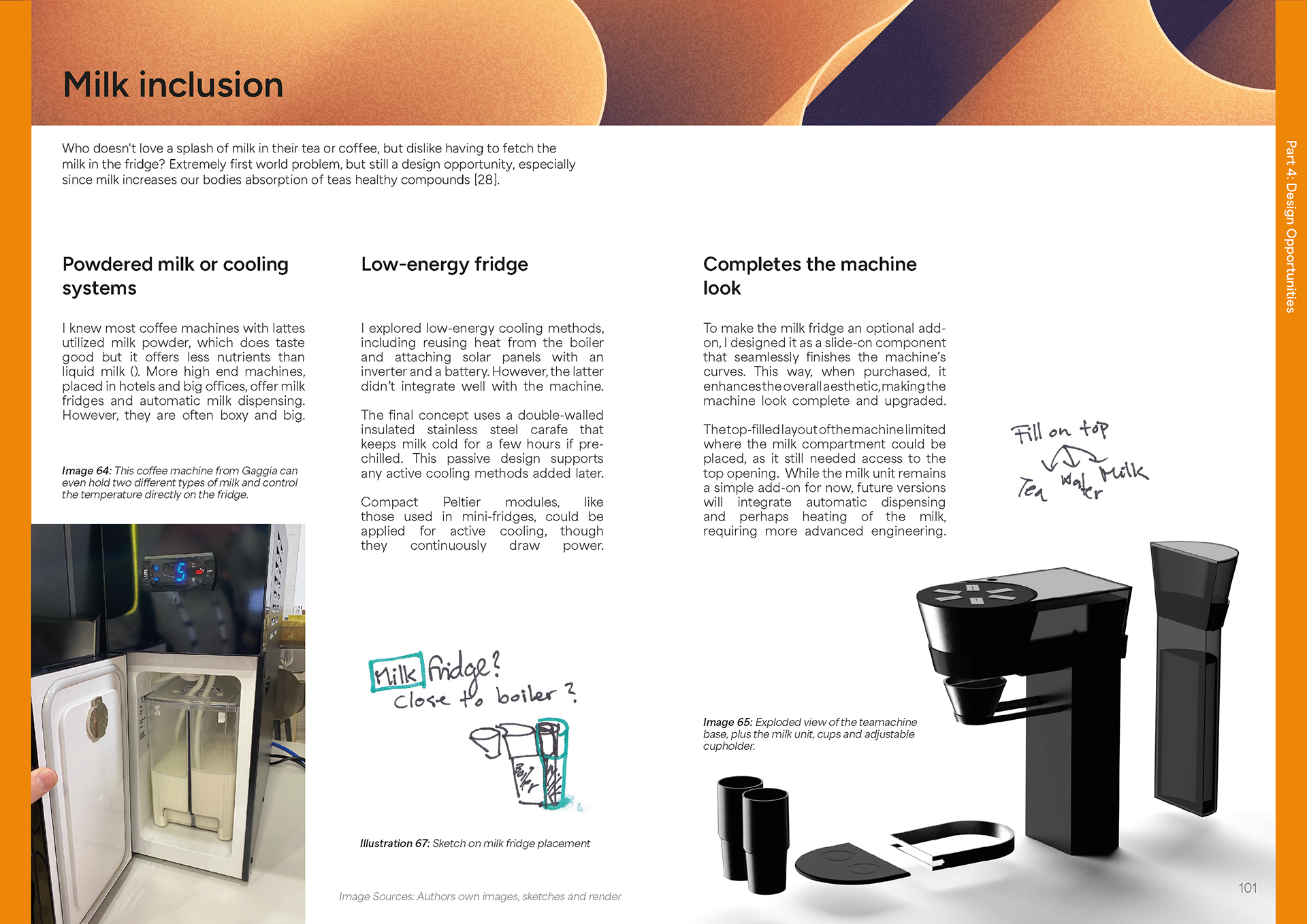
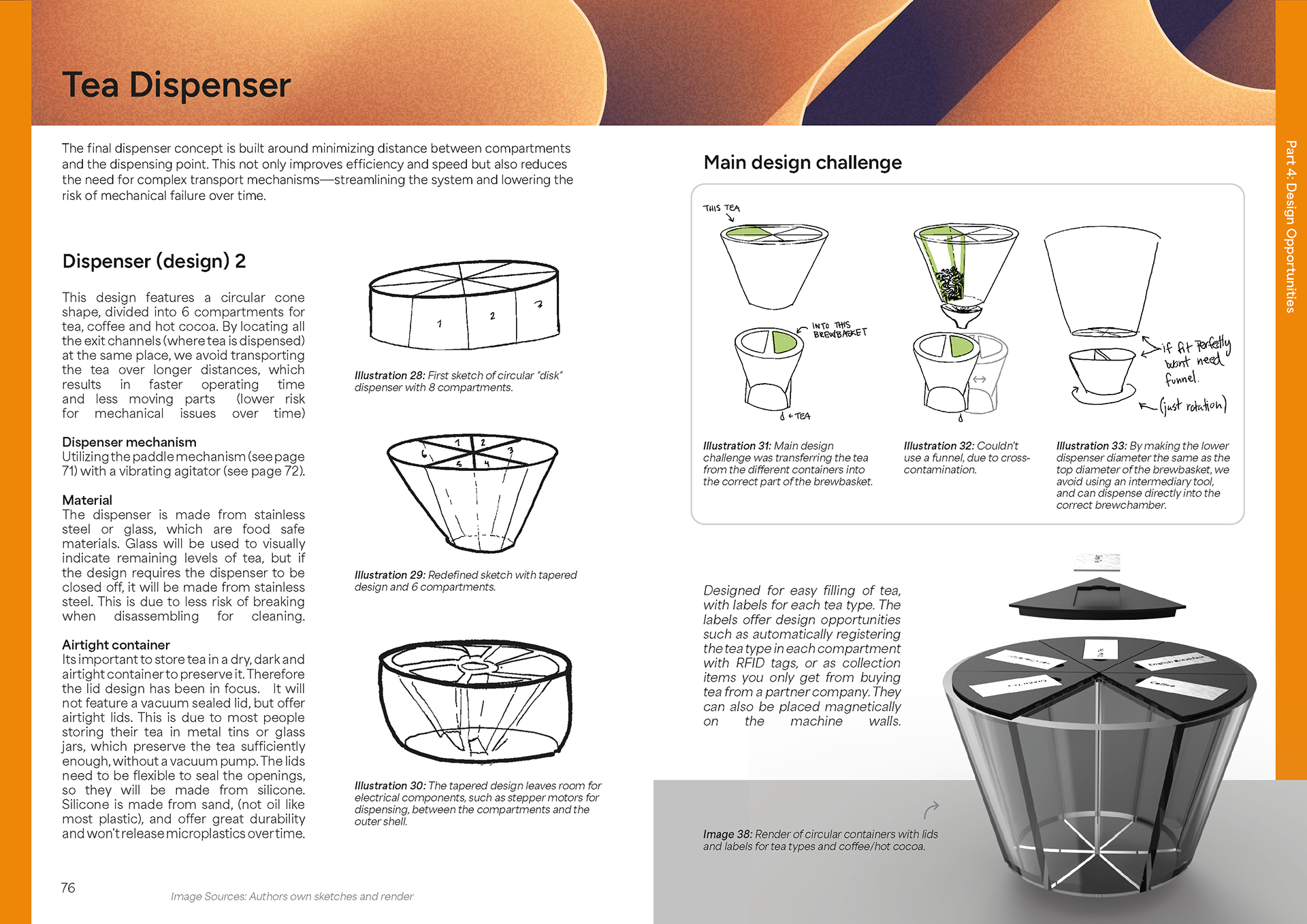
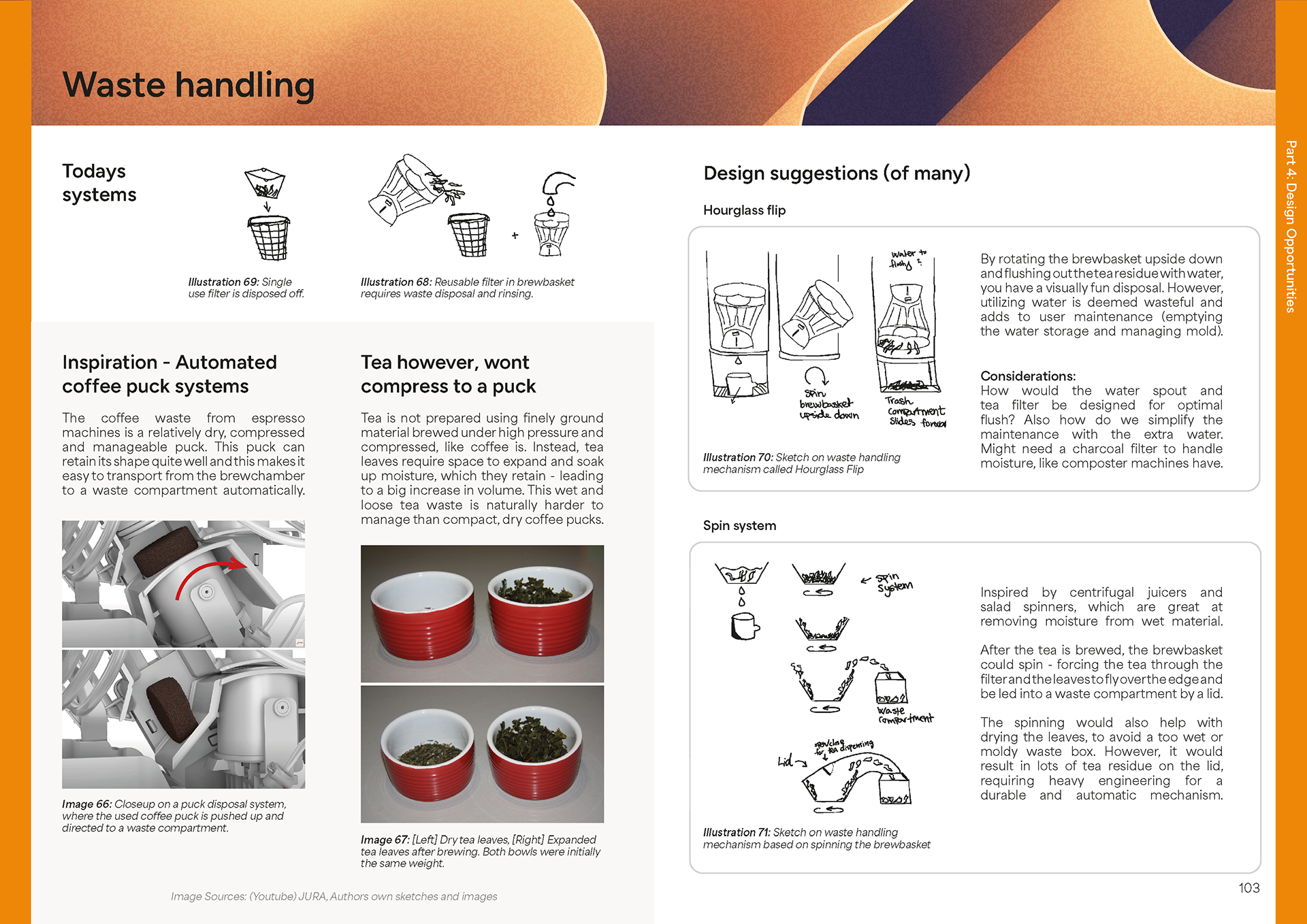
Here in the West, we’ve developed a coffee obsession, with a wide range of specialized tools and machines for coffee brewing. Tea, on the other hand, remains in the shadow of the tea bag, with few tools that make loose-leaf tea exciting to brew at home. The tea machine is more than a product — it’s a sustainable kitchen appliance that honors the tradition of tea while solving the challenges of modern tea brewing. It lets you enjoy real tea, without compromise, as a daily ritual for health, focus, and calmness.
Following are excerpts from the master thesis, covering 4 parts (click on images to display larger).
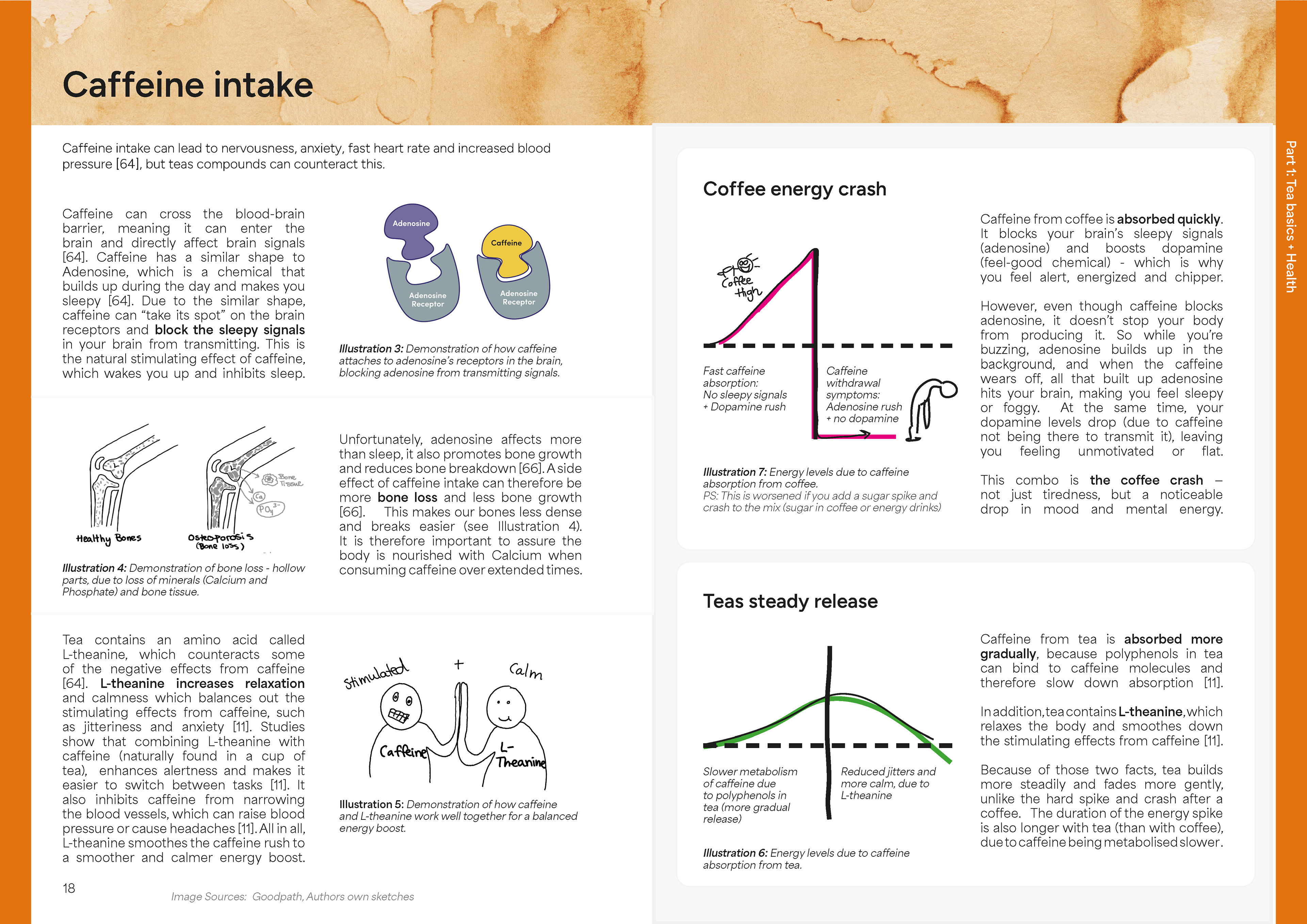
Part 1: Tea Basics + Health
Part 2: Sustainability
Part 3: Market Research
Part 4: Design Opportunities
REFLECTION
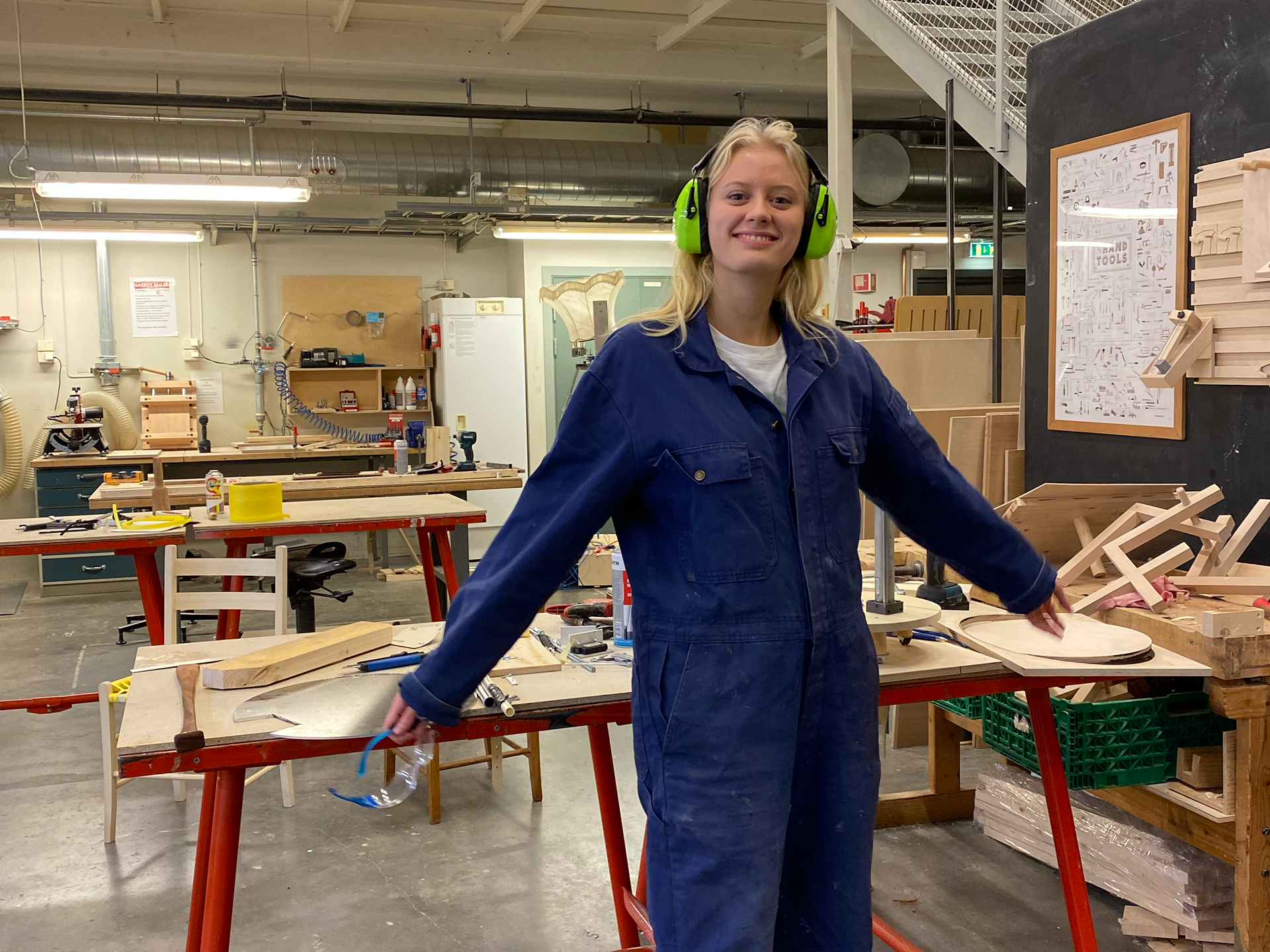
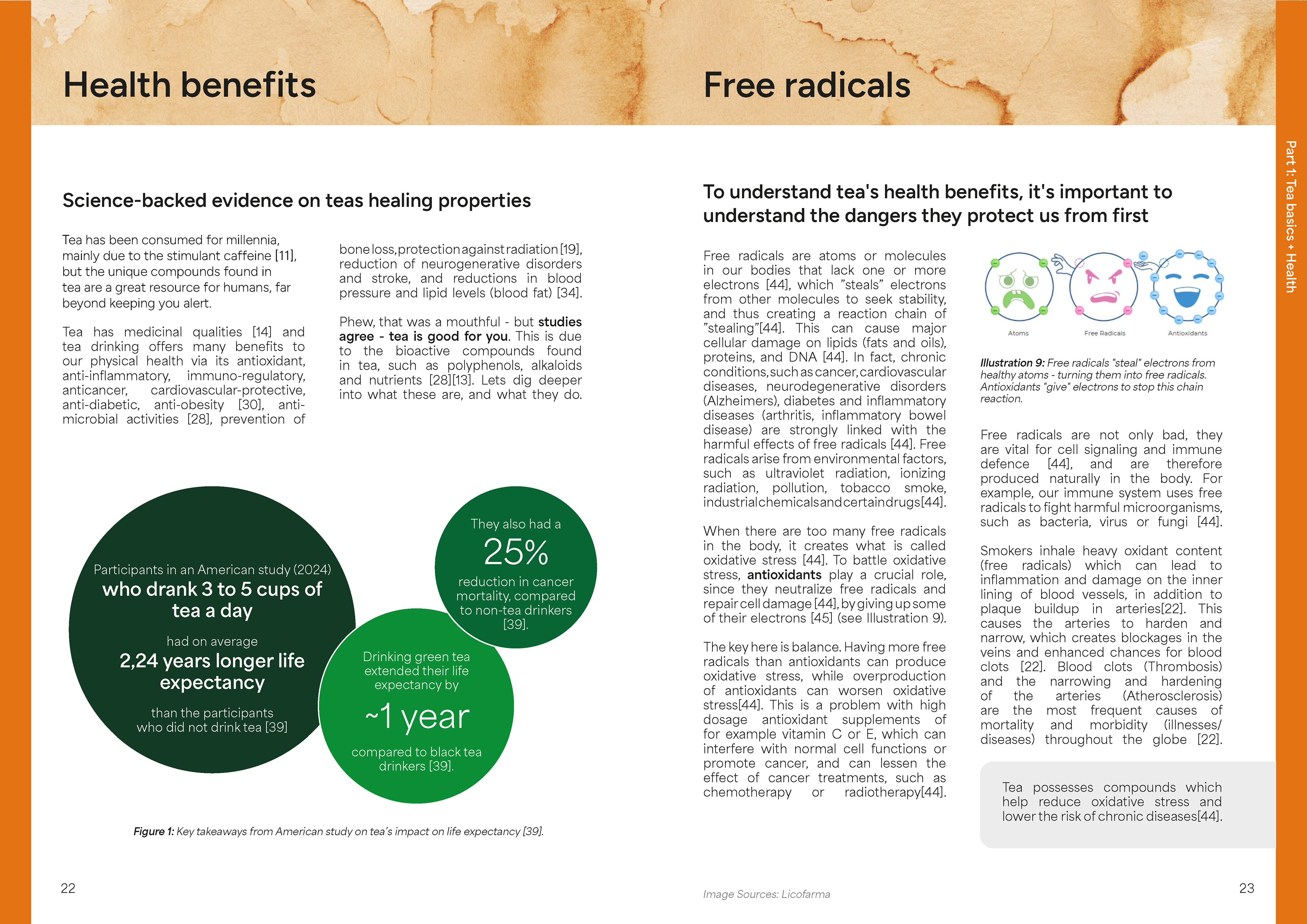
This project taught me how tea has played a part in trade history, how it was used as medicine before commercial processing methods were invented, the health benefits from this cup of antioxidant beverage and how machines can cooperate with the material properties of tea. It taught me how product design businesses work, and how to take care of the planet while producing new items on the market. Since this was one of my first projects performed without access to a workshop, with only a computer and a 3D printer, I am very proud of the concept development, and am eager to continue the design with actors from relevant fields of expertise, such as material science, mechanical engineering and electrical engineering.