Summary
This project aimed to build incentive to properly recycle batteries, instead of throwing them in the trash. This is due to batteries containing chemicals that contaminate our waste, pollute the environment and can cause catastrophic fires, while at the same time ending the material loop when it is not recycled properly. Our main goal was to upgrade the recycling stations, so that they provided incentive to be used and a reminder to bring the old batteries from home.
ENVIRONMENTAL Problem
Batteries are often thrown in general waste, which have environmental consequences. For instance, discarded batteries can leak battery juice and cause fires.
”[Batteries] contain chemicals that contaminate our waste streams, pollute the environment and can cause catastrophic fires.” (EPA,2023)
Improper recycling leads to ending the materials life-span, which is a waste of non-renewable sources.
"Lead, silver and zinc will become extremely scarce as soon as 2030 with our current rate of battery harvesting." (EPA,2023)
SYSTEM PROBLEM
Proper recycling of batteries exists, but fail to engage users with plain designs and no incentives.
It can be hard to remember to bring the batteries to recycling stations
The service could benefit from a physical item at home to act as a reminder.
There is no substantial reward for proper recycling
Without a motivating factor, it can be easy to avoid proper recycling.
CONTEXT
This project explored the integration of gamification into environmental education, by designing an interactive machine to incentivise children to properly recycle batteries. Children were targeted, partly because of their ability to influence their family in sustainable practices, but also since most recycling stations are present in a store context, which is often a stressful experience for parents with children. We could provide a stress reliever for the parents by entertaining the child and by giving children a part of the shopping that they are in charge of.
“If a child learns from their teacher about the damaging effects of CO₂ emissions, they may ask their families to reduce car use[...], and putting recycling bins in schools may encourage kids to ask parents whether they can introduce them at home.” (Hosany, S. (2022))
Recent studies indicate that children significantly influence their parents’ decisions regarding environmentally friendly practices. This is called Reverse Socialisation, where younger teaches older. By leveraging this influence, our project aims to educate and engage children in sustainability, encouraging them to advocate for eco-friendly choices within their families.
“Young children have limited tolerance for shopping so you need to get in and out as quickly as possible.” (www.brighthorizons.com, n.d.)
Our research showed that families, particularly those with young children, frequently have stressful visits to grocery stores. Without meaningful activities to occupy the childrens attention, they may resort to undesirable behaviors to alleviate boredom. These grocery stores are ideal for placing our interactive game machines because of the frequent visits families make to these locations. By offering a stimulating and interactive experience, we provide parents with a valuable tool to manage their children’s behavior while shopping.
prototype
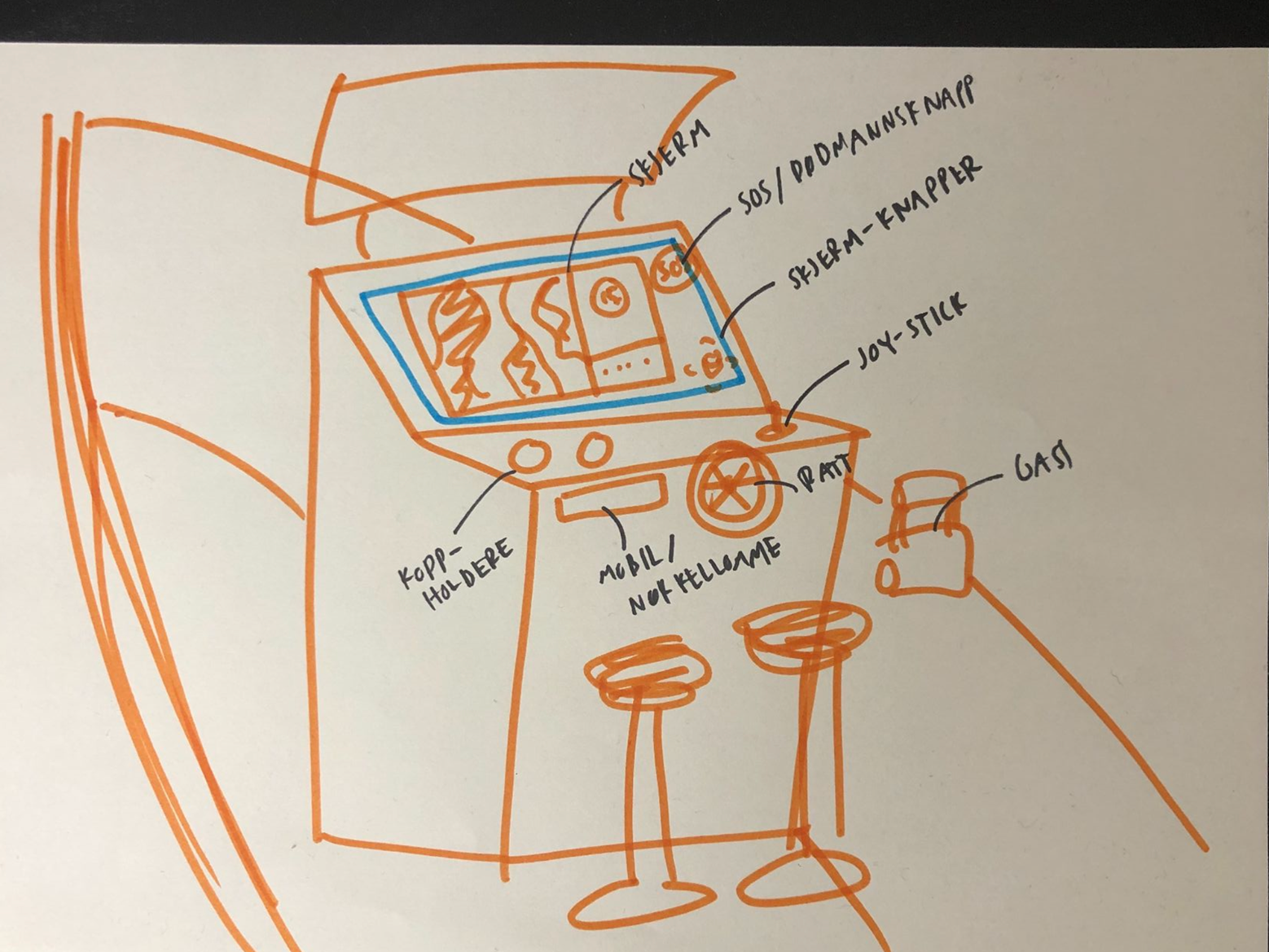
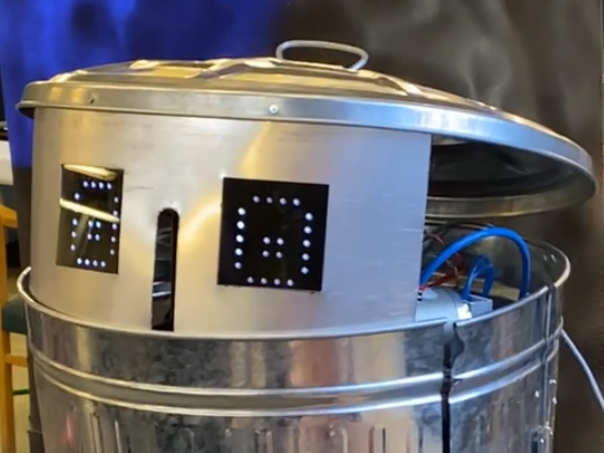
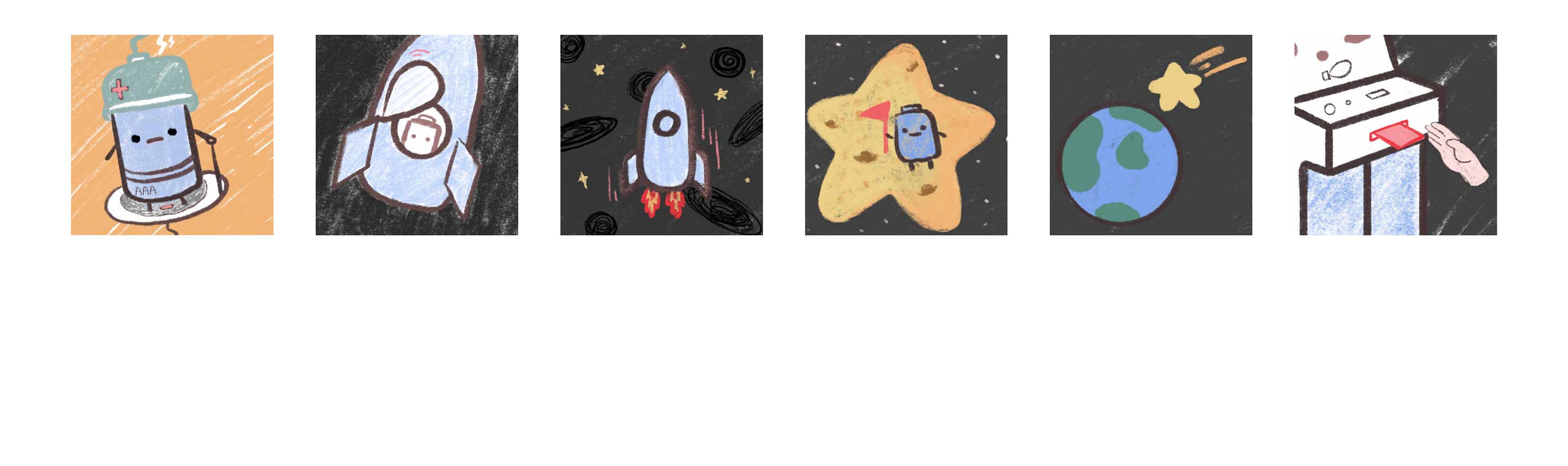
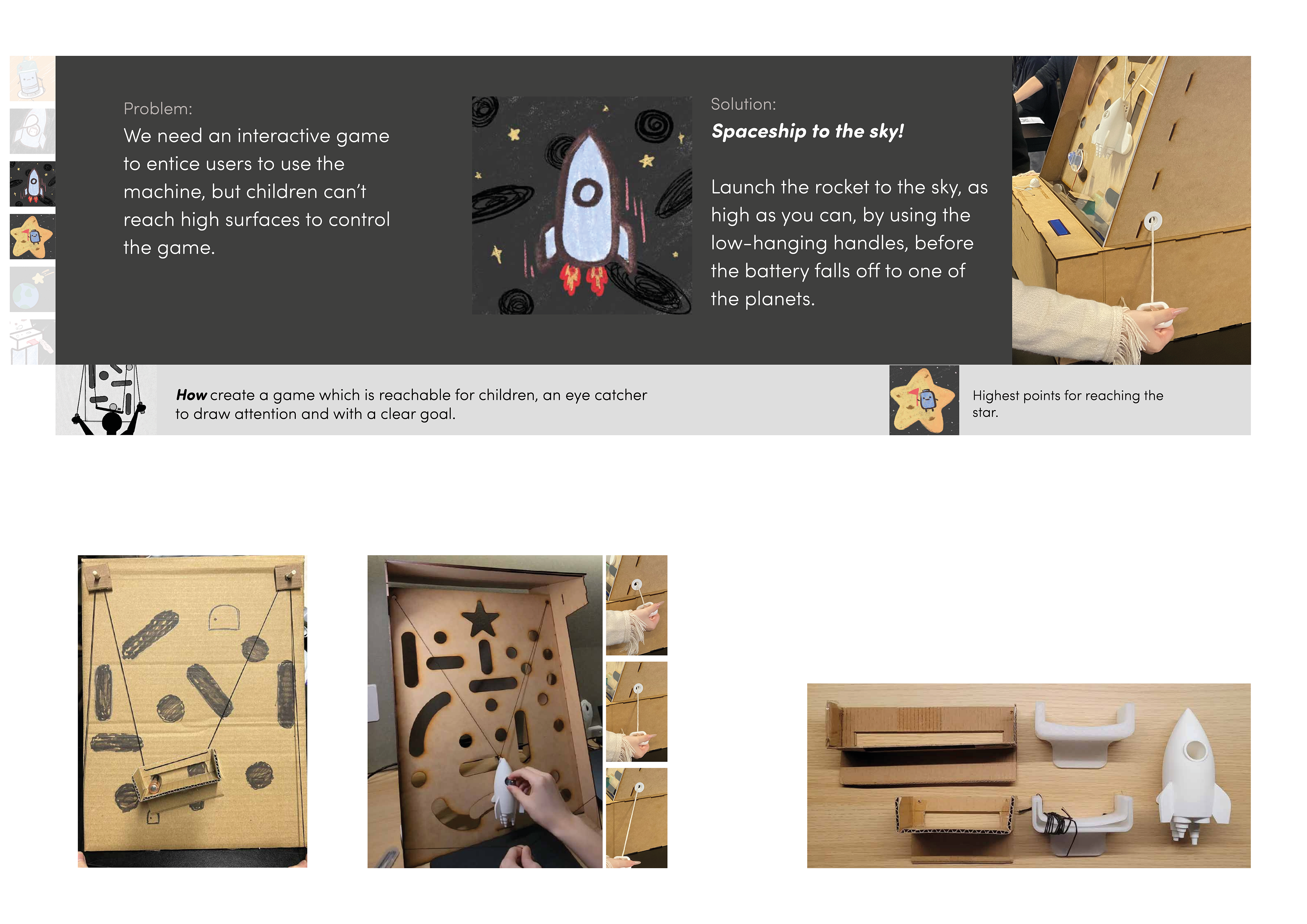
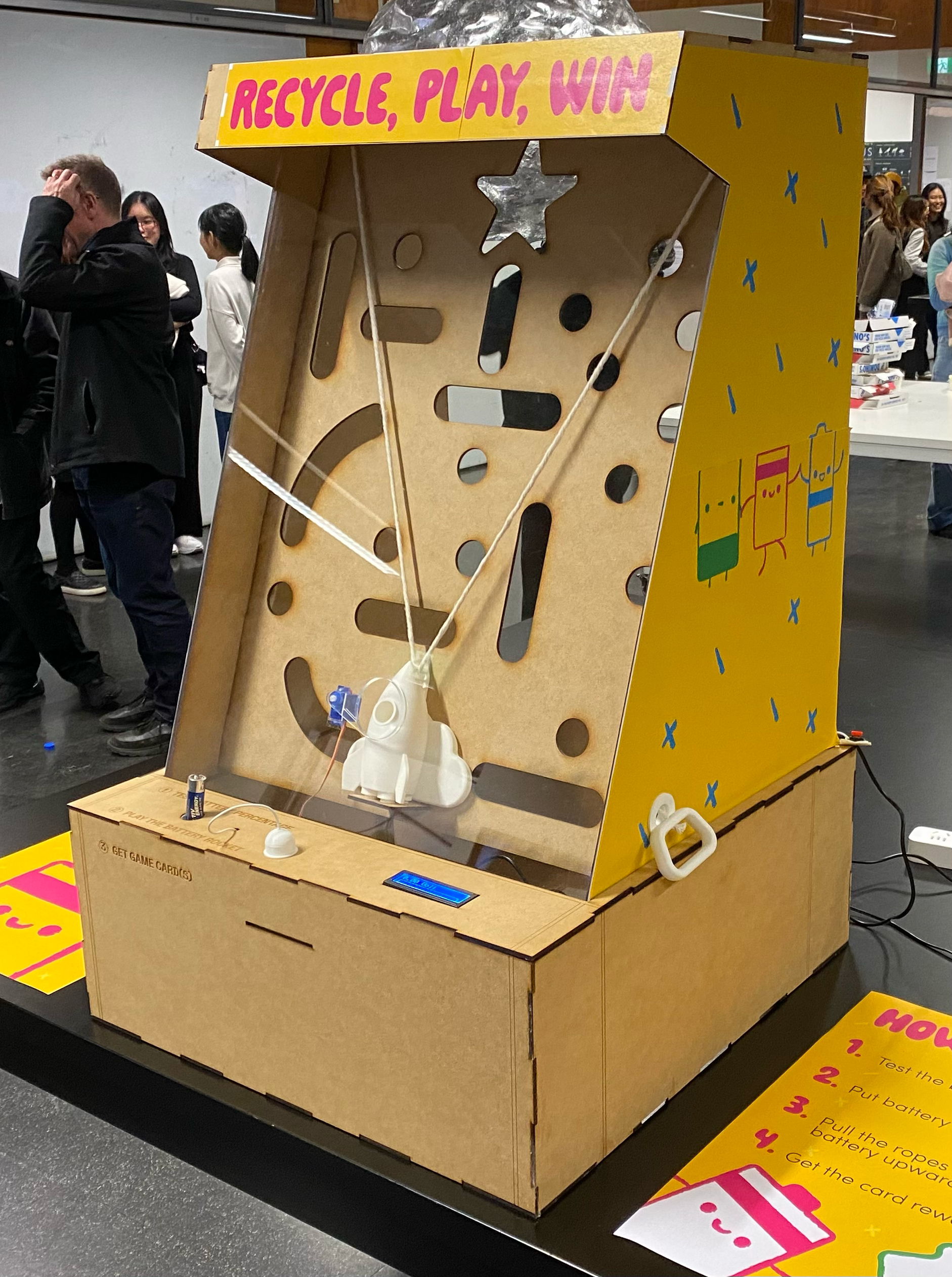
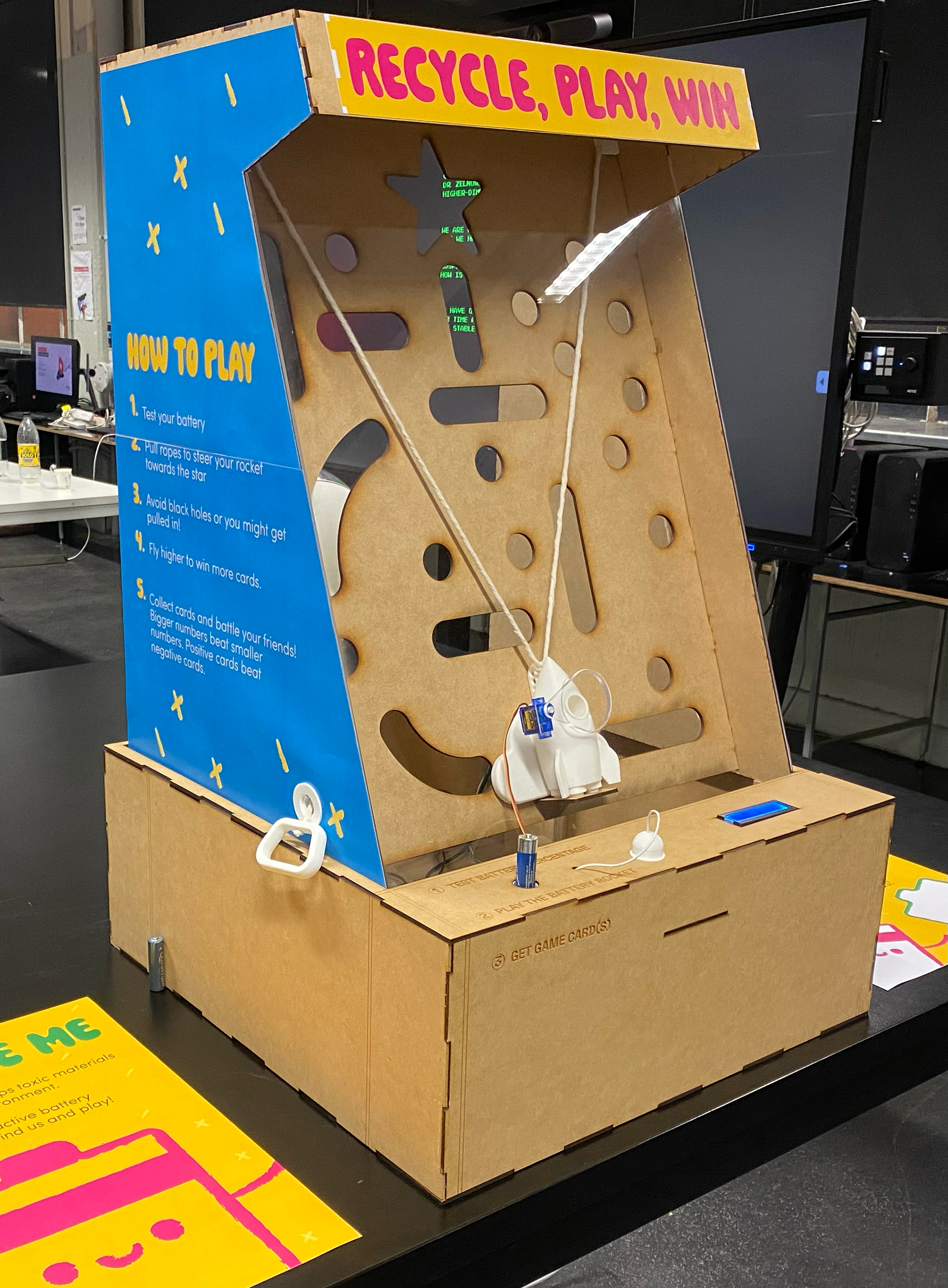
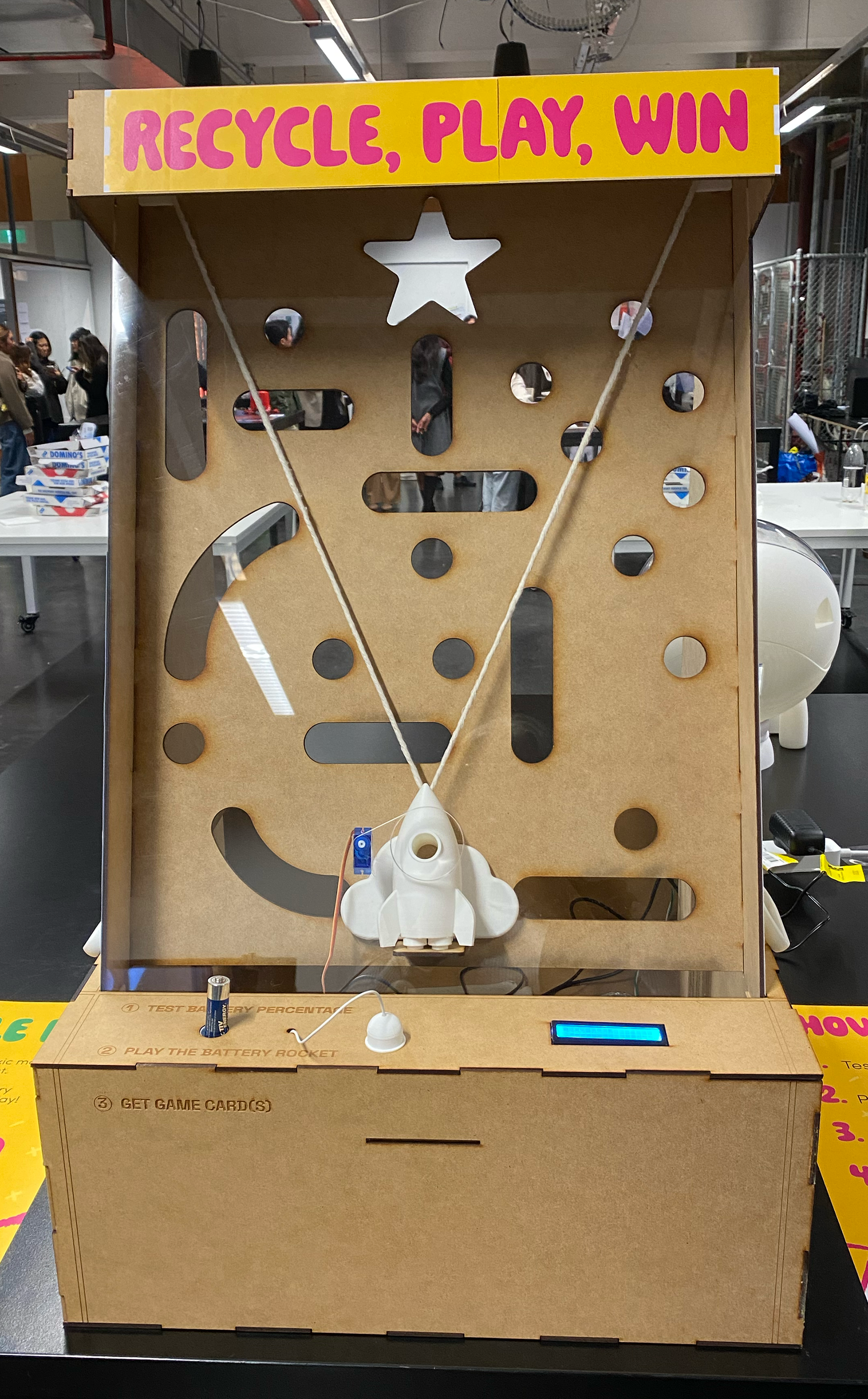
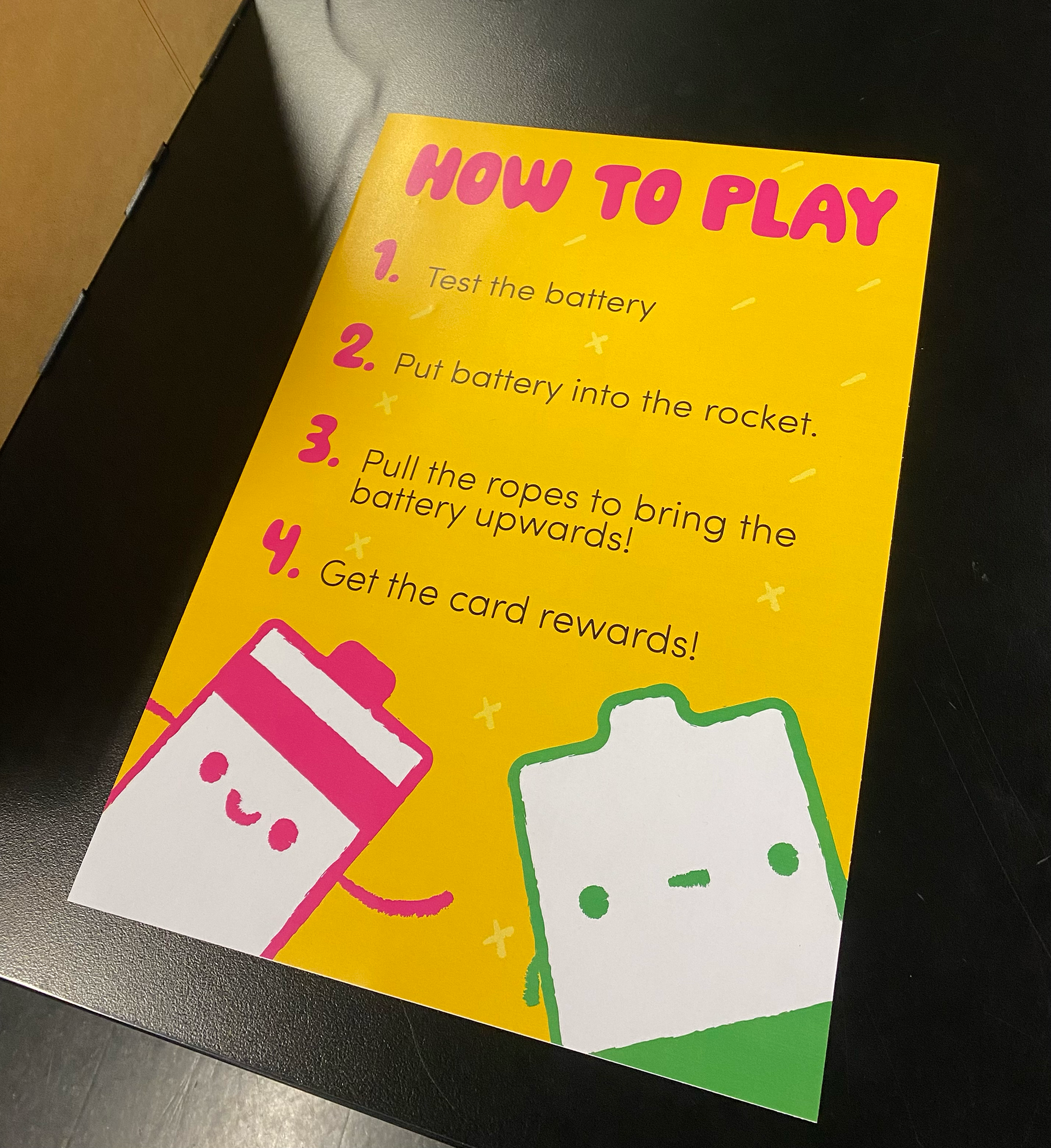
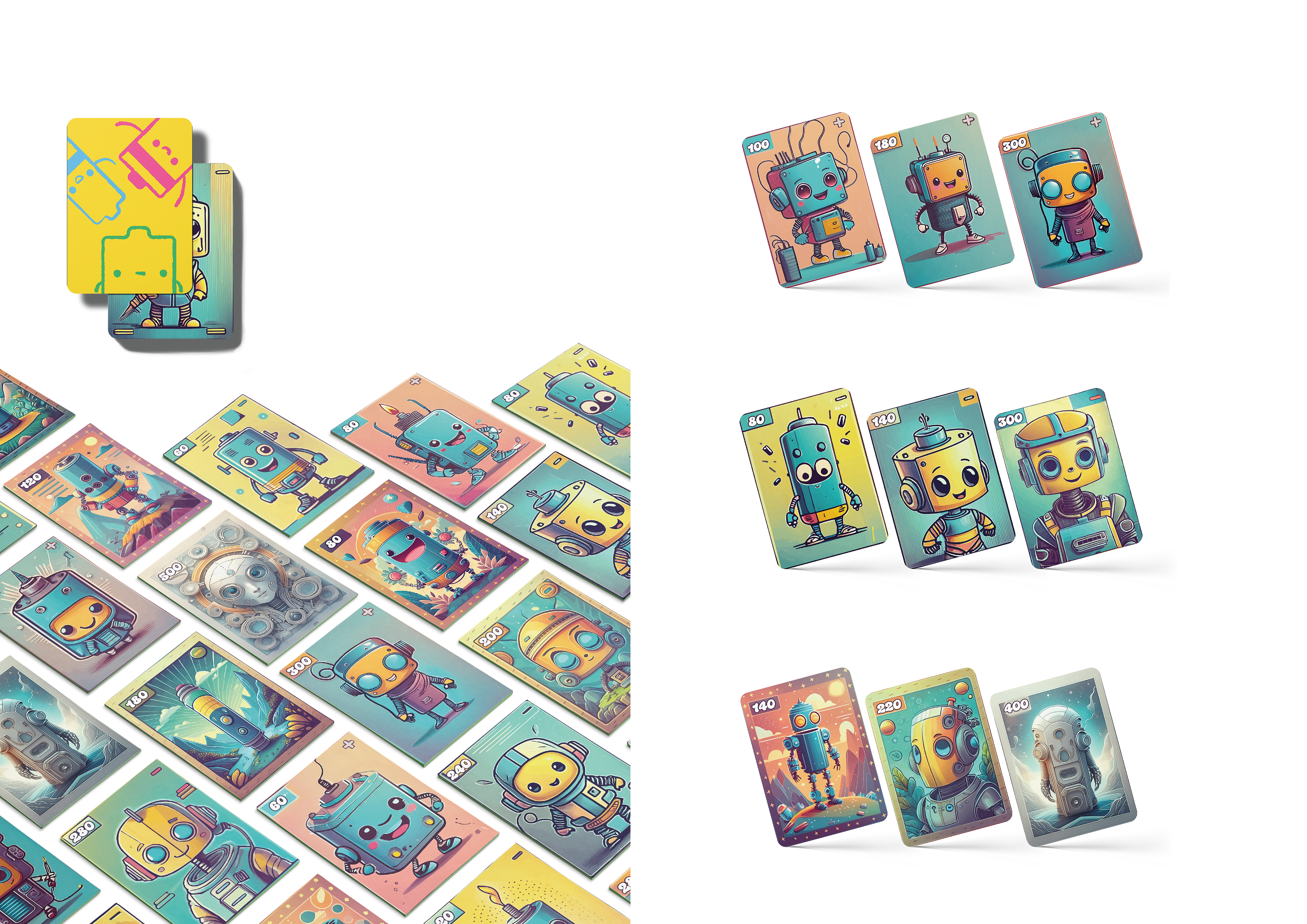
This project explored the integration between gamification and environmental education, by developing a reward system. The machine holds 3 main types of rewards, including an interactive game, game cards and educational value, as well as indirectly visual/tactical rewards.The final prototype incorporated a user-friendly interface where children could deposit their used batteries to start the game. Upon depositing a battery, the machine would activate, allowing the child to play a simple yet engaging game to win a prize. The prize consisted of collectible playing cards featuring cute, battery characters, which served as an incentive. Here is a breakdown on the machine principles, through the journey of an astronaut.
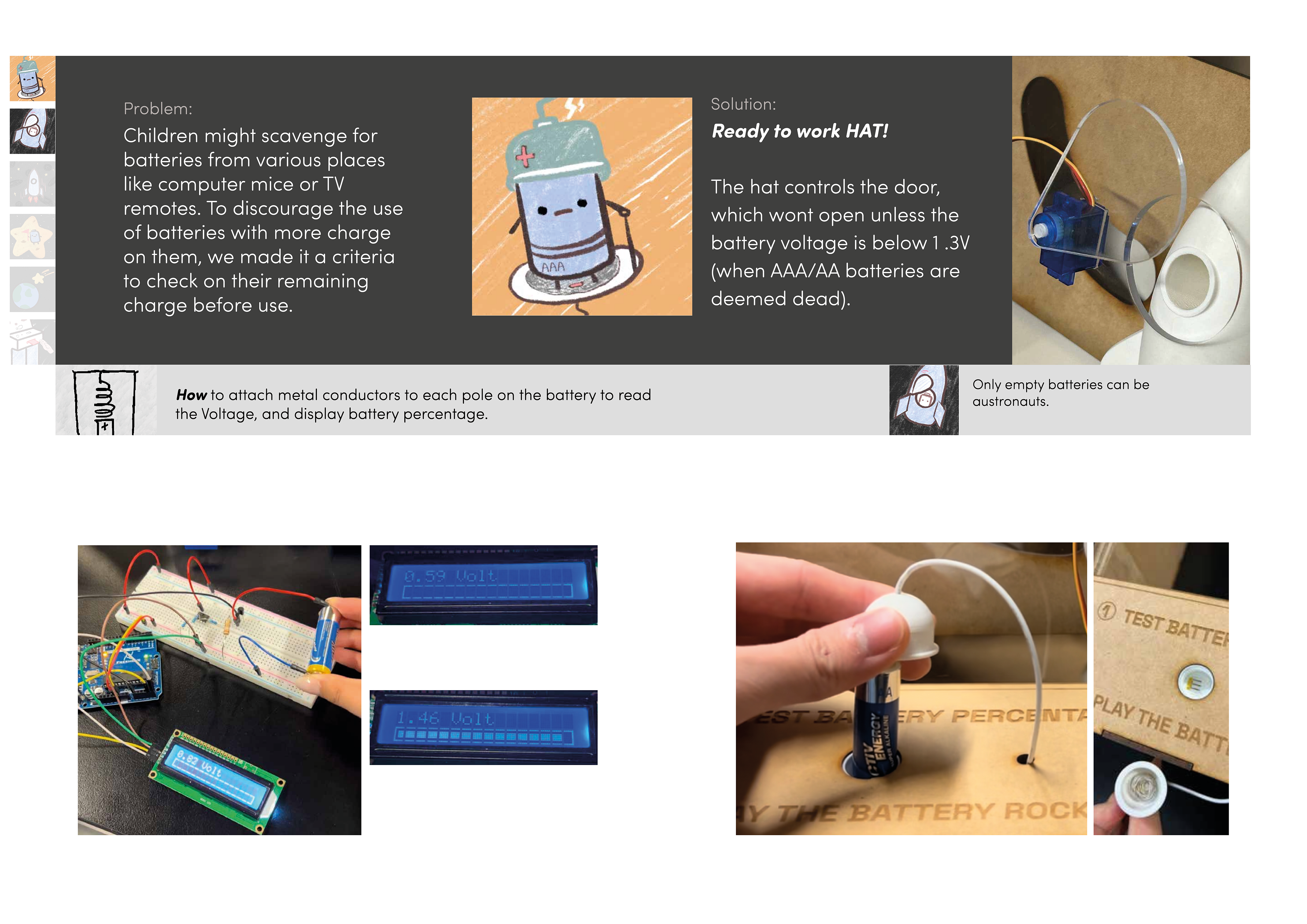
Educational Value
Interactive Game
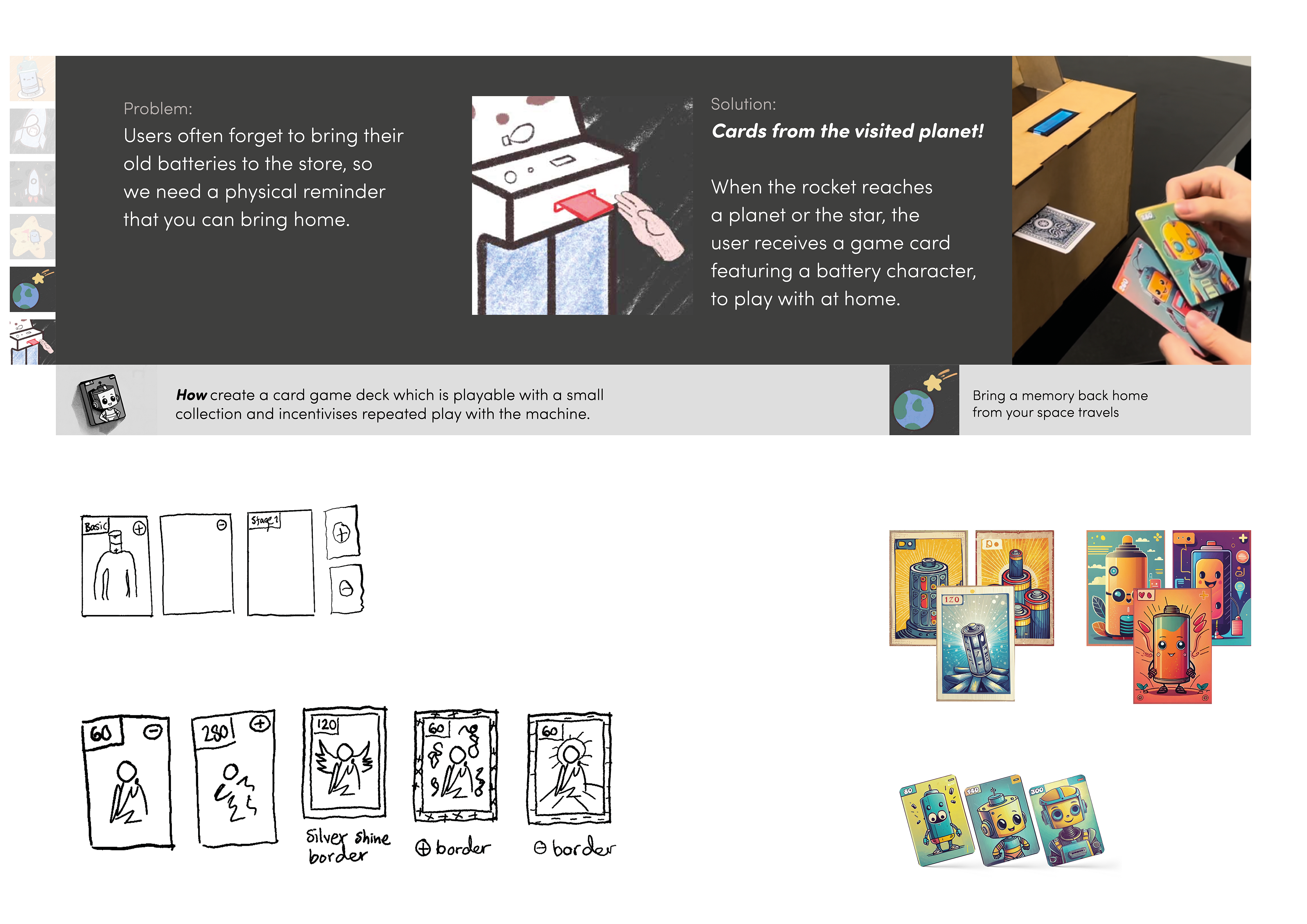
Game cards
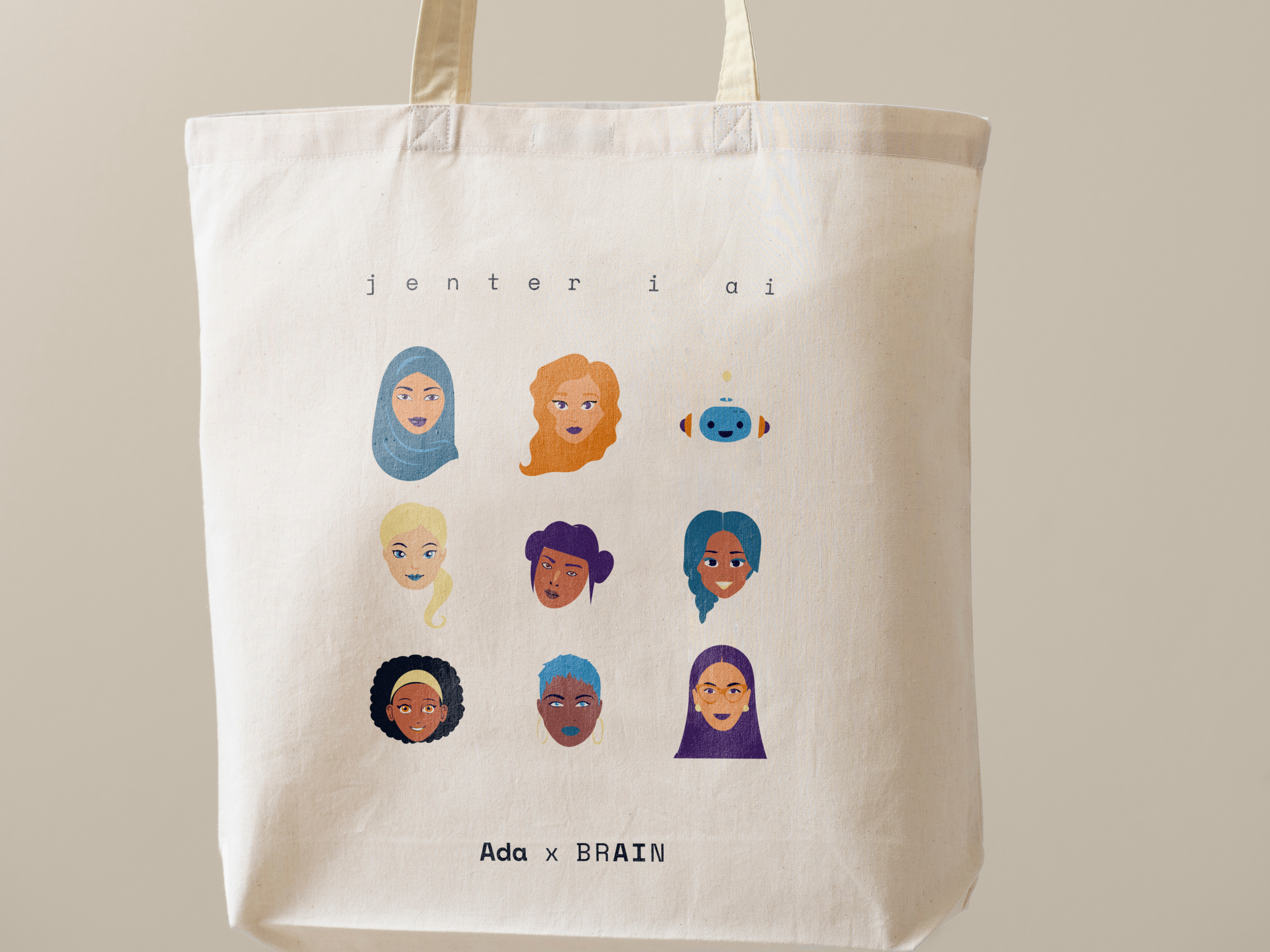
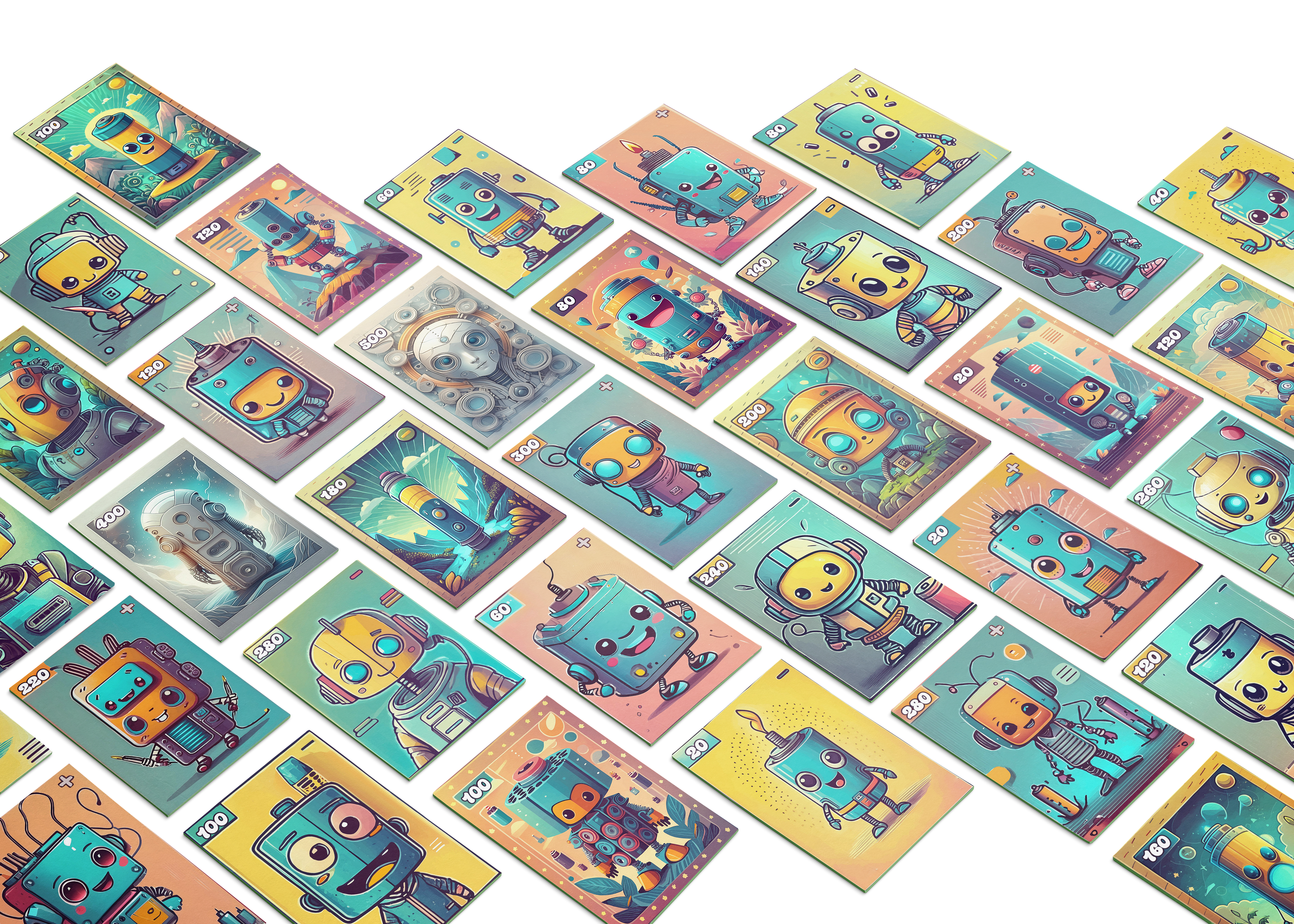
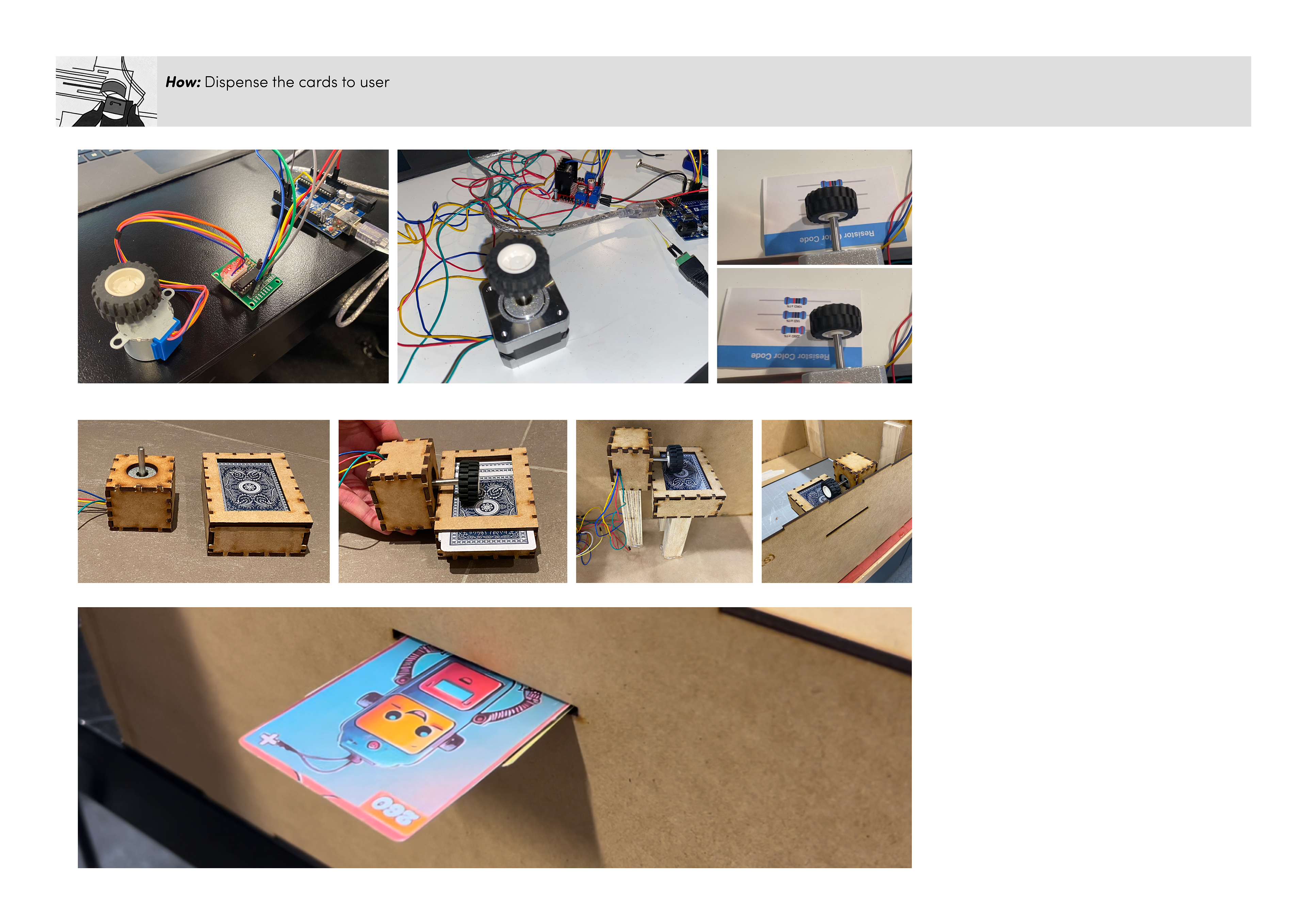
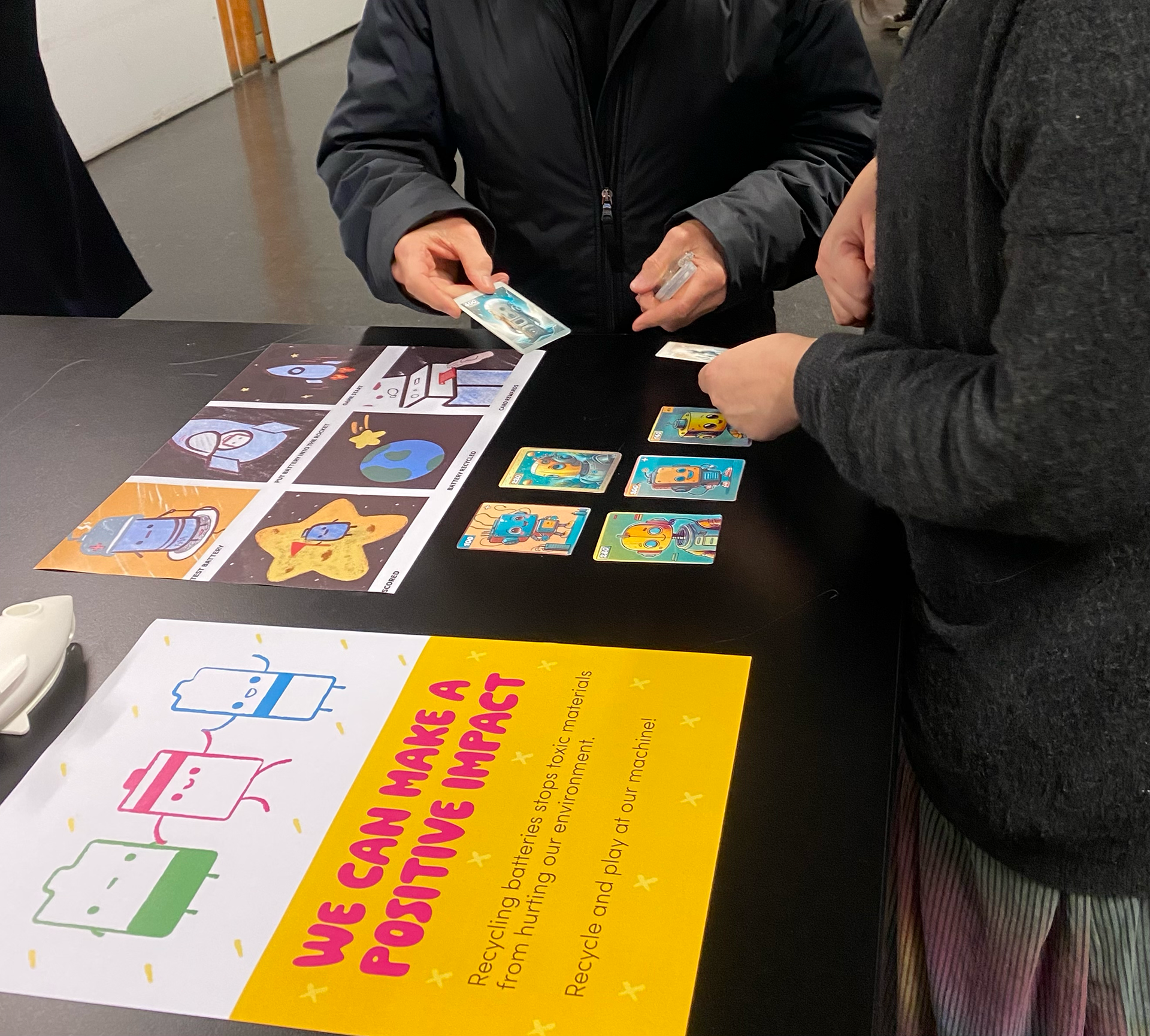
Illustrated game cards are provided as a direct reward for recycling and playing the game, however it also acts as a reminder for future use of the machine. The motivation to collect new cards to their collection, could serve as a sufficient prompt. Since the user would accumulate their stack over time, the game cards would need to be playable with just a few cards. This guided the card design to be simple and flexible. A card dispenser made with a stepper motor and a lego wheel was installed with laser-cut encasings on the lower end of the prototype to provide to the user.
Cardplay Testing
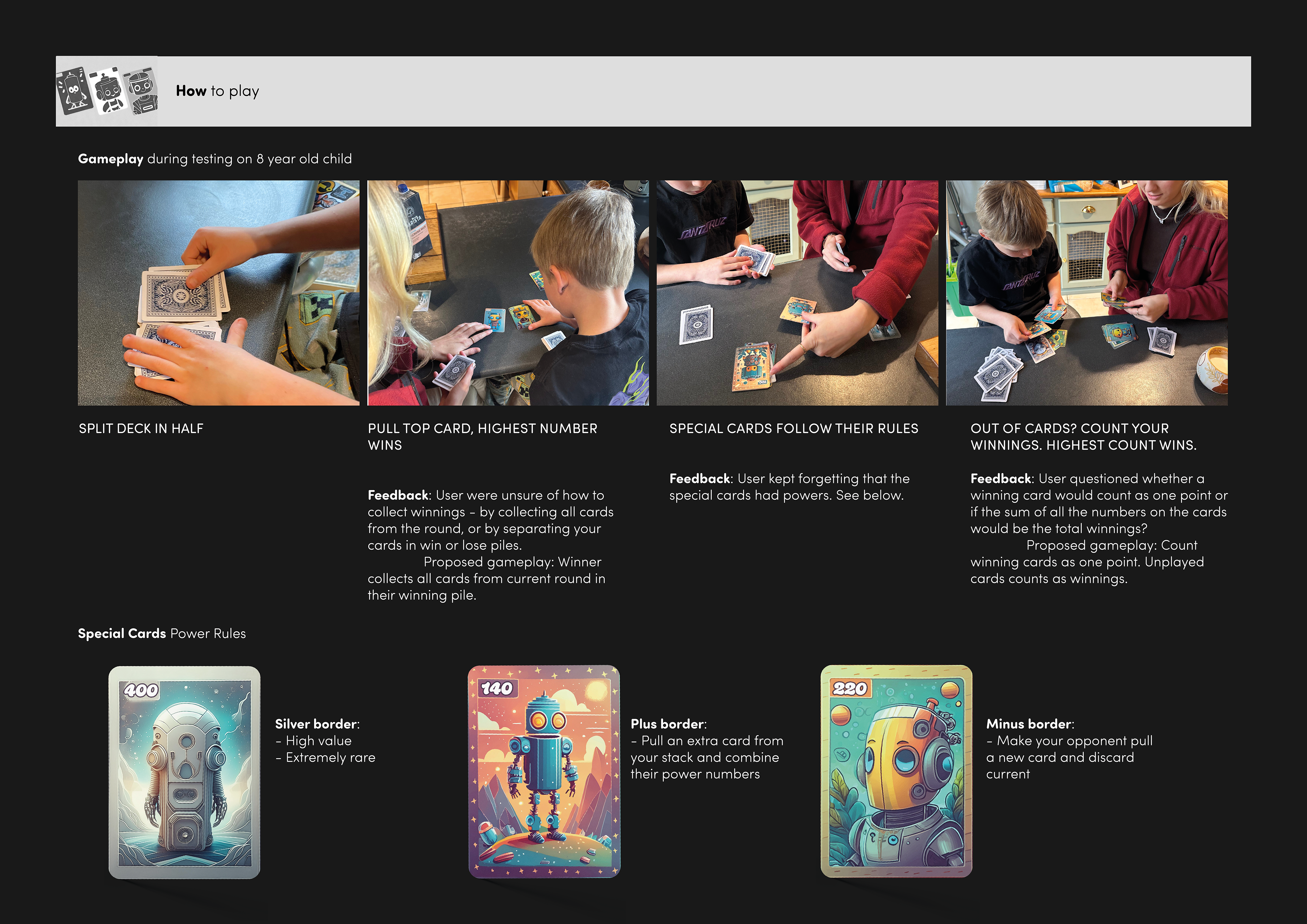
To identify potential logic flaws and areas of non-intuitive design, the game cards were tested with an eight-year-old user. The participant was encouraged to interact with the cards freely and develop their own gameplay based on the provided playing cards.
During testing, several usability issues emerged, such as overlooking the three sets of special cards, and therefore missing out on their unique game. This suggests that the proposed use of borders may not be prominent enough to be distinguished from the rest of the cards. Additionally, uncertainties arose around core game mechanics, particularly in relation to how winning cards should be managed between rounds and how scores are calculated.
These challenges could be addressed through the introduction of a clear set of game rules or guidelines. However, given the importance of creativity in children’s play, such guidance should be positioned as a proposed starting point instead of concrete rules, allowing users to adapt and reinterpret the game according to their own ideas.
final outcome
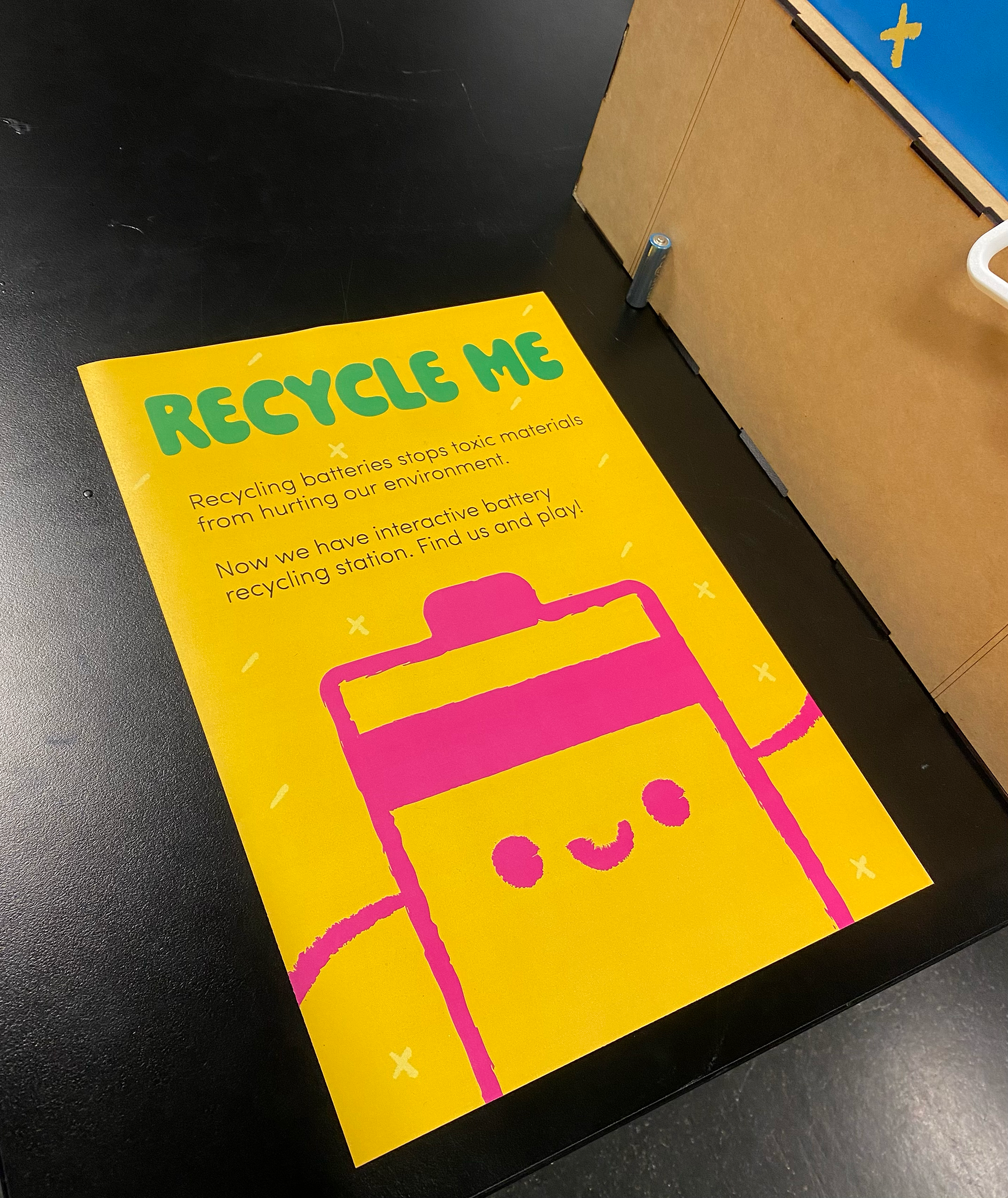
Photos from the exhibition at RMIT University Melbourne City Campus.
Reflection
The project successfully demonstrated that gamification and reward-based systems can significantly enhance engagement in recycling activities. Feedback from trials indicated a high level of enthusiasm, from all ages, suggesting the potential for broader implementation than purely for children. All ages like fun!
By merging gameplay with environmental education, this project highlighted the effectiveness of interactive, reward-based systems in promoting sustainable behavior among children. The recycling machine serves as a model for future initiatives aimed at integrating fun and learning in environmental causes.