SUMMARY
This project involved writing a scientific review article on a chosen subject, where I wanted to look into tools for managing time and plans for individuals with ADHD. The research findings then culminated into this project where I designed a tool which would teach users to strengthen their memory and prioritisation skills, through the use of a smart calendar mirror.
process
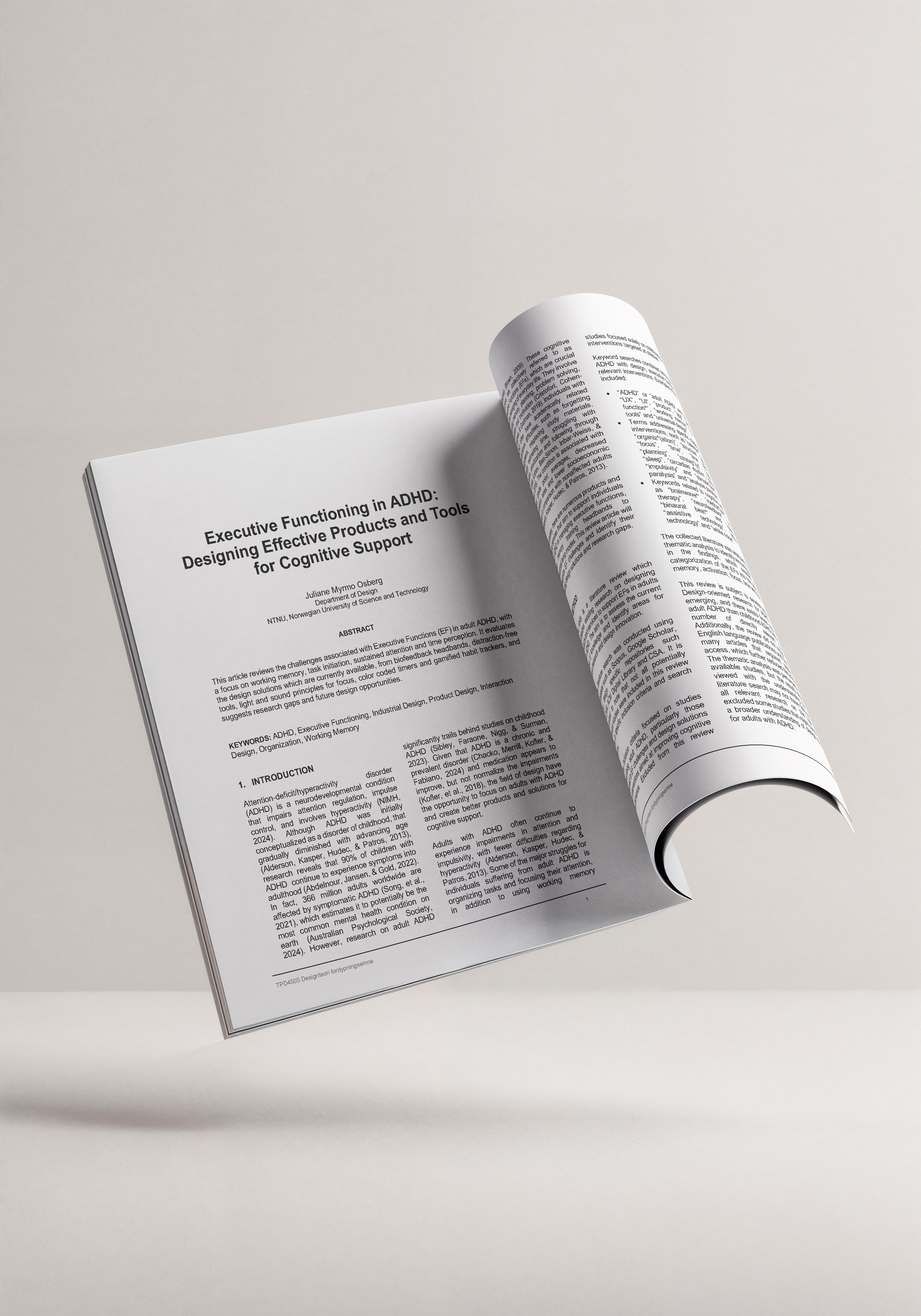
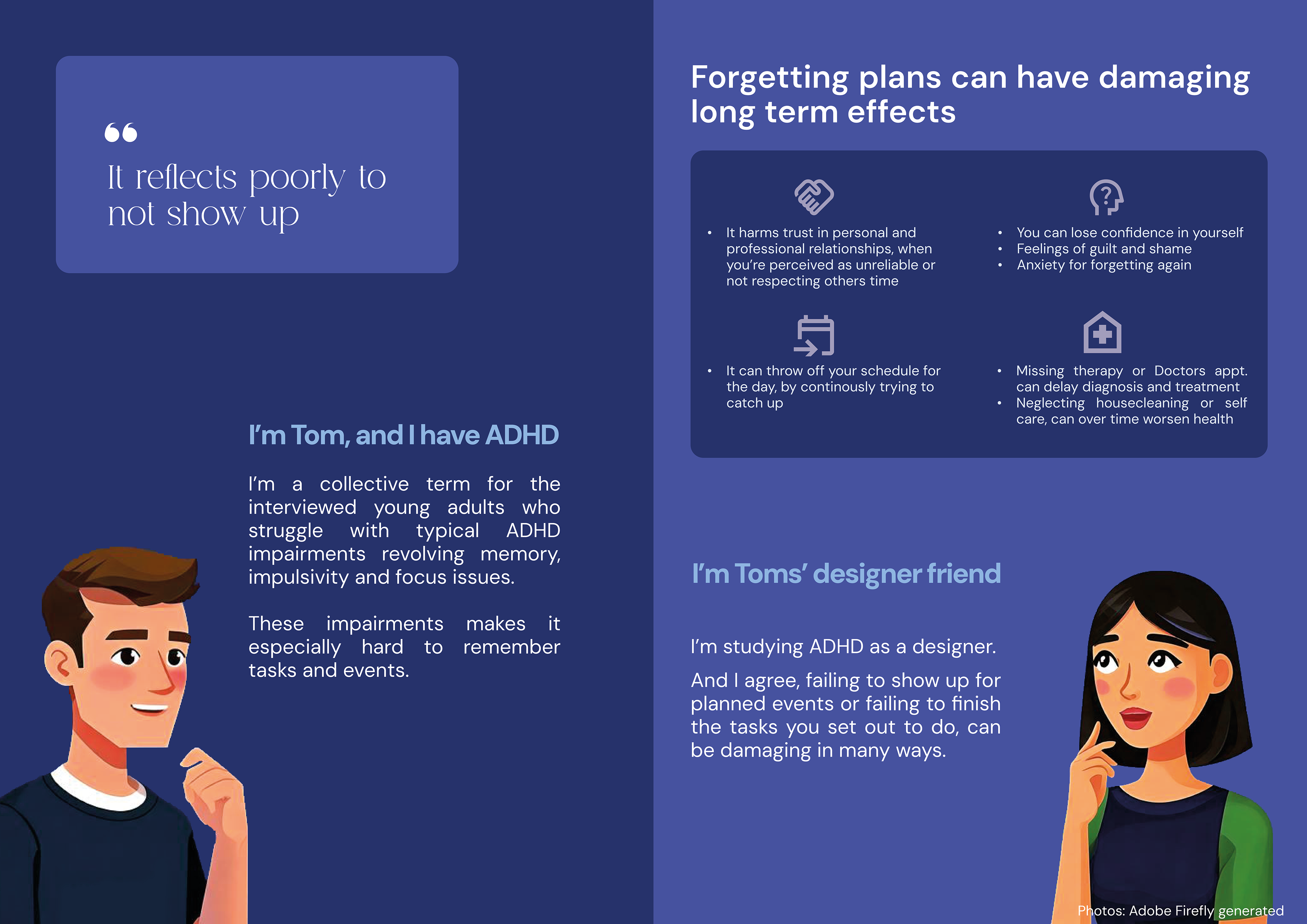
This project originated from writing a scientific review article, establishing a strong research foundation that guided subsequent design decisions. In this article, I explored executive functioning (EF) challenges in adults with ADHD, with a particular focus on working memory, task initiation, sustained attention, and time perception.
I critically evaluated existing design solutions, including biofeedback headbands, distraction-free tools, light and sound-based focus aids, colour-coded timers, and gamified habit trackers. Through this analysis, I identified key limitations and research gaps, highlighting opportunities for more integrated, user-centred design interventions. These insights directly informed the direction of the mirror concept, grounding the project in both scientific understanding and real user needs.
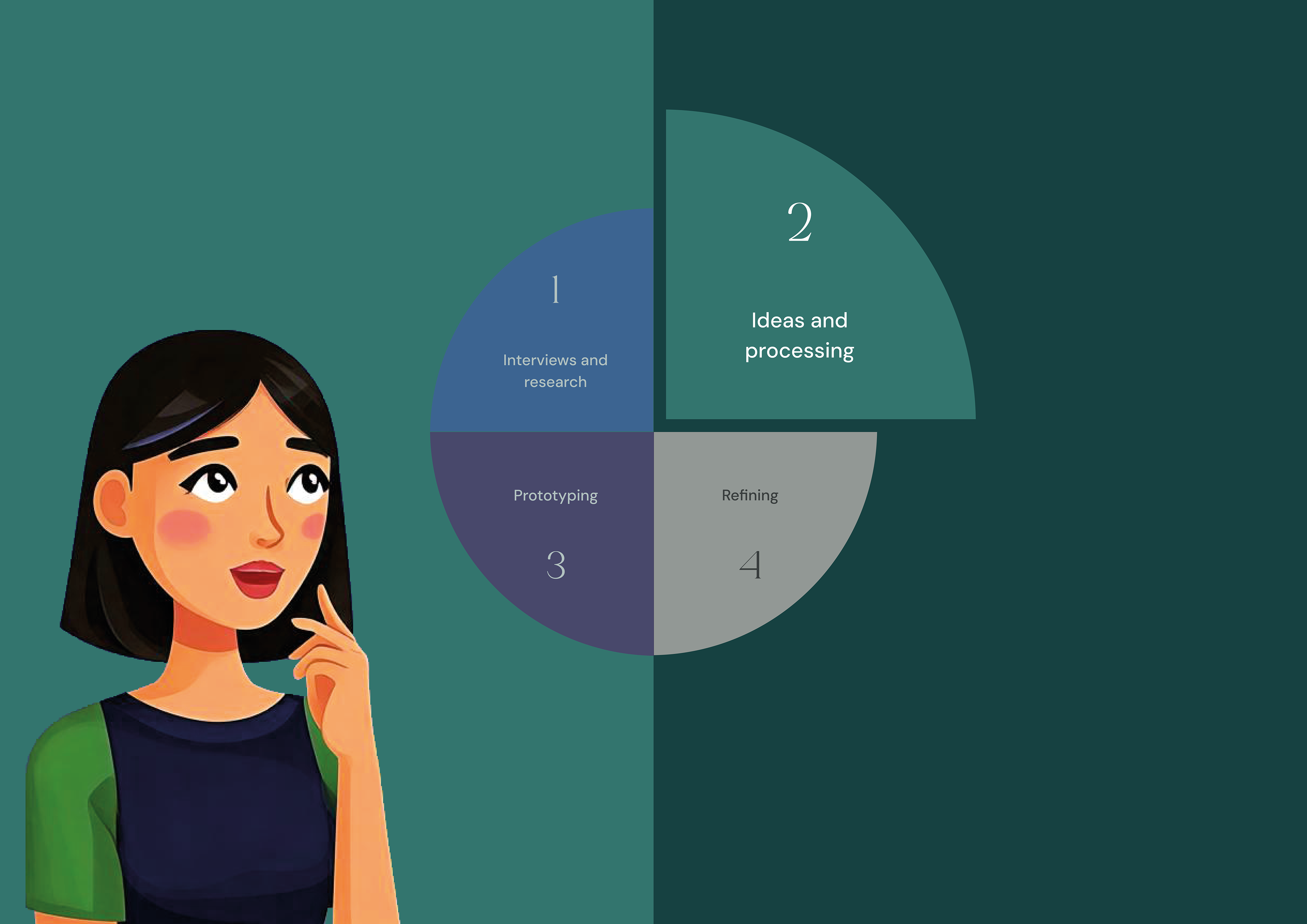
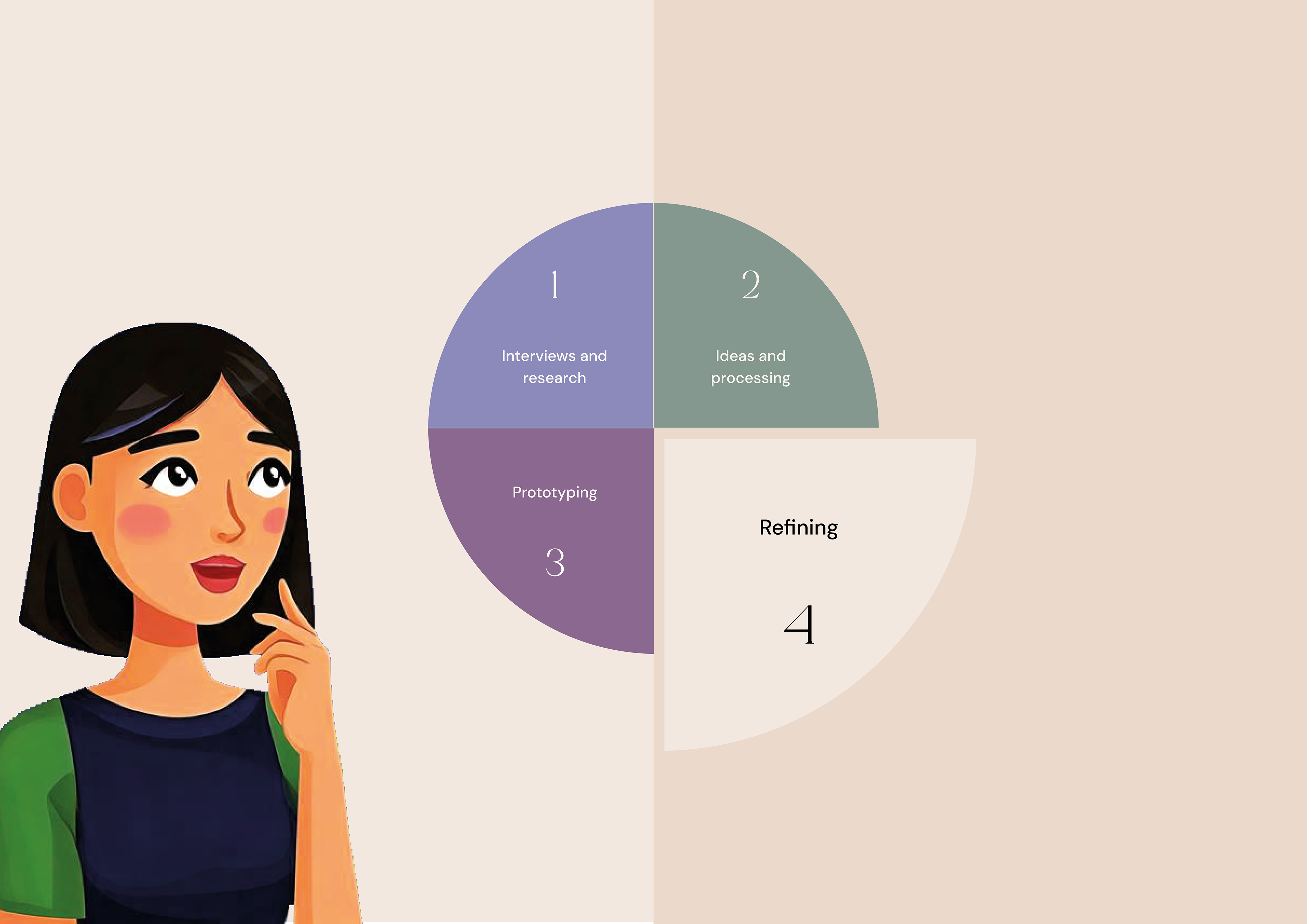
The article can be provided upon request. The following sections outline the project across four key phases.
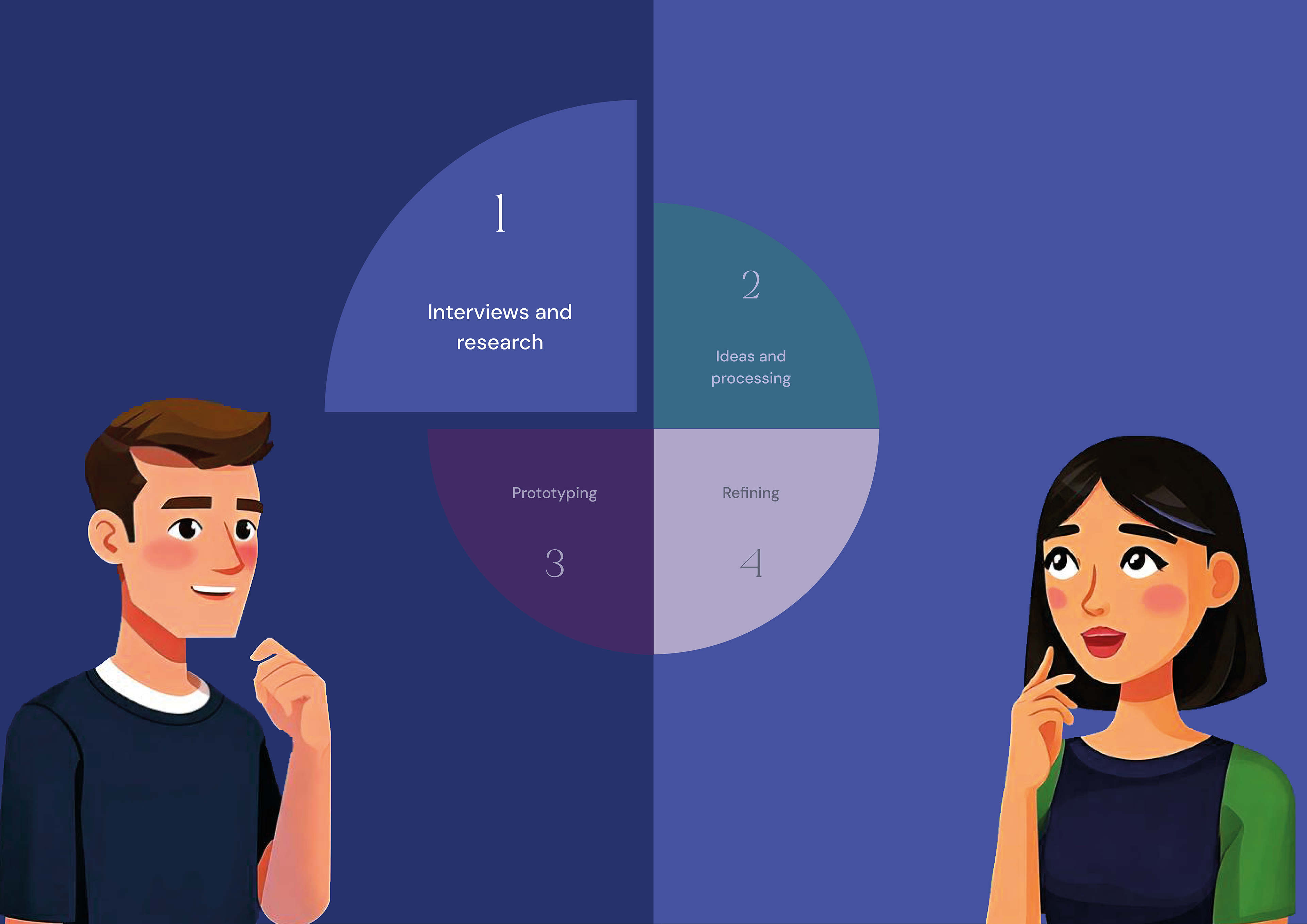
Part 1: Interviews and Research
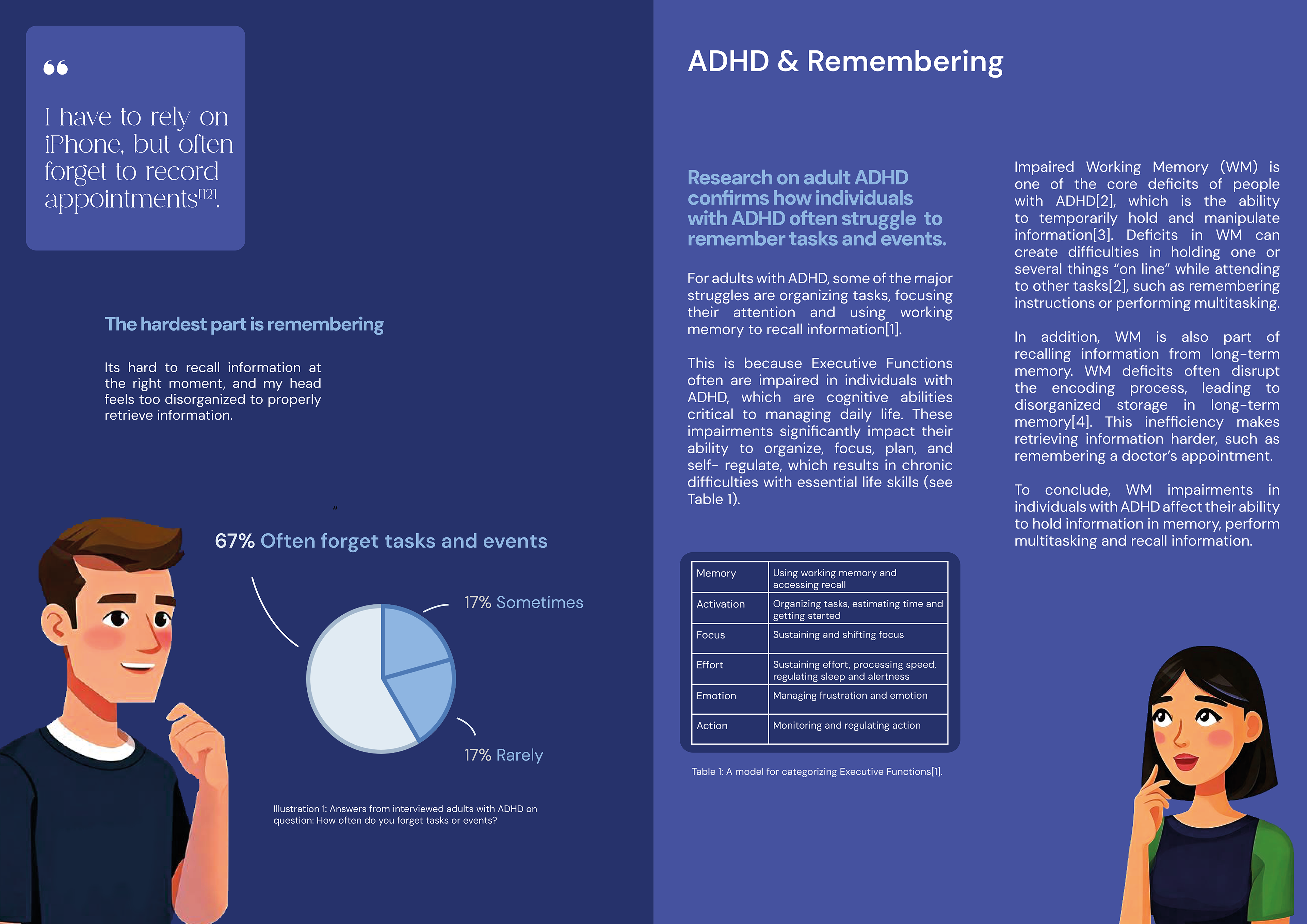
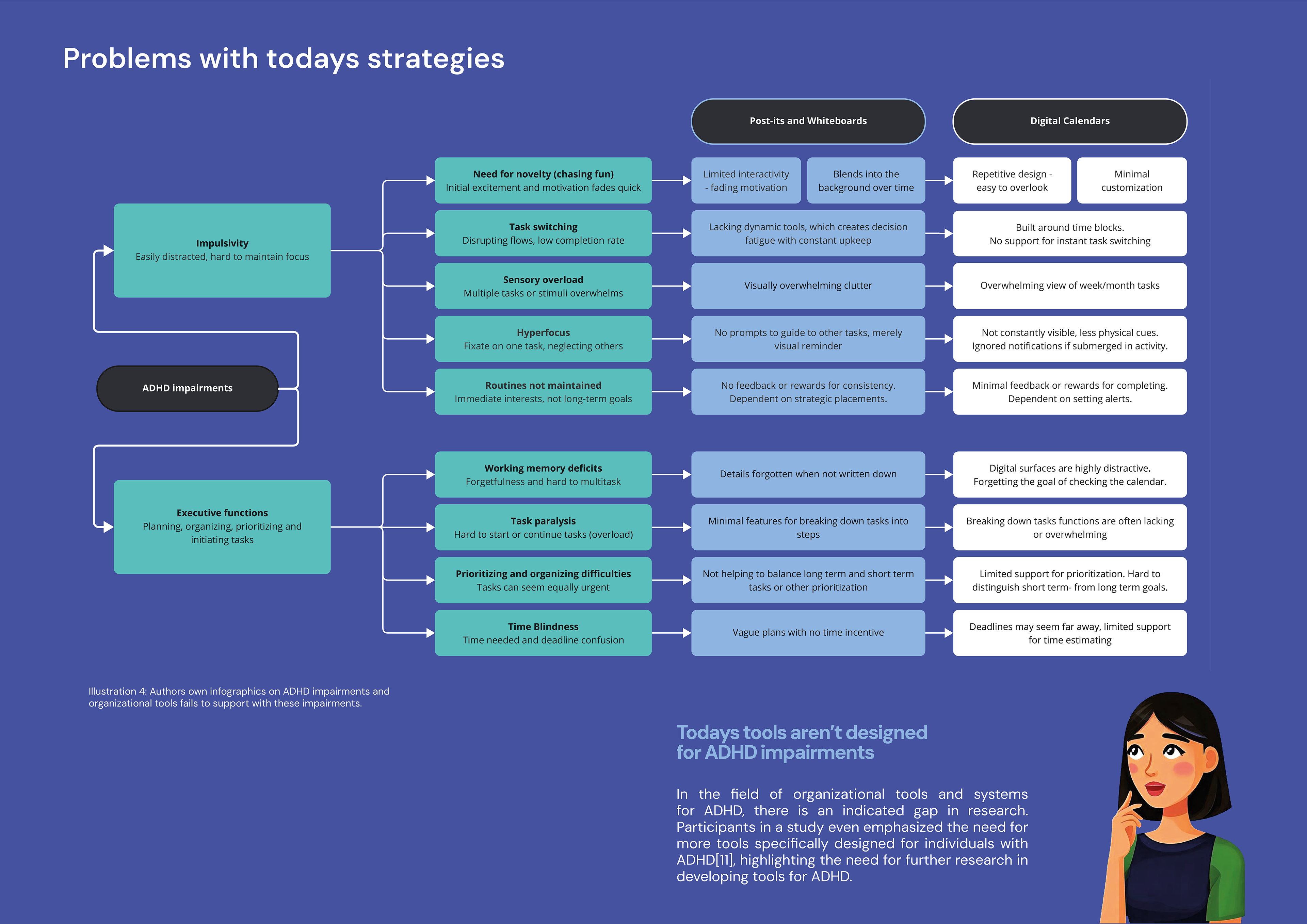
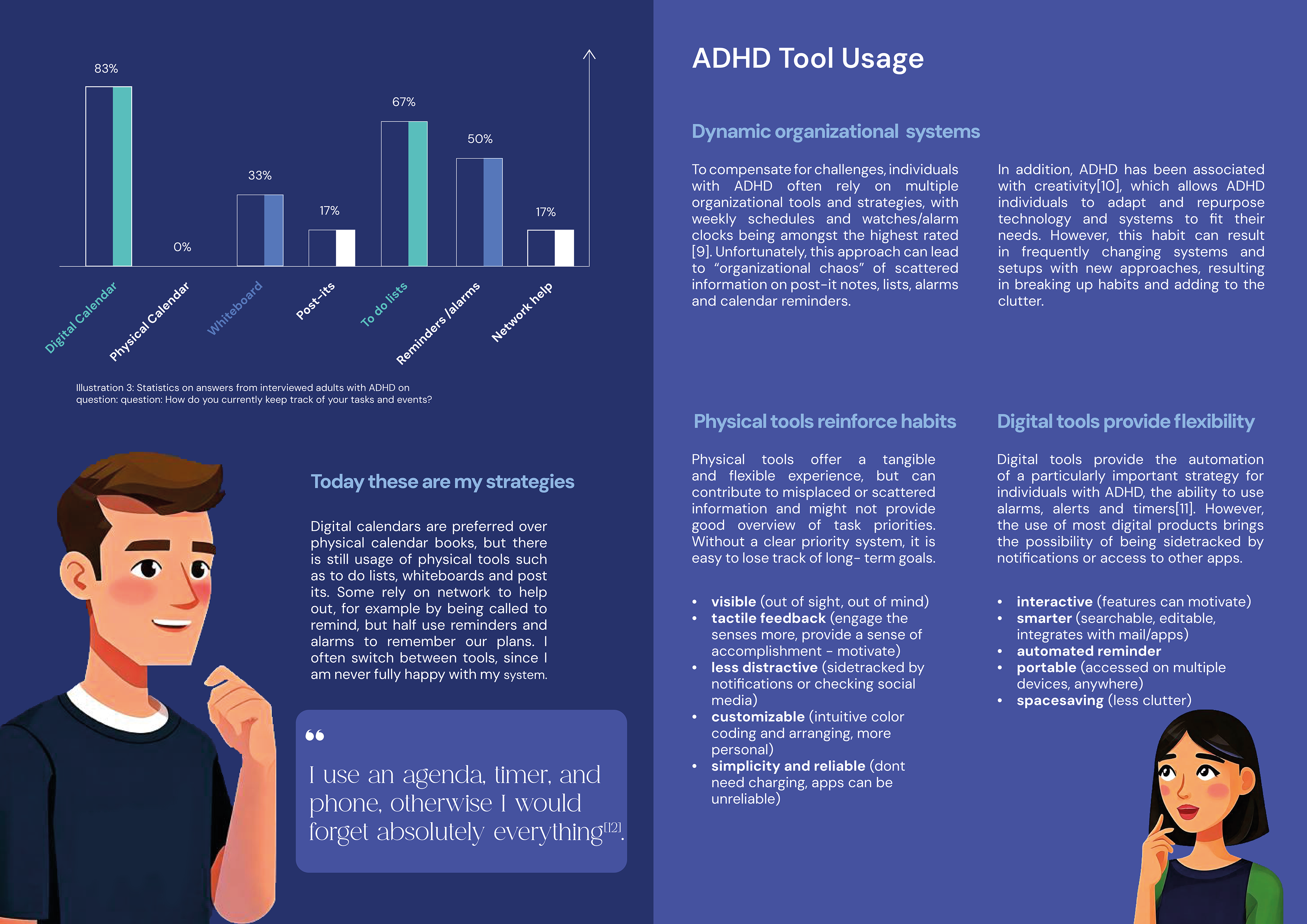
During the research phase, the project collected information on Executive Functioning for individuals with ADHD from interviews and scientific research. This entailed executive functions such as memory, activation, focus and action. With these functions in mind, the project analysed both physical and digital organisational tools and strategies.
Part 2: Concept Development
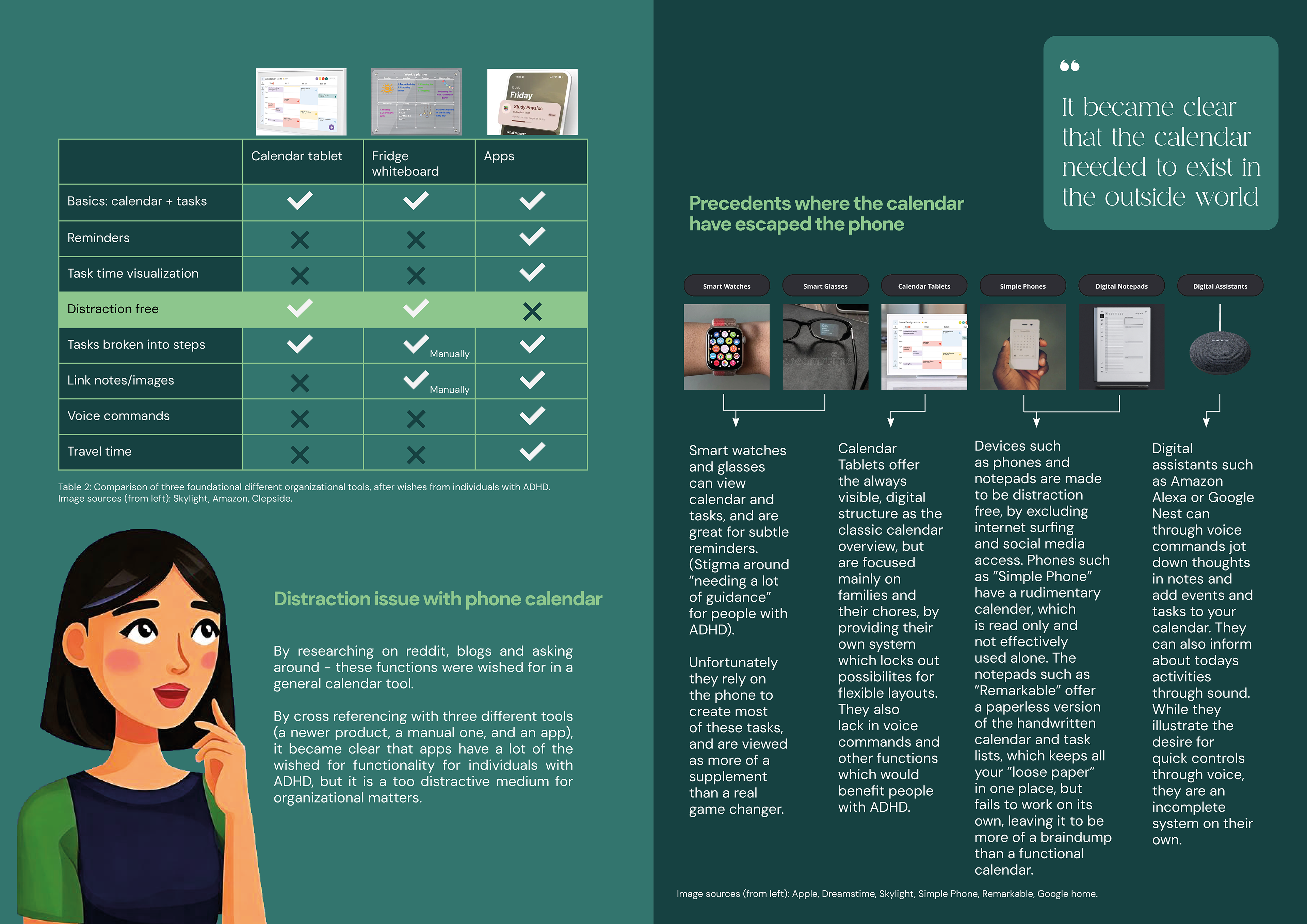
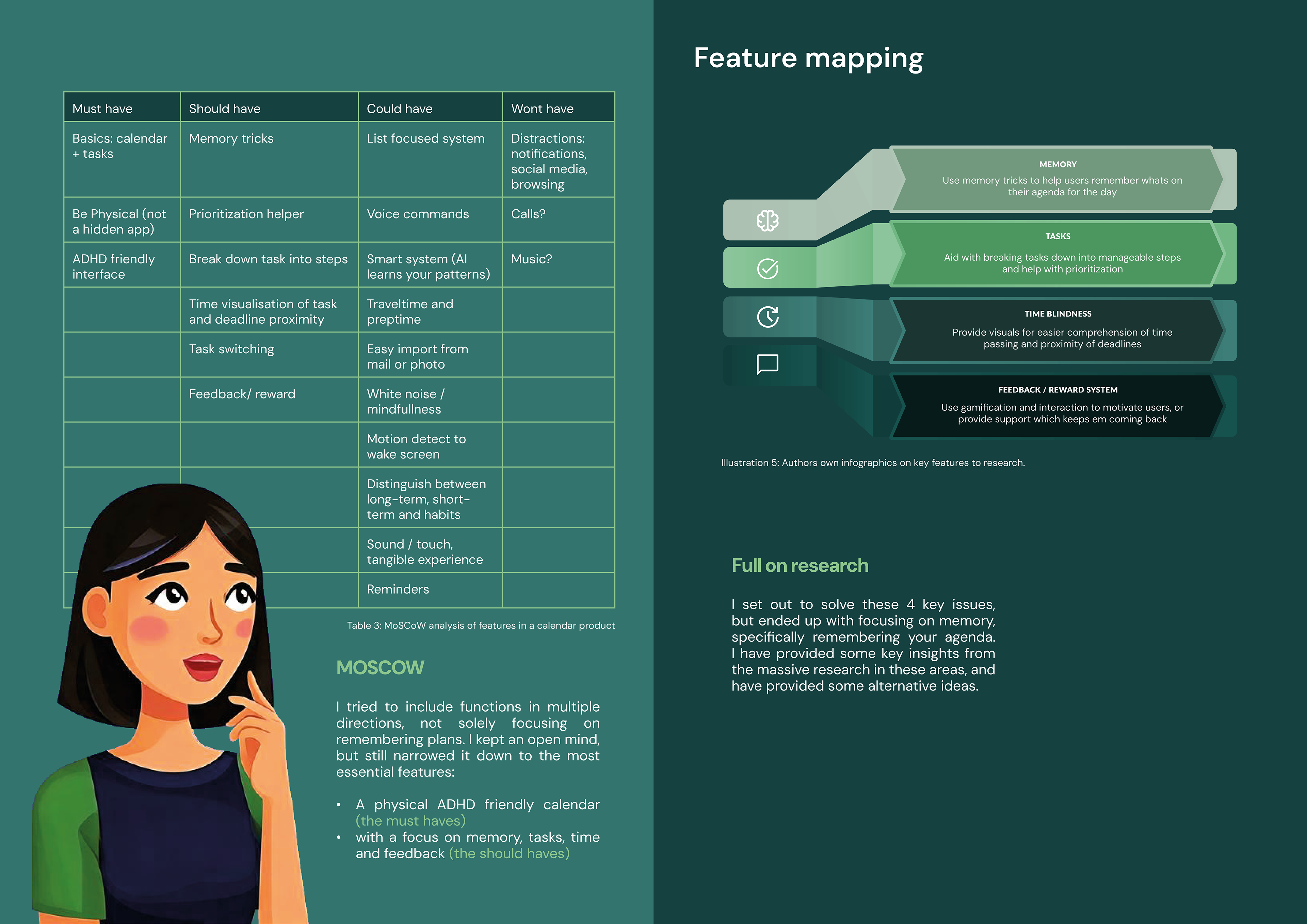
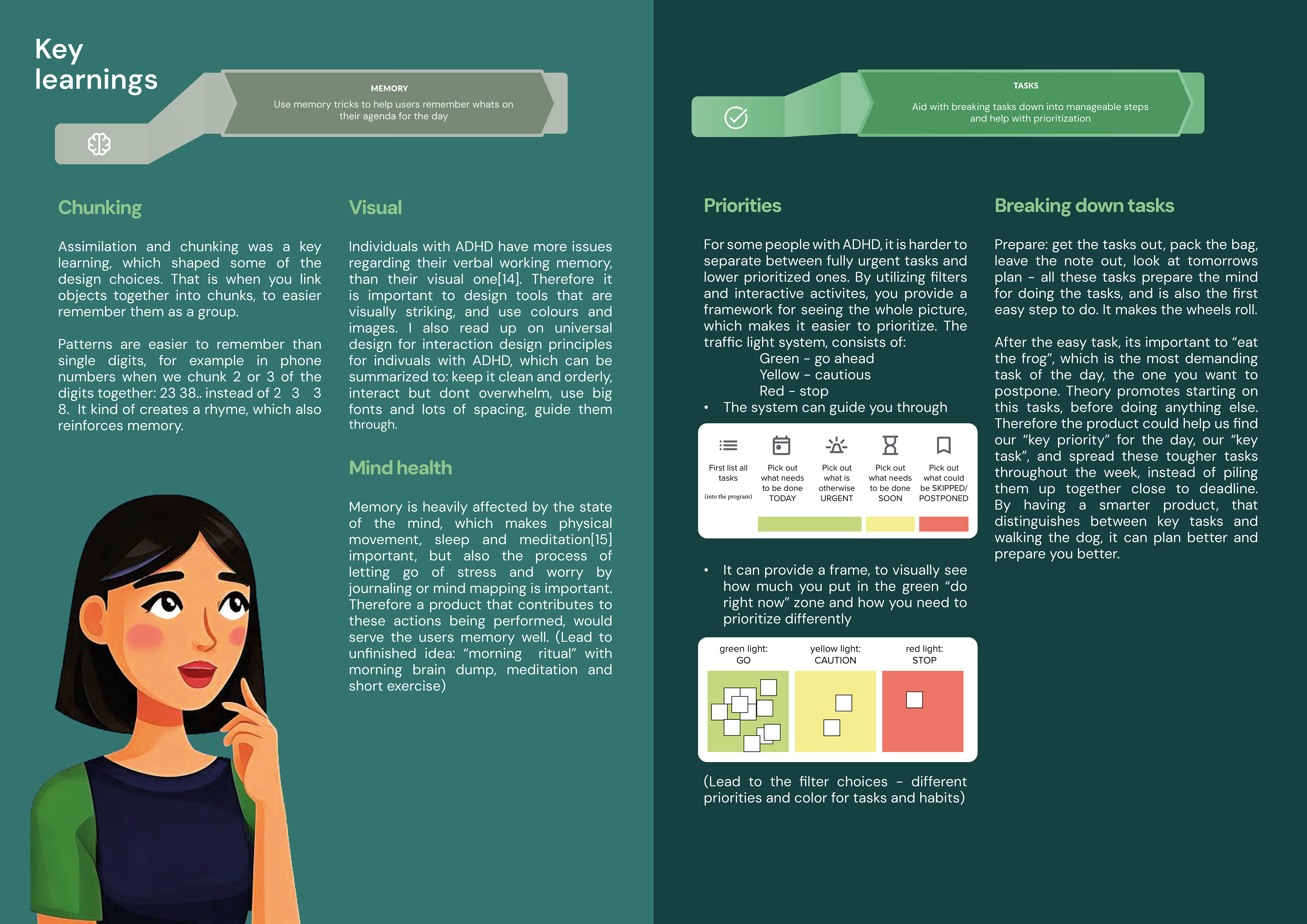
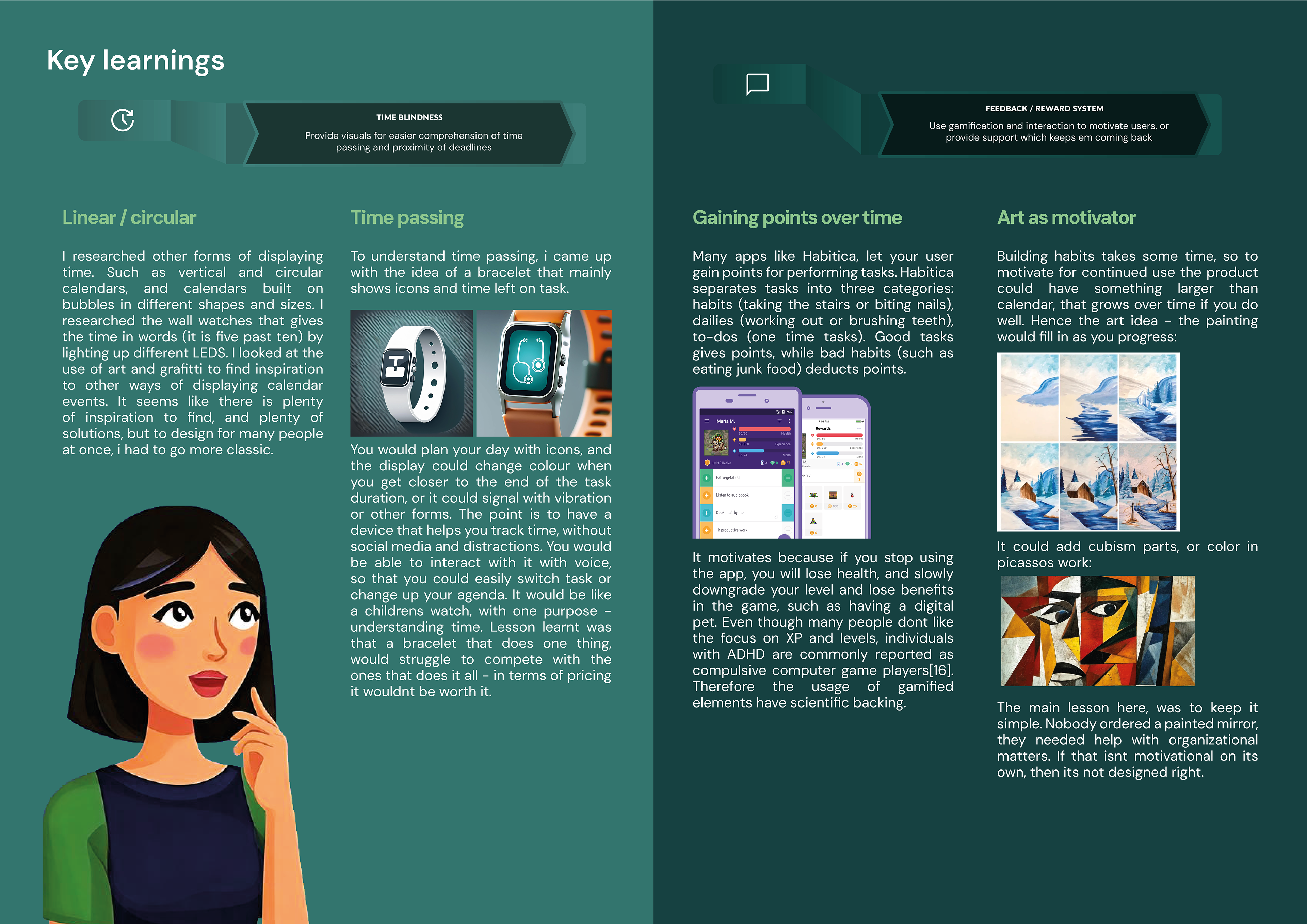
Building on research, the project analysed existing calendar types to identify practical organisational features, while recognising the phone itself as a key source of distraction. This led to exploring alternatives beyond the smartphone for more focused interaction. Using the MoSCoW method, four priorities were defined—memory training, task breakdown, reducing time blindness, and reward-based feedback—which guided a concise ideation phase and established the project’s design direction.
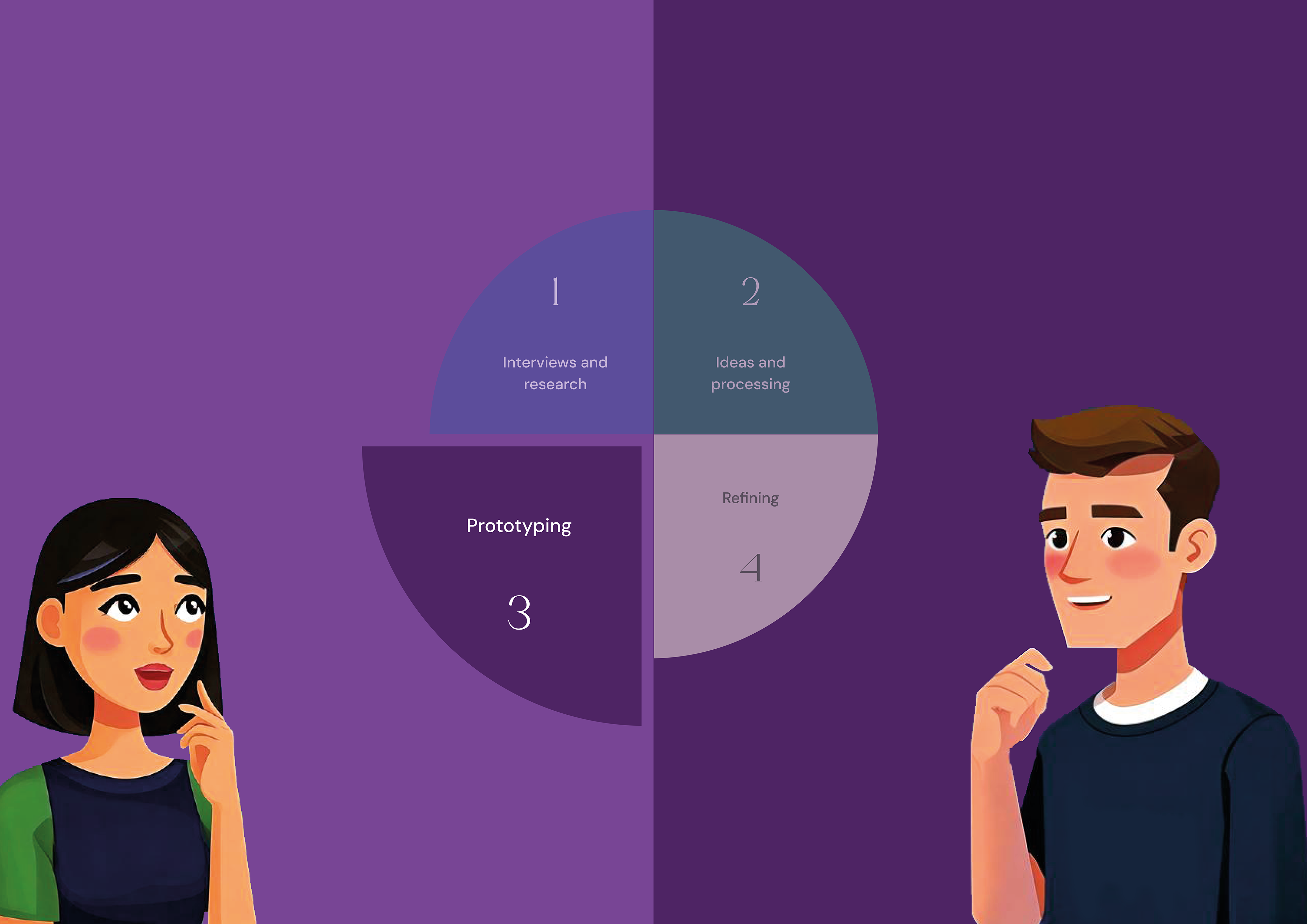
Part 3: Prototyping
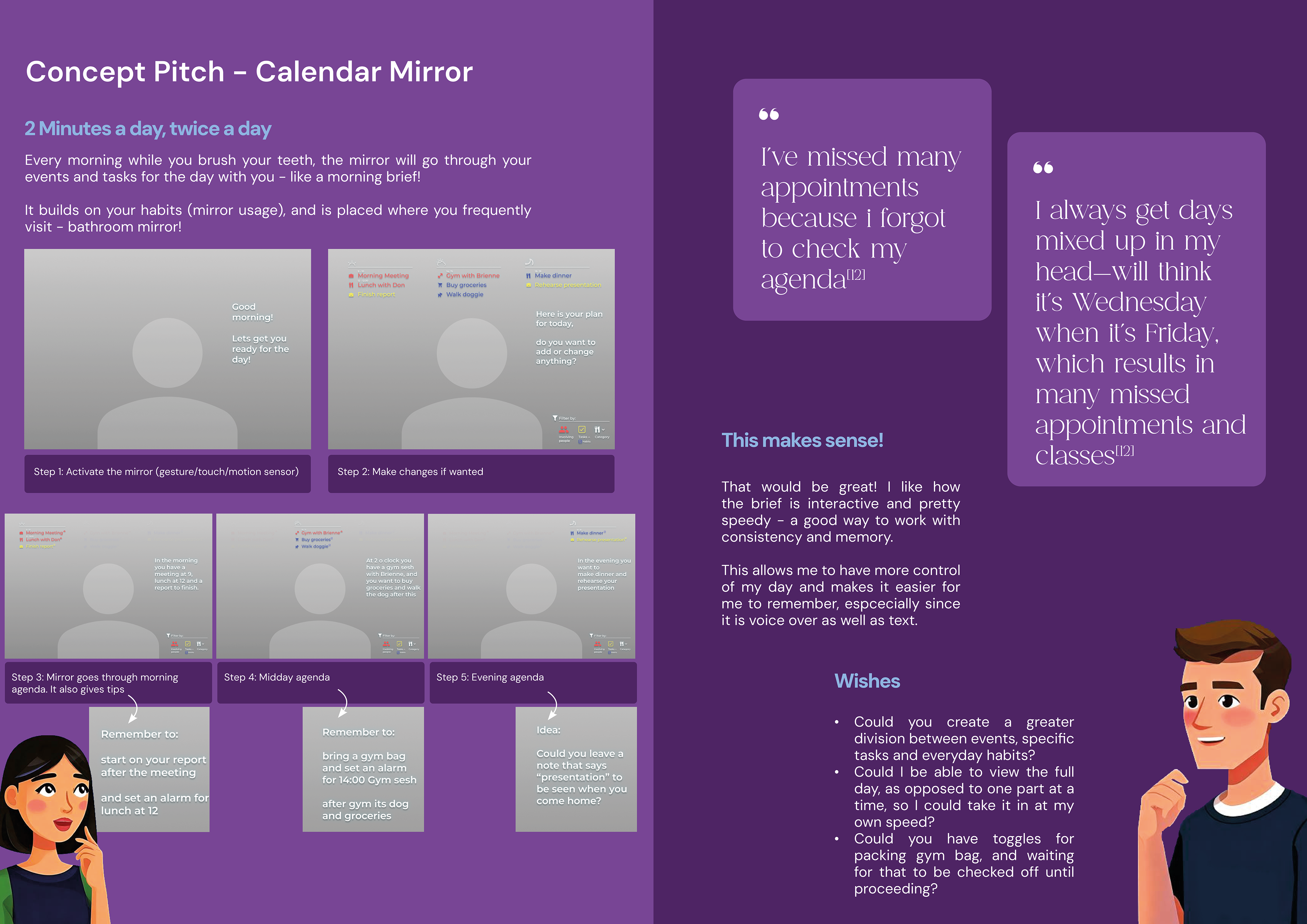
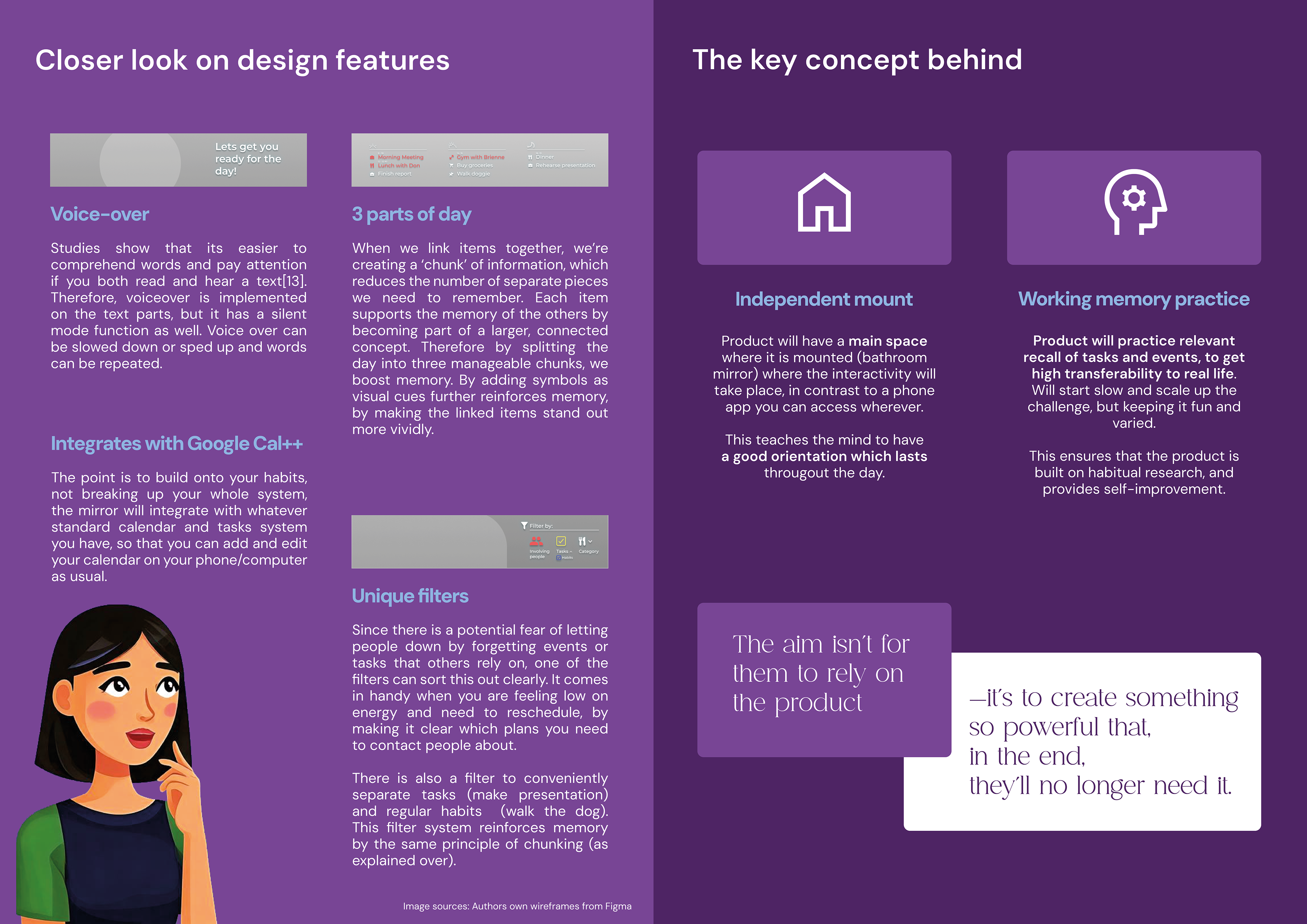
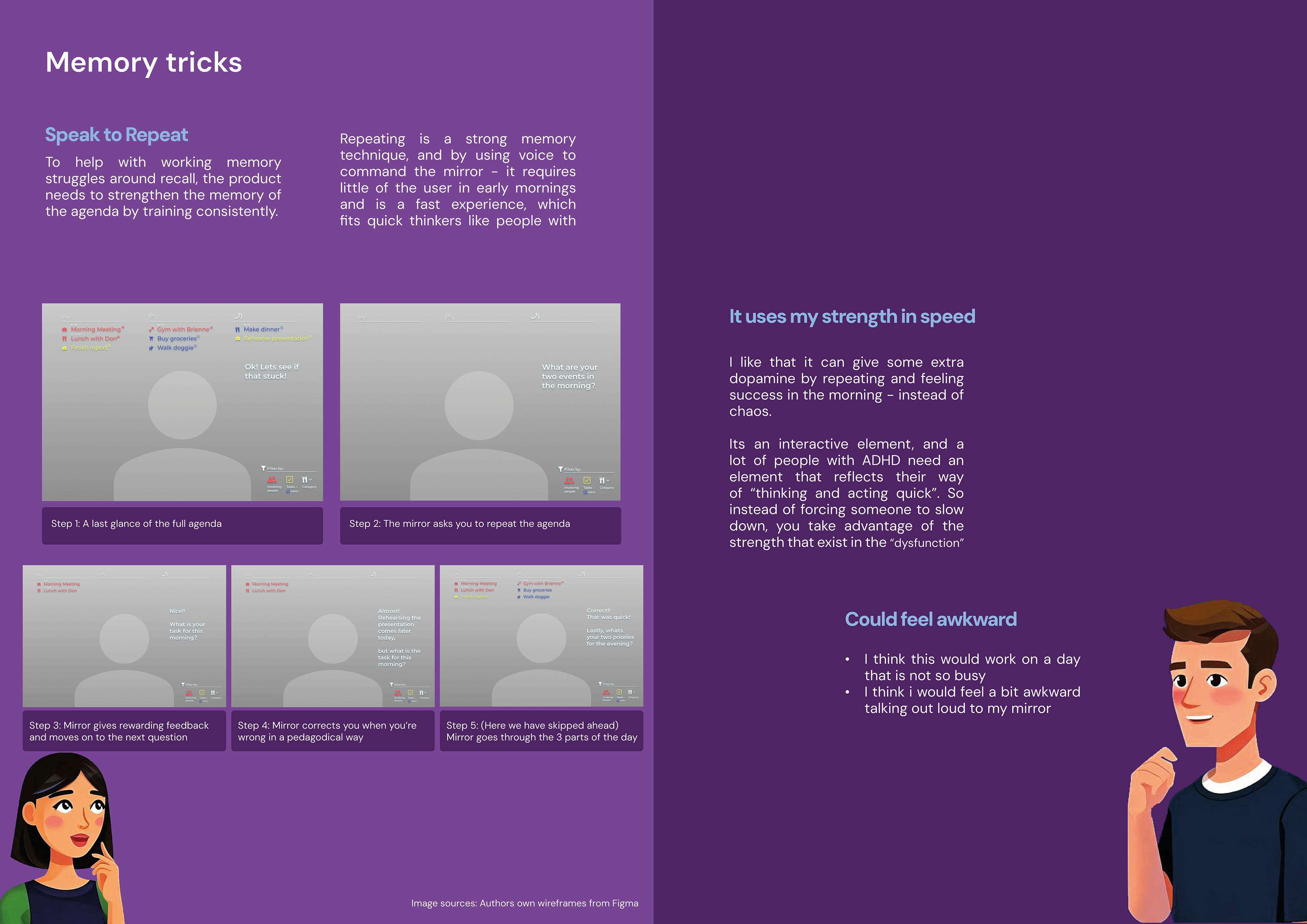
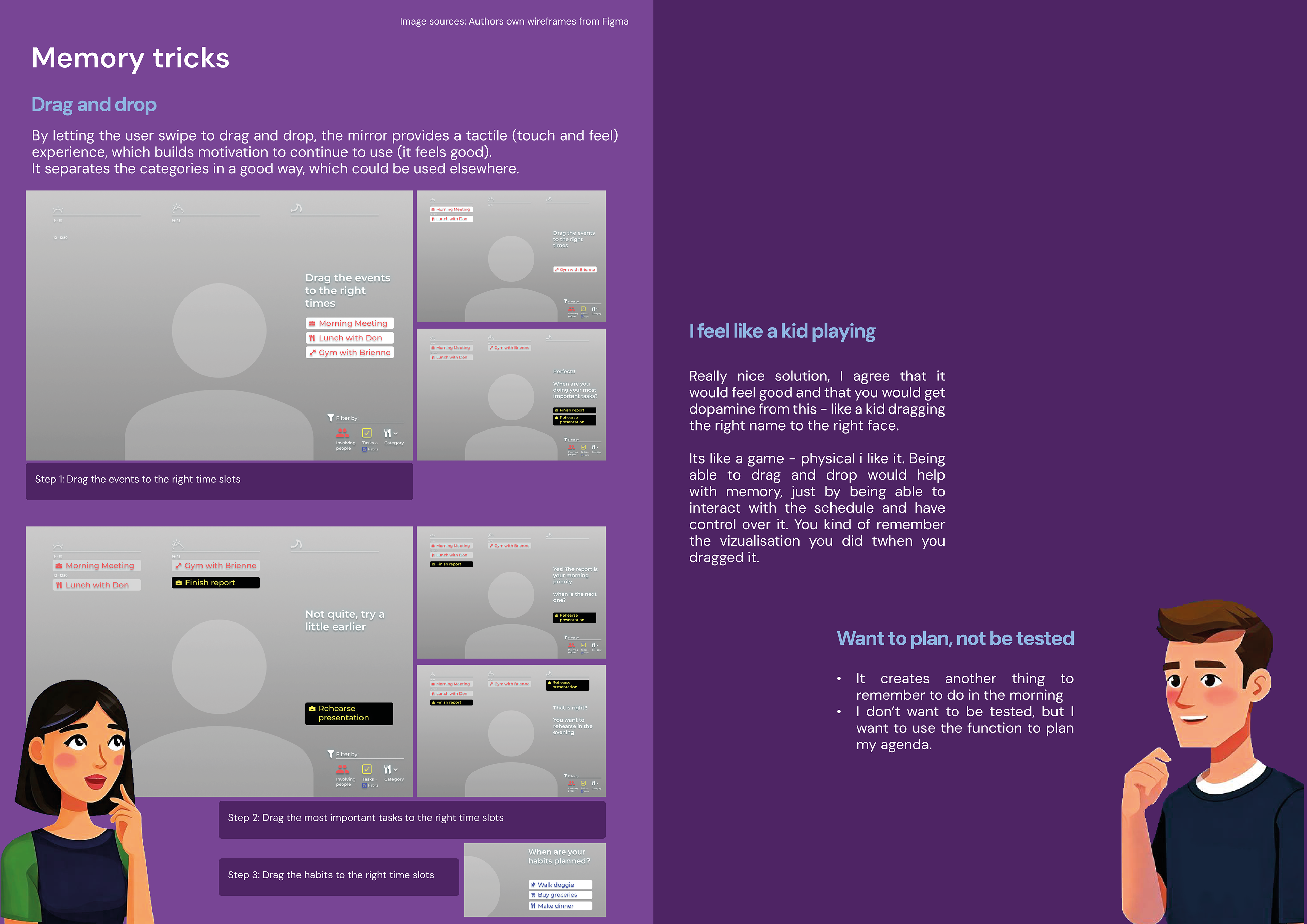
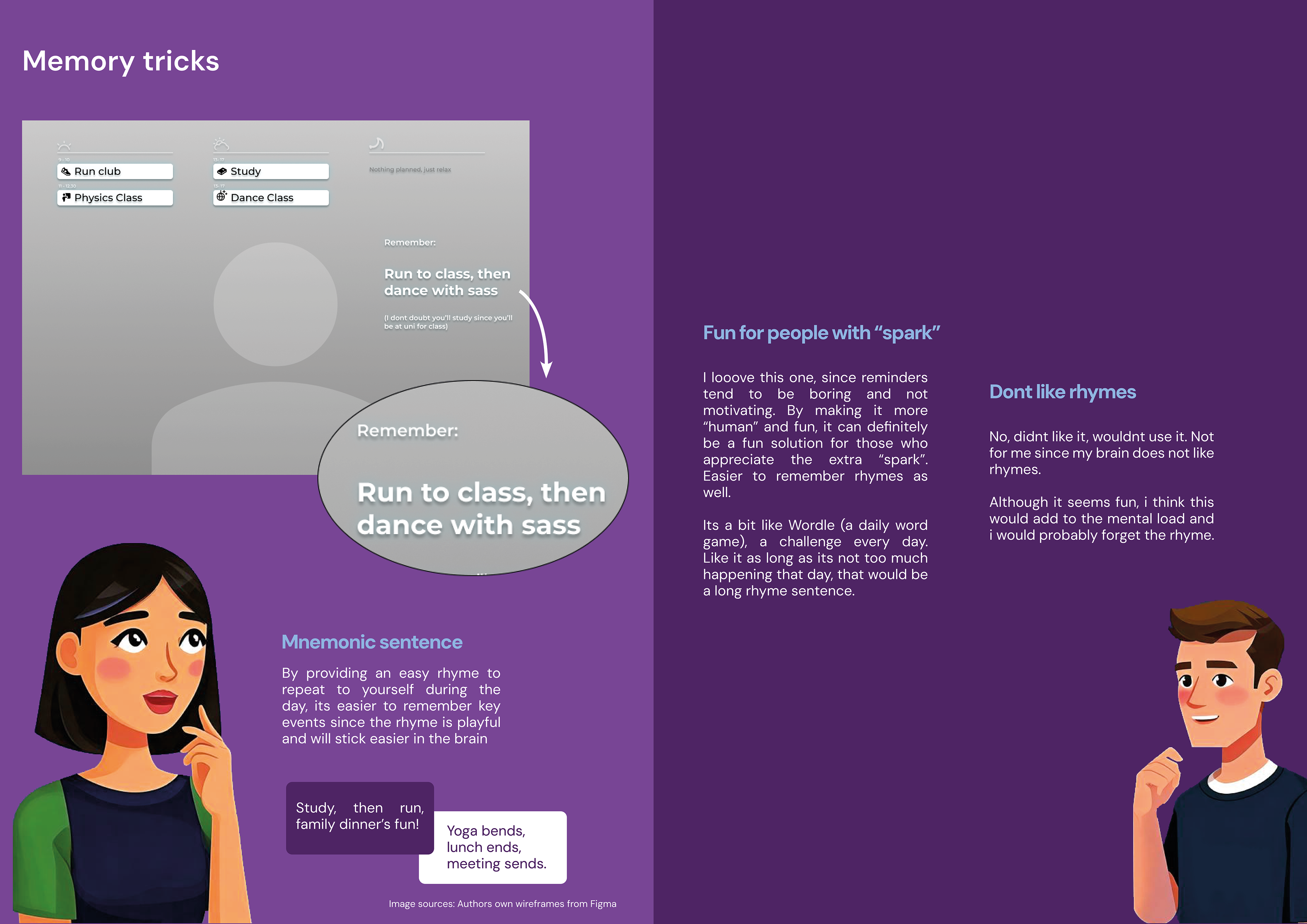
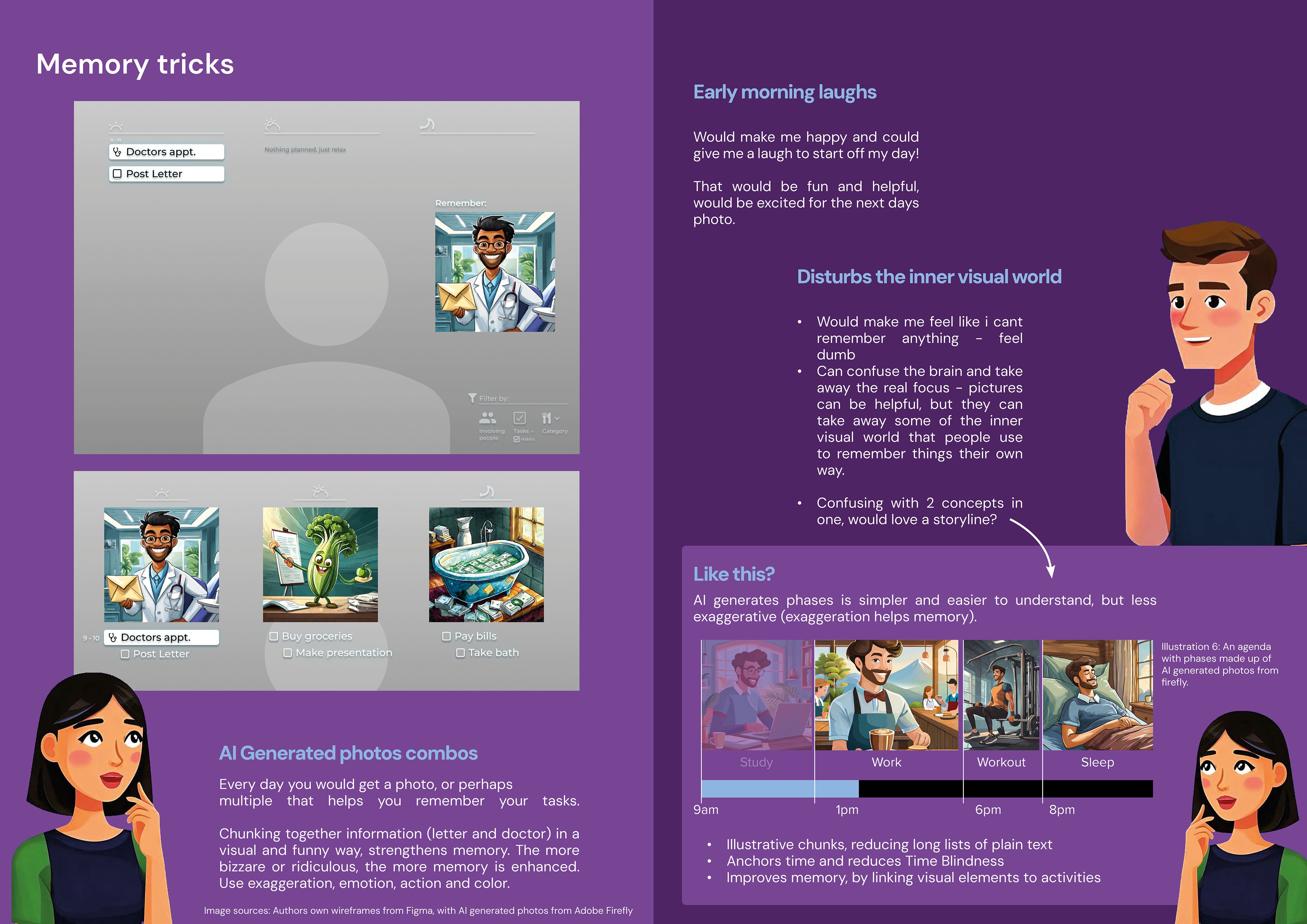
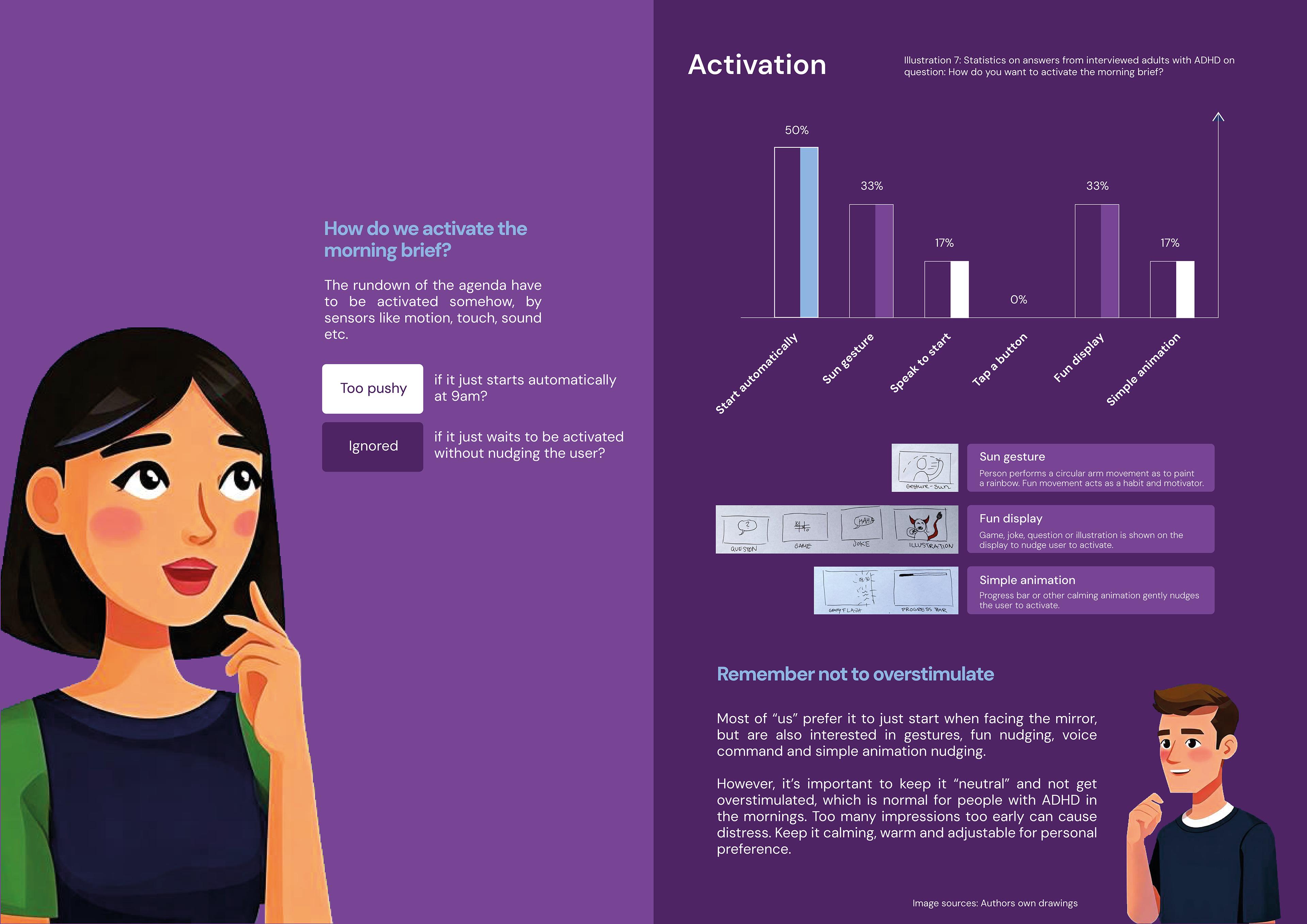
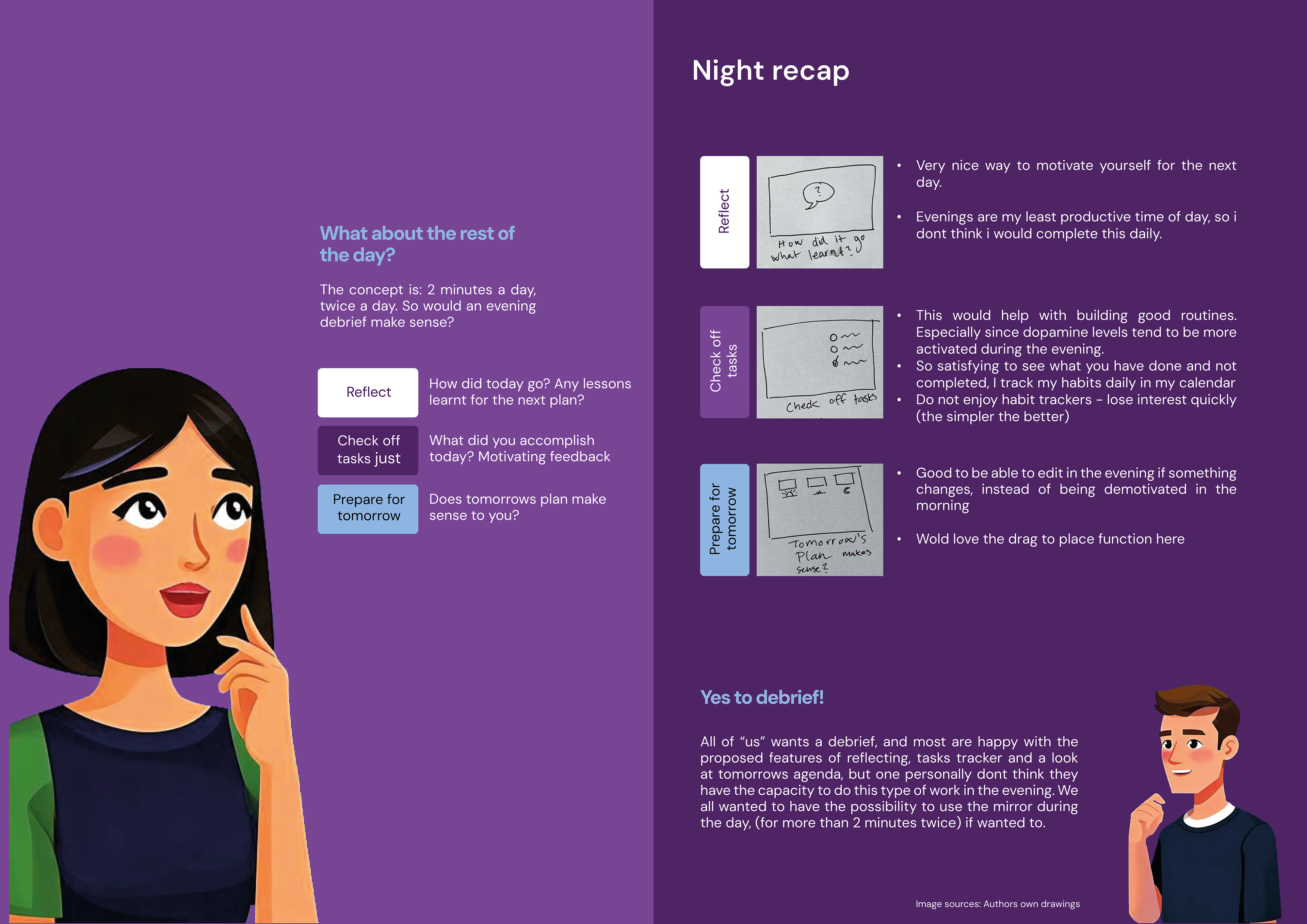
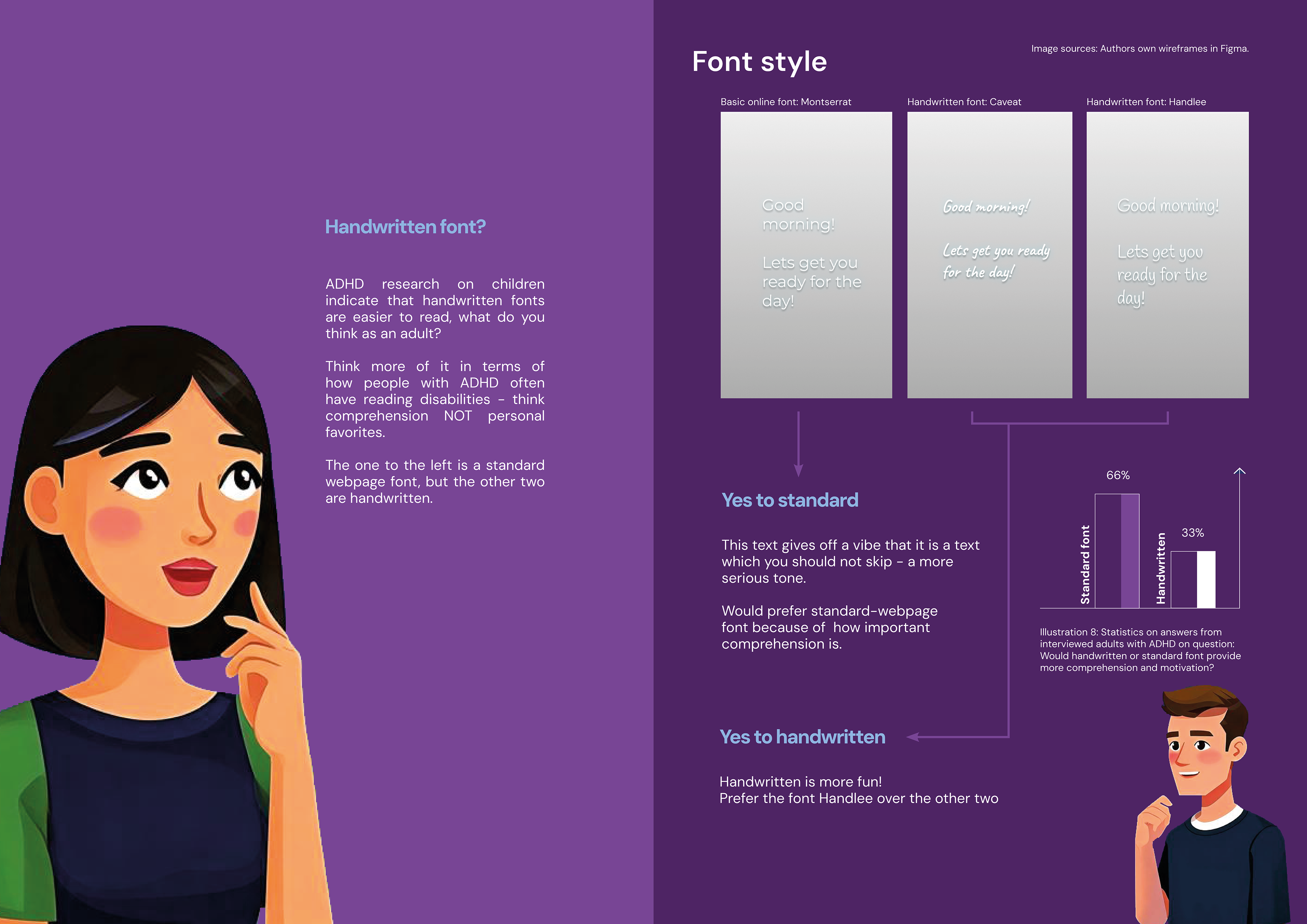
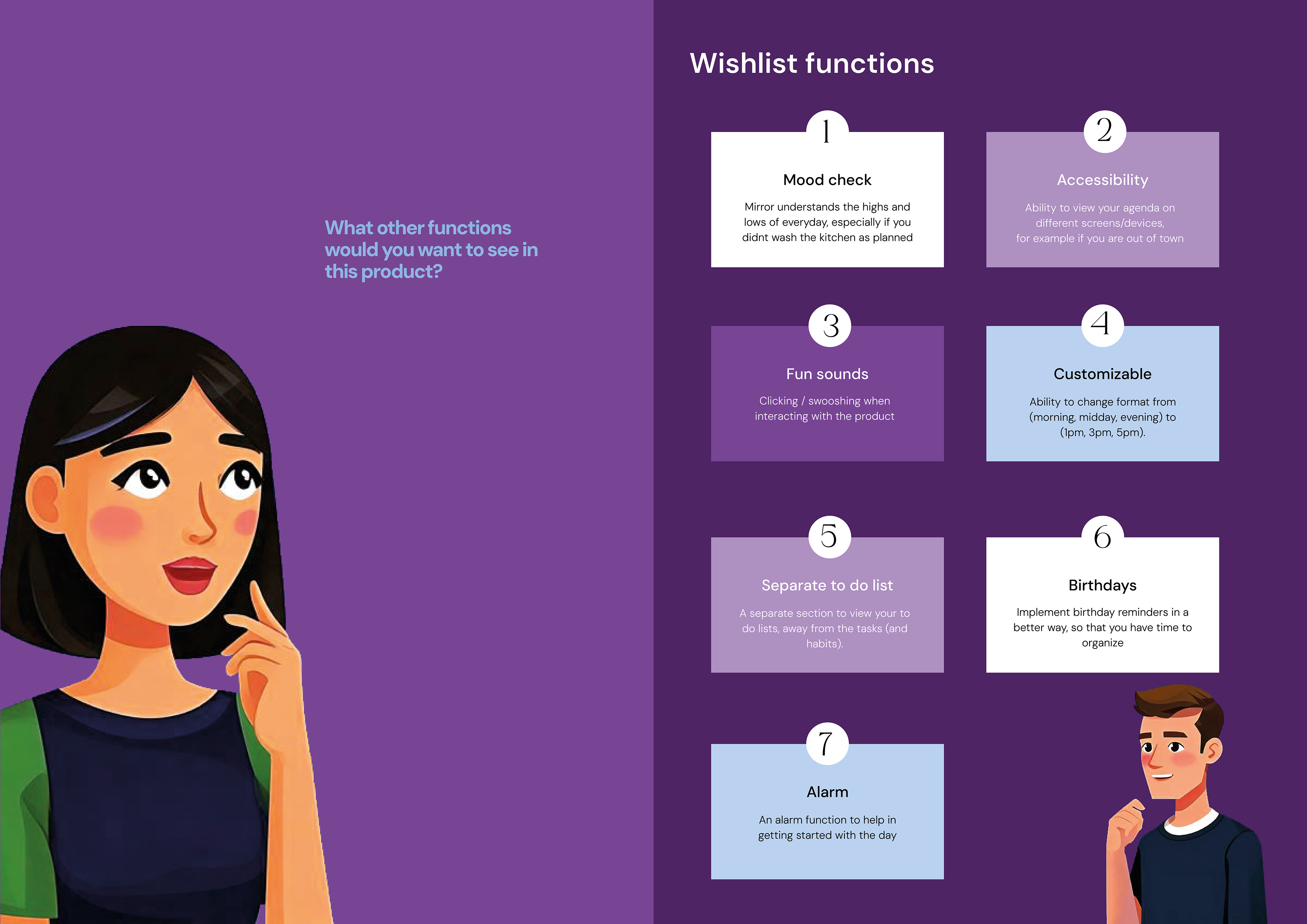
A low-fidelity clickable prototype of the calendar mirror was developed and tested with individuals with ADHD to gather early feedback. The prototype explored memory-supporting interactions such as repetition, drag-and-drop planning, voice input, mnemonic prompts, and visual mapping. Testing also informed decisions around system initiation, daily recap features, and typography. Users contributed additional feature ideas, including alarms, mood-based adaptability, and cross-platform access. The product is designed to build users’ memory and organisational skills, rather than create reliance.
Part 4: Refining
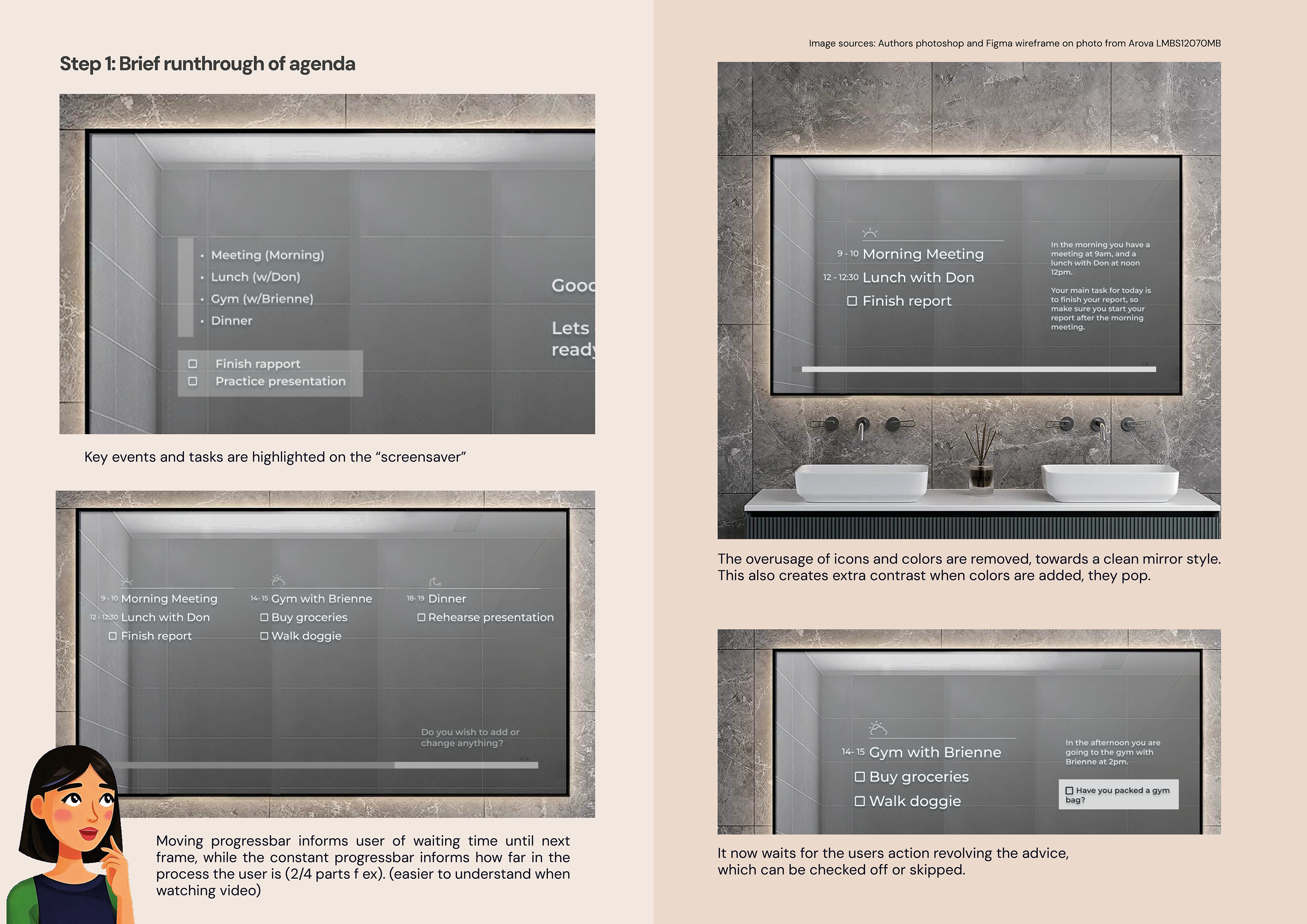
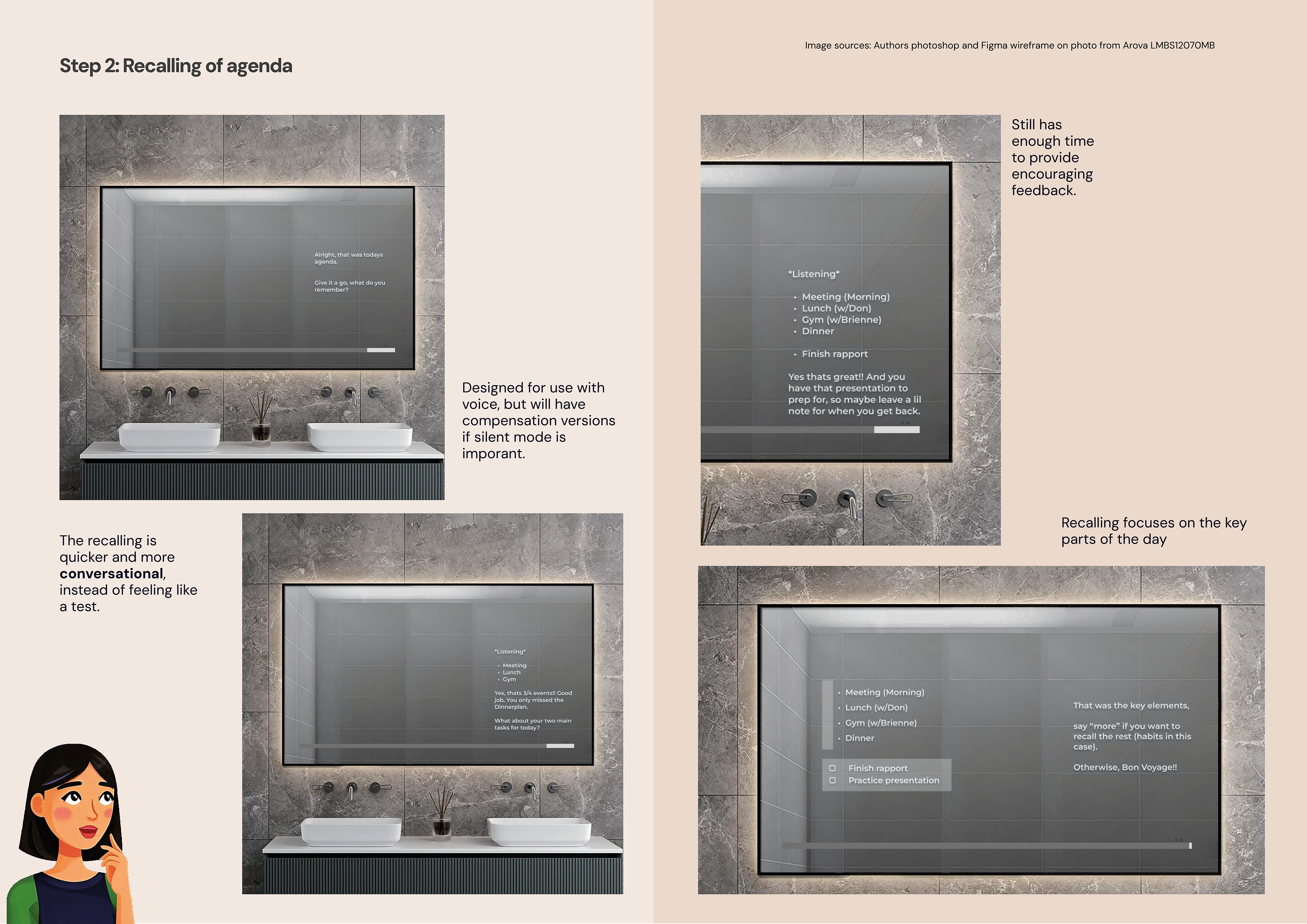
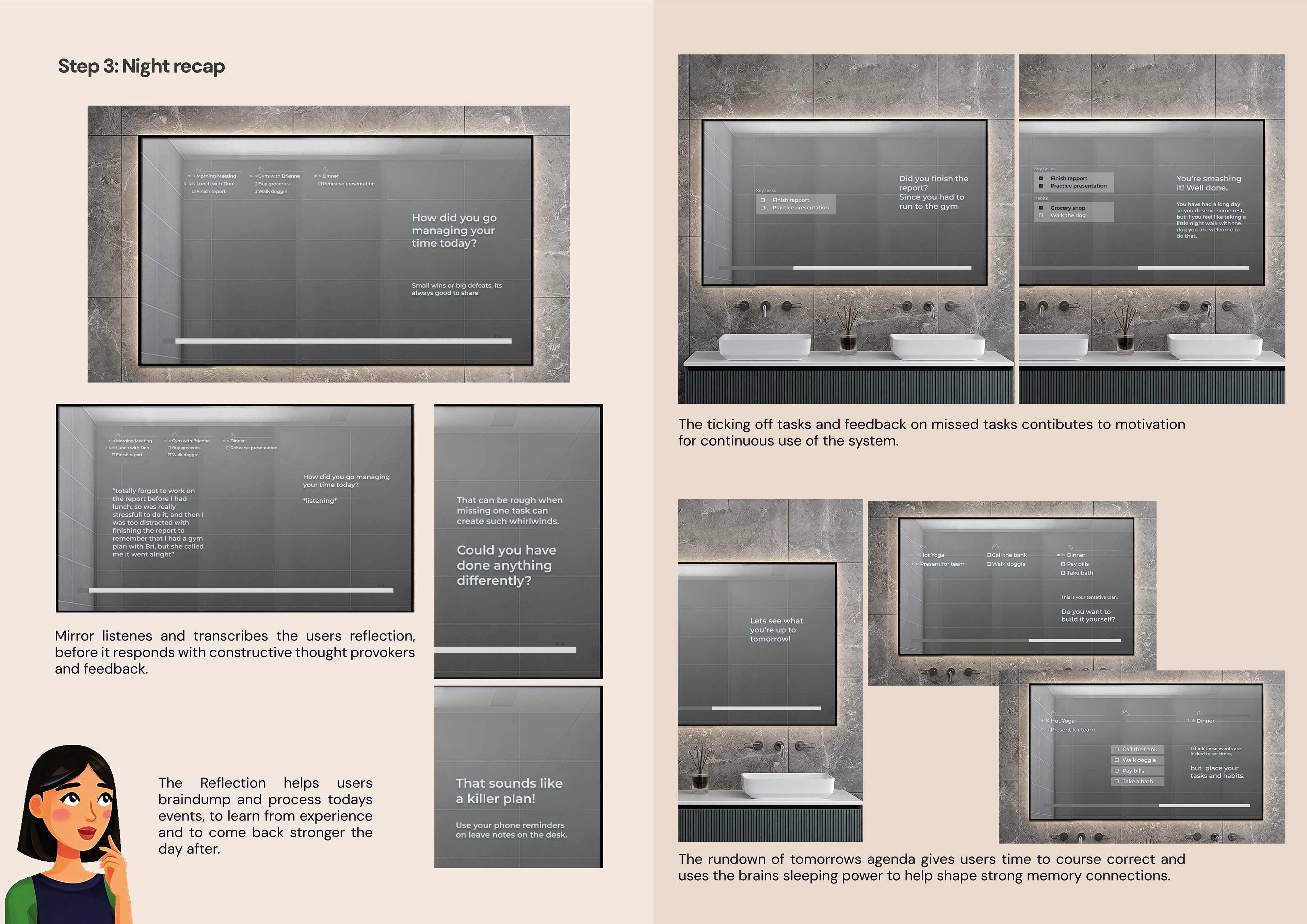
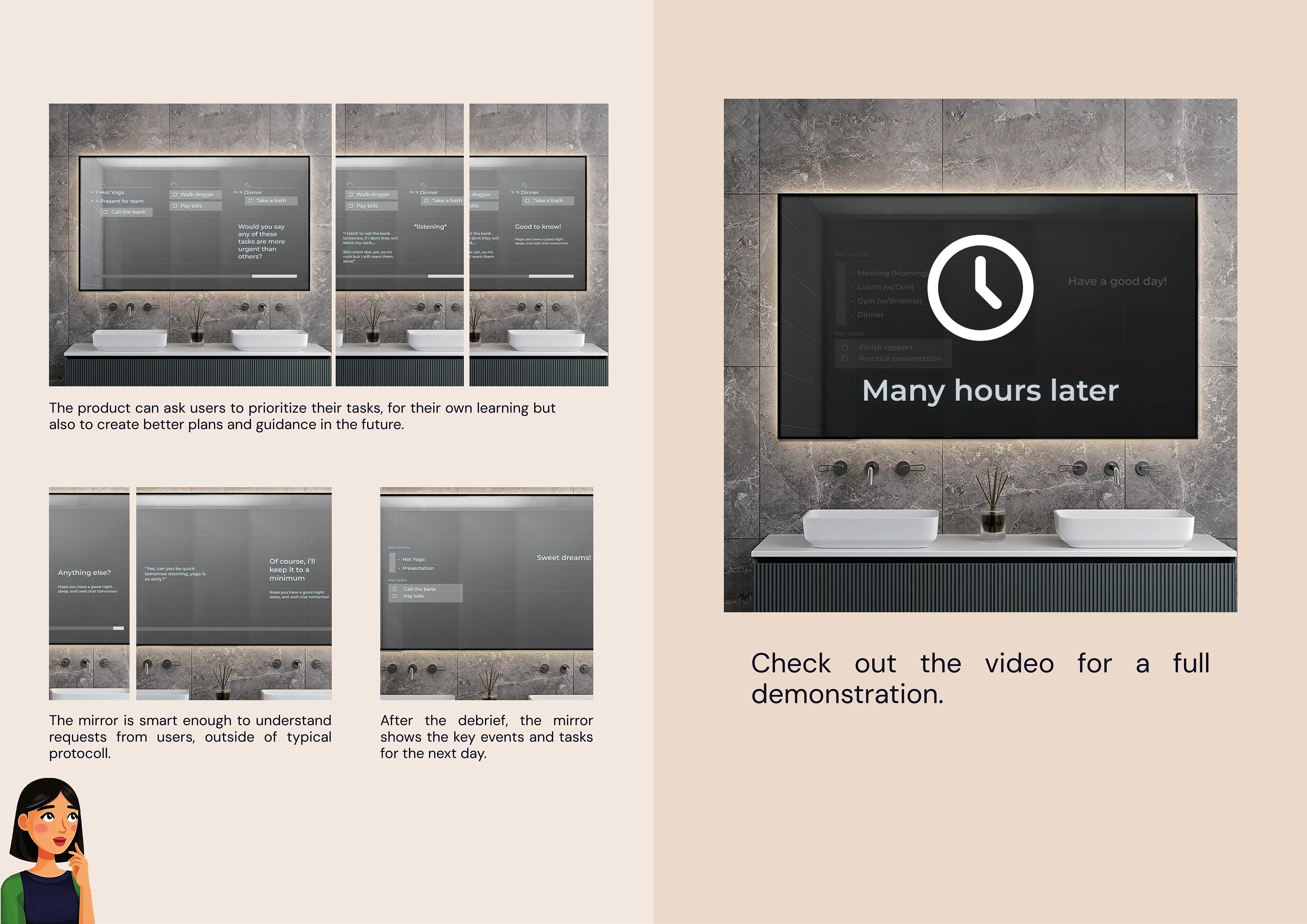
A higher-fidelity prototype was developed with a cleaner and more refined interface. It introduced a moving progress bar to clearly communicate users’ position within tasks and processes. The memory training experience was redesigned to feel more conversational, focusing on recalling key moments rather than reviewing the entire agenda. The reflection phase was also refined, including an evening recap and a preview of the following day to support preparation and continuity.
REFLECTION
While the initial intention of this project was to explore technical aspects such as Arduino integration, mirror materials, embedded LEDs, and waterproofing for bathroom environments, the process naturally shifted towards a stronger focus on human-machine interaction from an interaction design perspective. This direction aligned closely with my long-standing interest in the relationship between technology and psychology, leading to a deeper exploration of user behaviour, attention, and memory.
Throughout the project, I developed a more refined design approach, strengthening my ability to structure research, articulate ideas, and communicate concepts clearly. I also established a narrative style in presenting my work. While this meant less emphasis on physical materiality than originally planned, it resulted in a more user-centred and conceptually grounded outcome.
The project has generated strong interest from peers and family, reinforcing its relevance and potential. Moving forward, I am motivated to continue developing the concept beyond this thesis, including building a functional version of the mirror as a personal project.